


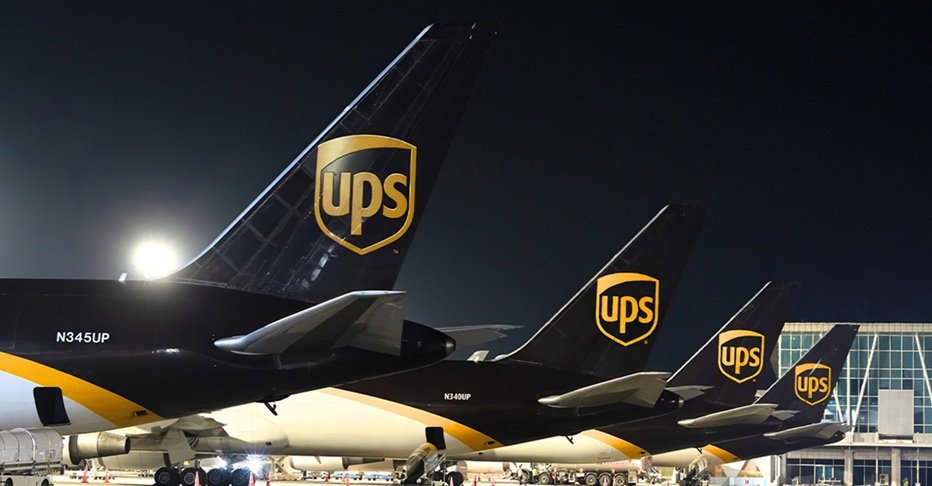
UPS has opened its new hub at Clark International Airport in the Philippines that is is 15 times larger than its predecessor and increases the average package volume to 46,000 per day.
Covering 30,000 sq m (323,000 sq ft), the new UPS Clark hub enables the average daily volume of packages processed through the hub to increase to 46,000 while maximum processing capacity rises to 15,000 packages per hour.
The expansion includes specialized handling for healthcare, high-tech and manufacturing customers with time-sensitive and temperature-sensitive shipments.
The new, sustainability-certified hub houses three refrigeration and freezer units, ranging from -20 to 25 Celsius, dedicated re-icing capability and UPS Premier RFID technology to provide priority handling and enhanced visibility for critical and temperature-sensitive healthcare shipments.
It also features an automated sorting system, which uses smart technology to process up to 9,000 small packages per hour. Ramp operations use a fleet of electric ground servicing equipment, including cargo tractors, belt and cargo loaders, ground processing units and forklifts.
UPS now operates 170 flight segments into and out of Clark every week, connecting businesses across Asia Pacific, India, Europe and the United States in as little as one business day.
UPS now operates 170 flight segments into and out of Clark every week, connecting businesses across Asia Pacific, India, Europe and the US in as little as one business day.
“This is a very special moment for our customers and our company,” said Russell Reed, managing director UPS Philippines. “To enhance services across more than 1,100 trade lanes is incredibly exciting, especially at a time when businesses are facing a unique set of challenges.
“When we opened our first Clark hub in 2002, we always had growth in mind – for our customers, our people and the local community,” continued Reed.
“We’re proud to have called Clark home for nearly quarter of a century and we’re delighted that the new UPS Clark hub will continue to provide people and businesses, both in the Philippines and across Asia, with international trade growth opportunities for decades more to come.”
The more than $80m investment in the hub is part of UPS’s ongoing investment in its Asia Pacific logistics network which aims to build resilience amid trade complexity.
UPS said the service enhancements enabled by the new UPS Clark hub include up to two days faster delivery to and from eastern China and other major Asia Pacific markets; up to two days faster service between several Southeast Asian markets and India; improvements to and from the Philippines on trade lanes worldwide; and faster transit times, extended pickup cut off times and earlier delivery times in cities and countries across the region.
“When we first announced plans to build our new Clark hub in 2024, it was the beginning of a sustained, multi-year investment strategy to strengthen our Asia Pacific network and give our customers faster connections to support growing trade flows across the region,” said Bernard Jiang, president UPS Asia Pacific.
“Asia Pacific has been the heartbeat of global trade for years. There are still plenty of growth opportunities for the region’s businesses and a lot of untapped potential. Clark is the latest in a series of recent major investments UPS has made in its Asia Pacific network and there’s more to come as we continue to speed up connectivity, unlock trade growth opportunities, improve service reliability and strengthen supply chains for our customers,” added Jiang.
The Clark Airport hub is the latest in a series of investments by UPS in its Asia Pacific network as the company helps its customers confidently manage changing trade routes, regulations and supply chain disruption.
In March this year, UPS opened its largest logistics center in Asia Pacific, in Taiwan, and broke ground on construction of a new hub at Hong Kong International Airport. Then, in April, UPS completed a major expansion of its hub at Incheon Airport.
Subscribe to gain access to all news
Already have a subscription? Log in.
Choose your subscription
Considering a corporate subscription? Contact us to find out more.
Or
Want to read this article for free?
You can read one free article per month. Enter your email and we’ll send you a free link to access the full article. No payment required.
