


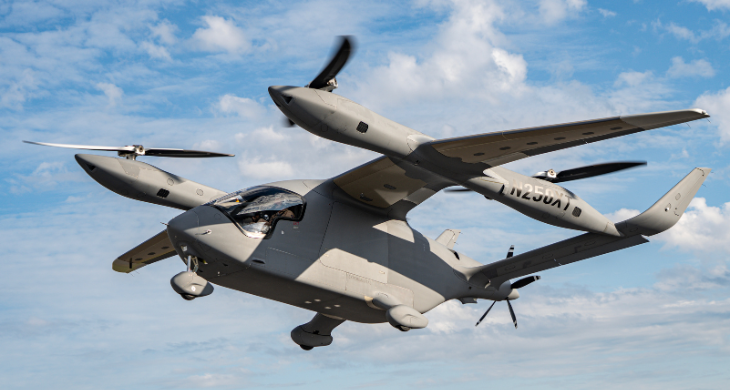
BETA Technologies have taken a ‘lead’ on their rivals in the eVTOL race with the announcement that the US FAA has granted the company a Part 21 Special Airworthiness Certificate which will allow it to carry passengers on the A250 VTOL variant of its electric aircraft programme. The company has already carried a number of passengers on the CX250 CTOL variant which has also carried out an extensive programme of demonstration flights in the US and Europe. Which, the company says, together with the high commonality in propulsion and flight control systems, has provided the background for the approval.
“This authorisation brings vertical flight closer to the people and places that will put it to work, building on BETA’s track record of industry firsts. We completed the first crewed electric VTOL transition flight in 2024, we were first to receive market survey authorisation for our conventional takeoff and landing aircraft (CTOL), and now we’re first with our VTOL,” said Kyle Clark, founder and chief executive officer of BETA speaking about the announcement. “Operators can now experience the VTOL firsthand and begin planning how it fits into their businesses, from connecting communities to moving people and goods at a lower cost. This is an important step toward commercial adoption, and we’re grateful to the FAA for developing the regulatory framework that makes these operations possible.”
Unlike the other aircraft that have have demonstrated a capability to fly the entire flight envelope, Joby’s S4 and Vertical’s VX-4 the A250 is equipped with dual flight controls which means pilots from potential customers will be able to gain hands on experience of flying the aircraft which may also prove a boon when it comes to meeting training and conversion requirements post certification.
The approval also expands the geographic scope of BETA’s operations, providing greater flexibility to demonstrate the capabilities of electric vertical flight across a wider range of operating conditions, subject to applicable FAA limitations.
“The FAA is committed to working with American innovators to safely integrate these new aircraft into our national airspace, while maintaining the rigorous safety standards that have made the United States a global leader in aviation,” said FAA Administrator Bryan Bedford.
Image: Beta
