


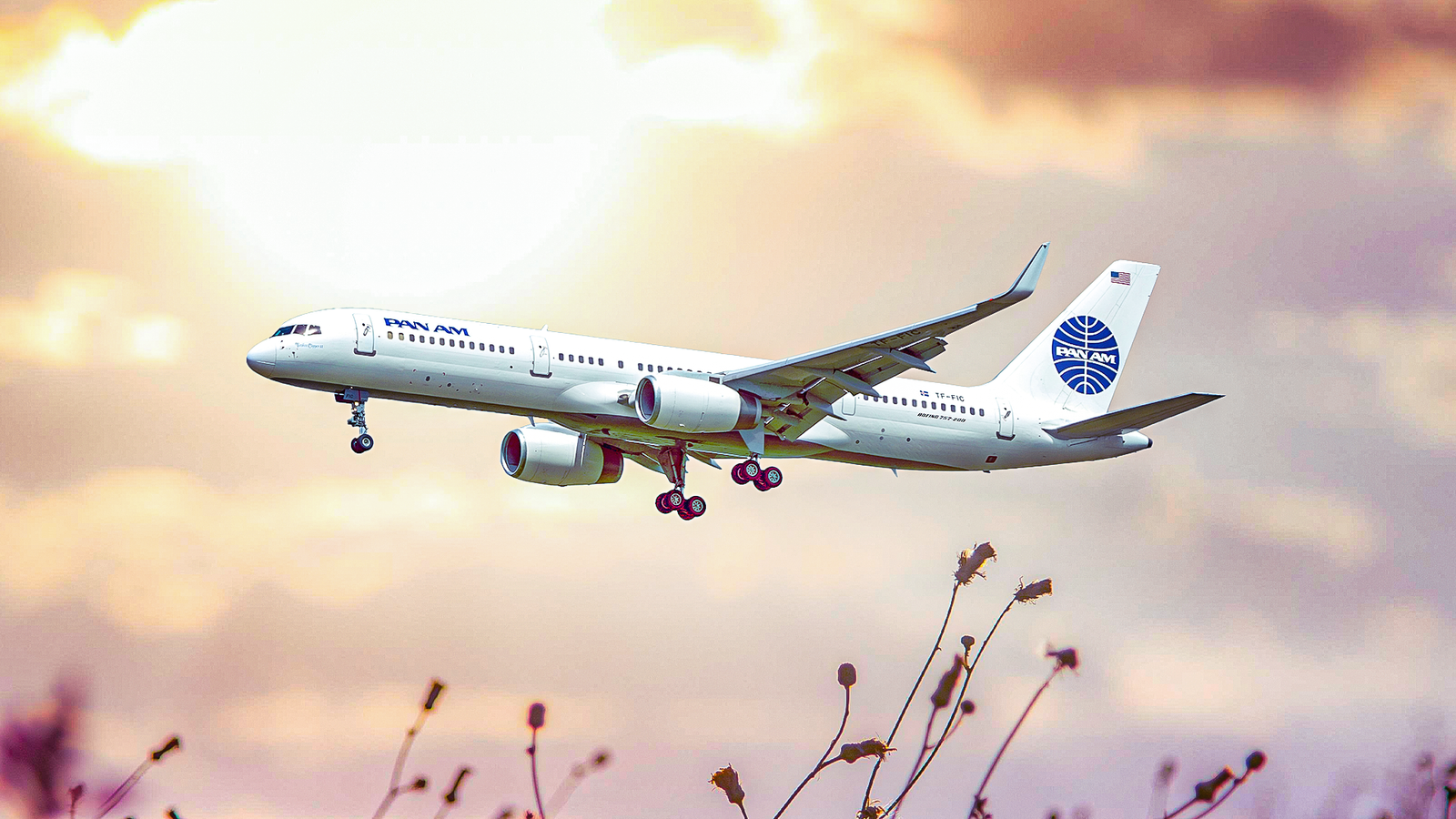
The airline industry in the US today hardly looks anything like what it did 60 years ago. American, Delta, and United Airlines now operate massive long-haul networks, while many carriers have merged. Several notable airlines have also gone out of business, and one of the saddest liquidations came in 1991, when Pan American World Airways ceased operations. Pan Am was one of the most legendary carriers ever and the de facto flag carrier of the US, yet the industry left it behind.
But although Pan Am had been in decline for years and stopped operating altogether in 1991, the name didn’t stay dead for long. The name returned in 1996, but this airline (also known as Pan Am II) merged with Carnival Airlines just two years later. The same happened to Pan Am III, founded in 1998 and out of business by 2004, as well as the fourth iteration, which operated from 2010 to 2014. Today, a new group of investors is betting that this time is the charm and is seeking FAA certification to relaunch Pan Am.
The New Pan Am Coming To The US
Although the Pan Am name has been revived several times, its reincarnations never resembled the massive international carrier that operated long-haul flights worldwide. In June 2025, the name briefly returned again for a series of charter flights paying tribute to the airline’s golden days, but these were all-business class flights aboard Boeing 757s (an aircraft type Pan Am never operated), and they only operated for a short period of time.
However, during this time, Avi8 Air Capital began collaborating with Pan American Global Holdings, the owner of the Pan Am name rights, to evaluate the feasibility of fully reviving the Pan Am name again while running the charters. After developing a business plan, the new entity began seeking FAA certification in October 2025 to resume operations. It’s seeking Part 121 certification, the FAA’s strictest set of regulations for airlines operating large aircraft on scheduled services, such as passenger, cargo, or charter operations.
It’s been announced that the new airline will be headquartered in Miami and will operate Airbus aircraft, with A220s or used A320s being preferred. CEO Ed Wegel also previously stated on LinkedIn in December 2025 that the airline intended to operate the Airbus A320neo “at some point in the future when the supply chain issues and engine issues are resolved.” In addition, the company has struck a deal with Amadeus to power its IT and distribution centers, with Avengers Flight Group for simulator training, and with Airbus for the manufacturer’s SkyWise Digital Suite.
HOW MANY ARE FLYING?
Pick an aircraft to see how many are in the air right now
What Part 121 Certification Entails

Part 121 governs scheduled carriers operating large transport aircraft, the strictest set of regulations for US air operators. This does not, however, mean that anyone can book a ticket with an airline, as it also governs companies operating charter flights like Atlas Air, Omni Air International, or the new Eastern Airlines. The regulations are not about the business model; they focus on the company’s operations, the aircraft being flown, and the FAA oversight required to maintain safety.
The FAA will closely scrutinize Pan Am’s operating procedures, manuals, maintenance programs, and more to ensure compliance with regulations. The regulator will verify that Pan Am’s intended aircraft will be safely equipped while ensuring that the company is hiring appropriately qualified crew who will receive FAA-approved training. In addition, the FAA will review Pan Am’s route planning, dispatch, and dangerous goods procedures, and Pan Am will need to submit thorough documentation for review.
FAA Flight Operation Regulations | Description | Examples |
|---|---|---|
Part 91 | Regulates non-commercial flying | General aviation flights, repositioning and maintenance flights by commercial operators |
Part 121 | Regulates scheduled commercial service with large aircraft; pilots must hold an ATPL, the most stringent operational and maintenance regulations | Large passenger, cargo, and charter airlines |
Part 135 | Regulates commercial on-demand charter and commuter service with low-capacity aircraft; pilots must hold a CPL, with less stringent operational and maintenance regulations than Part 121 | Kalitta Charters, Wheels Up, Boutique Air, Counter Aviation |
Much of the review process involves checking documentation, but the FAA will also be performing on-site checks and observations, while Pan Am will need to perform proving tests as well. This is not a quick or easy process, and certification can take several months or even years. For Pan Am, a new company with no revenue, this adds expense, and the longer Part 121 certification takes, the greater the financial pressure on the airline.
The Business Plan For Pan Am

Despite using one of history’s most famous airline names, the new Pan Am won’t actually sell tickets on commercial flights. Rather, it’ll be a charter airline mainly flying to Latin America, with scheduled passenger services coming later. Company leadership has stated previously that the airline will offer three classes of service while simultaneously planning to fly narrowbody aircraft. In all likelihood, this could mean economy and extra-legroom seats, along with a domestic first class cabin.
It’s unconfirmed what aircraft the new Pan Am will/has acquired, but the Airbus A220 (presumably the A220-300) is the front-runner. However, new A220s are hard to get, and delays are common, so the company is also looking at used A320-200s as a backup, should it prove too difficult to get A220s in a timely fashion. It’s unclear whether the A320neos are still part of the plan, but the airline aims to grow its narrowbody fleet whileadding widebodies to the mix.
In the meantime, Pan Am is continuing its charter operations, as it’s selling tickets for a 19-day all-inclusive excursion throughout Africa in June 2027. This will operate using a 757-200 configured with only business class seats, just like the 2025 charters. These flights are actually operated by Icelandair, meaning that they’re not subject to the airline receiving FAA certification. What’s more, the company is expanding to become more of a lifestyle brand than just an airline.
The Other Ventures Of The New Pan Am

‘A Journey To Reimagine Africa’ is Pan Am’s next high-end charter, but it won’t be the last. The airline has established a ‘Pan Am Journeys’ subbrand for luxury private jet tours and has opened up bookings for a golf-themed trip to Ireland in September 2027 with the same 757. The new Pan Am has also partnered with Holland America to charter the cruise ship ‘Zuiderdam‘ for a Caribbean tour that replicates routes operated by the original Pan Am flying boats, departing in October 2027.
In addition to charters, the company is partnering with Hilton to open the ‘Pan Am Hotel’ at the Citadel Outlets near Los Angeles. The design and theme will pay homage to the original airline’s heyday, featuring a mid-century modern aesthetic and Pan Am-branded artworks. In addition to the Pan Am touches, the hotel will include two on-site restaurants and a fitness center, and it is expected to open in late 2026.
The new company appears to be diversifying by entering multiple markets, which helps ensure a steady stream of revenue and protects it from downturns in one segment. It’s also noteworthy that it continues to focus on charter operations and appears to be positioning itself as a premium or luxury travel brand. Of course, while premium travel is on the rise in the US, that doesn’t mean customers will flock to the new Pan Am, and that will be a major challenge.
Why Travel With The New Pan Am

Premium travel is not only lucrative on its own for airlines, but demand for premium seats is on the rise in the US, which has been heavily taken by Delta Air Lines and United Airlines in particular. However, part of the reason why passengers are flocking to Delta and United is because they’re already the largest airlines in the world, operating worldwide networks with competitive schedules. Because these elements are already where customers generally need them, the airlines can successfully position themselves upmarket.
Pan Am, on the other hand, has no frequent flyer program, no airline partnerships, no credit cards, no corporate contracts, and effectively, no brand cache. The Pan Am name is nostalgic to an increasingly older group of enthusiasts, but most passengers booking premium cabins today would rather fly with  Delta Air Lines regularly than on a new, unproven airline bearing the Pan Am name. Add that the airline’s initial network will naturally be tiny, making the company’s selling proposition difficult.
Pan Am will initially operate charter flights, and while scheduled flights are expected to come eventually, that isn’t guaranteed. Given how strong the US’s major airlines have become, it might be more financially prudent for the new airline to stay within its own niche rather than compete with established carriers. While this new airline could eventually find a customer base if it chooses this path, it would be incredibly difficult.
