


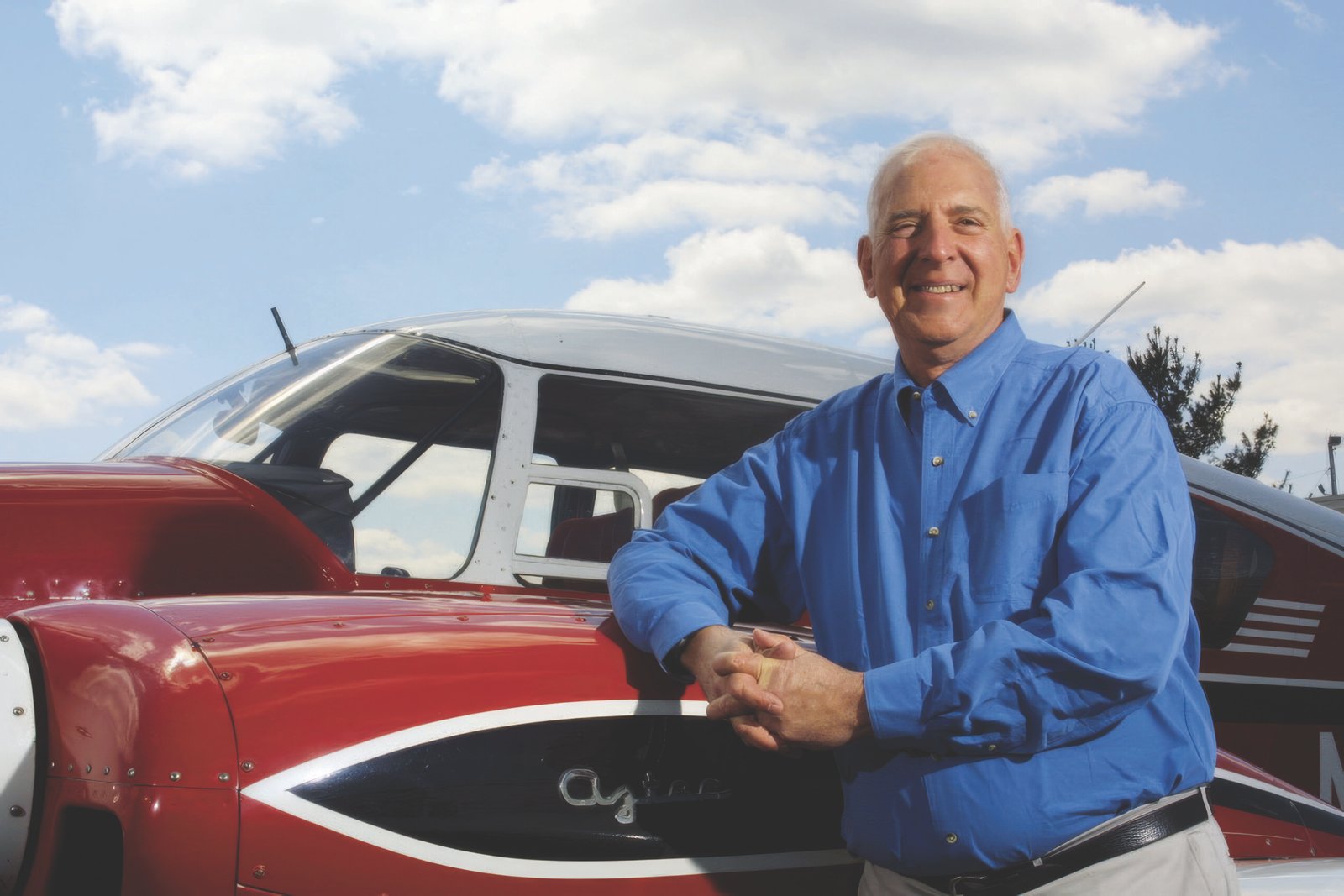
This issue’s theme is “The Greats,” which is rather daunting. I think any of us could fill pages with names of genuine aviation heroes.
I’ve been blessed to actually know a few, such as Barry Schiff, Clay Lacy, Bob Hoover, Neil Armstrong, Joe Kittinger and (drumroll) Jimmy Doolittle. And there’s no doubt my list would also feature Juan Trippe of Pan Am, Eddie Rickenbacker of Eastern, Pat Patterson of United, C.R. Smith of American, and those foresighted designers/builders such as Donald Douglas, Walter and Olive Ann Beech, Clyde Cessna, William Piper, and Dale and Alan Klapmeier.
If you're not already a subscriber, what are you waiting for? Subscribe today to get the issue as soon as it is released in either Print or Digital formats.
Subscribe Now
But I think our lists should also include those “unknown greats” we all know, such as my mechanic, Mark Day, and his deceased father, Ralph Day, at Warren County John Lane Field (I68), the Stewart family that operates Red Stewart Field in Waynesville, Ohio (40I), which is one to remember if you want to learn to fly tailwheels and have tons of fun doing it, and the original Hogan brothers (Art, Bill, Joe, and Bernie) at Butler County Hogan Field (KHAO).
- READ MORE: Dealing With Some Cold-Blooded Cargo
- READ MORE: Pilots Cherish Many Rites of Passage
I remember a cold Sunday morning in December 1961 when my sister and I arrived in her VW, fresh from Mass and dressed in our Sunday best. Our directions were to drive down a rough road to a little white shack on the South Line at Lunken Airport. When we opened the door, there was a room filled with five or six men, smoking and arguing about the climb rate of one guy’s Luscombe 8E. Then out of the little office in the back, the manager appeared, a great big guy with a deep voice who laughingly announced that those claims were ridiculous. We told him that a priest, Father Blome, was letting us learn to fly in his Ercoupe. The little airplane was perched out in the grass next to Aero Services.
The big guy with the loud voice was Hal Shevers.
After addressing a few issues like holes in the fuel tanks and a rotted nosewheel tire, the little dull-grey airplane (N341) was declared airworthy. When we began flying with instructor Larry Whitesell, I fell even deeper in love with airplanes (and, OK, with Larry too). My dad found out what we were doing and called this Shevers guy to say he was holding him responsible for us. Hal agreed to this impossible task.
Shevers, from Scarsdale, New York, graduated with a degree in engineering from Purdue and learned to fly at the old Aretz grass field near the university. He took a job offer in Cincinnati with Cincinnati Milling Machine Co., but Hal wasn’t a guy who could work for anybody—especially as a cog in a large company. Now he was trying to sell his Comanche to buy gas for an elderly Dodge Dart and pay his share of rent on a huge old house he shared with five other guys called “The House of Bad Dreams.” Bob Herweh hired Hal to manage Aero Services which leased tie-down space, had a couple lease-back airplanes, an 80-octane fuel pump, and some part-time instructors.
This Shevers guy was selling cans of an “amazing exhaust gas stain remover,” which were stashed in the Dodge. I’m pretty sure it was 80-octane avgas. Then, I think his father in New York found a Japanese company selling hand-held radios that monitored aviation frequencies. Hal and Russ, a friend from The House of Bad Dreams, ran ads in Trade-A-Plane, and those radios sold like hotcakes. Hal and Russ were in business, stocking charts, manuals, and headsets, etc., from a small office and showroom in Lunken Airport’s terminal building. A little black-and-white catalog debuted, sales grew, more aviation products were added, and Sporty’s Pilot Shop was born.
Hal and I were friends, and one day he said, “Marf, I’m nearly 30, and it’s time to get married.” He was dating two women and asked, “Should I marry Sandy or Kay?”
“C’mon, I can’t tell you that.”
“Think about it. I respect your opinion.”
“They’re both nice gals but, OK, I kinda like Kay—she’s pretty and talented…”
He not only married Sandy but told her about my advice on their honeymoon. For the next 60 years, she was always a little frosty toward me.
Sporty’s soon outgrew that space and moved across the road to a larger building. It replaced the little black-and-white flyer with a larger, full-color catalog with a lot more products. Hal put together a three-day traveling instrument ground school, sponsored by Beech Aircraft. He hired me and a couple other guys, and we traveled all over the country. I quit in tears in Pittsburgh.
Sporty’s moved to Clermont County Airport (I69) about 12 miles east of Lunken. He started out in the small terminal building but, within a few years, built a large facility with lots of T-hangars across the field. He even got the FAA to make a “cutout” to keep the airport outside of Cincinnati’s Class B airspace.
It was a huge and rapidly growing business. “Sporty’s Europa” was soon born, but selling small airplane products in Europe didn’t work nor did a resort in the Bahamas. However, the original catalog expanded into three with upscale products for home and work. Hal had an Aztec (that’s a story in itself that I’ll save for later) and acquired a Cessna Citation. When I was between a failed marriage and an FAA job, I prevailed on him for a job writing catalogue copy. Before long I was fired.
Hal was good hearted and generous with his employees but also controlling and volatile. His workers, now in the hundreds, were well paid and enjoyed parties, boat rides on the Ohio River, and tickets to baseball and football games.
But to stay in his employ, you had to accept constant oversight and criticism—no exceptions. Many did, but many left voluntarily or were shown the door. For all his difficult personality traits, Hal Shevers and his company did more for general aviation than any other single enterprise. He was motivated from the beginning by a desire to develop and market GA training. His Part 141 flight school, with films, online courses, and other products have “made” many pilots and saved many lives.
His health began failing after a bad fall and long hospital stay. Although Sporty’s was now employee owned, he tried taking command again, but it didn’t work. Hal and Sandy moved to Florida.
He was an old man at 90, but it’s nearly impossible for me to believe this larger-than-life man is gone.
This column first appeared in the September Issue 974 of the FLYING print edition.
