


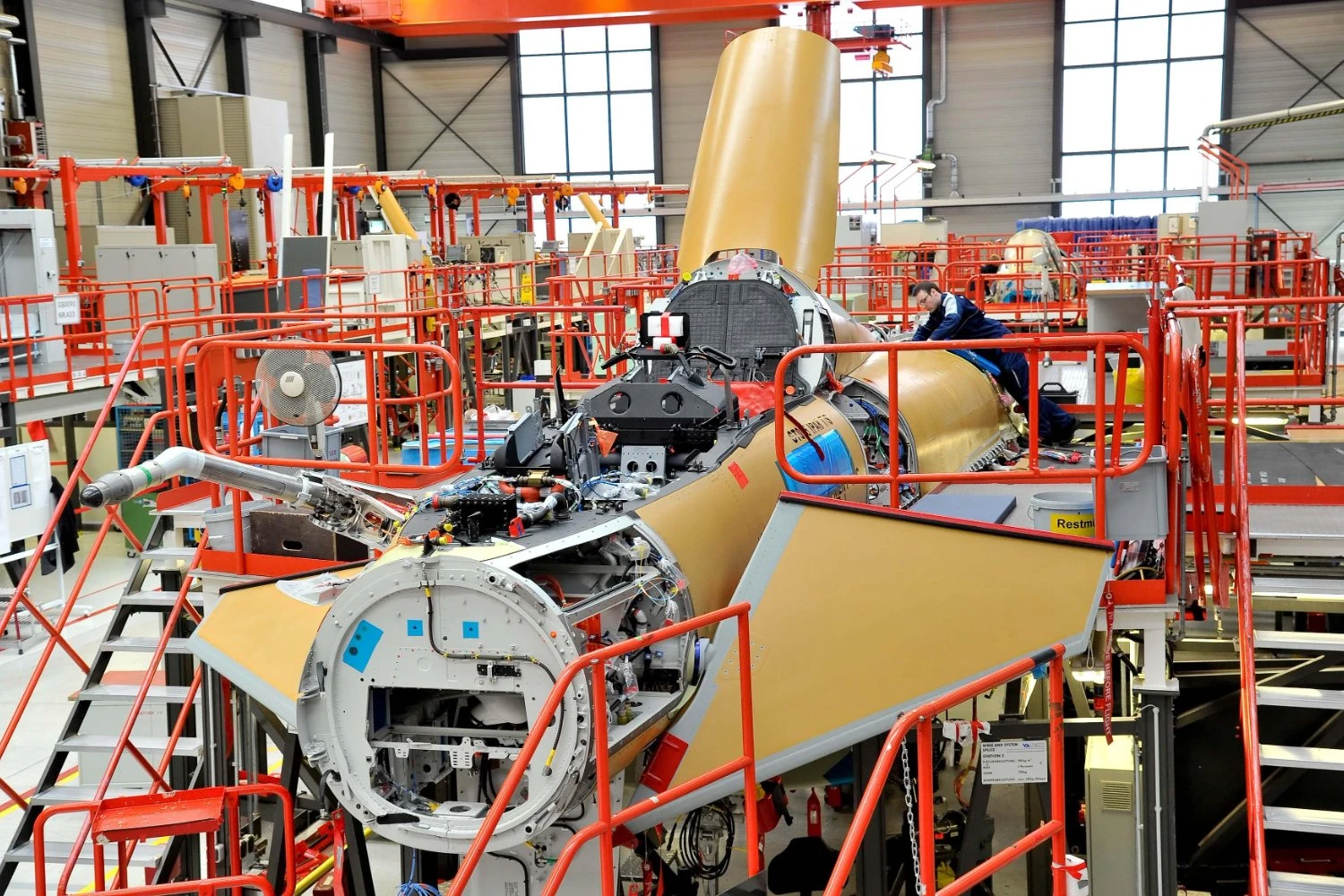
The first Eurofighter Typhoon ordered by Türkiye is taking shape at BAE Systems‘ Samlesbury factory in Lancashire, England, where assembly of the fighter’s forward fuselage is underway. The British manufacturer confirmed the milestone on November 5, just over a year after Ankara signed a contract for 20 new aircraft.
Production is also progressing in Germany, where Airbus Defence and Space is manufacturing the center fuselage of the same aircraft. The work is part of the Eurofighter consortium’s established production system, which distributes major aircraft components among facilities in Britain, Germany, Italy and Spain.
Representatives of the Turkish Air Force recently visited Samlesbury to inspect the production line and receive an update on the program. BAE Systems released a photograph of the delegation during the visit.
“This is an exciting moment for the programme and a demonstration to our Turkish customer that Europe’s defence industry is working hard to deliver on our commitments to them,” said Dave Ward, BAE Systems’ vice president for Türkiye.
Follow Air Data News: WhatsApp | Instagram | LinkedIn | Twitter | Facebook
Ward said the Typhoon would become an important part of Türkiye’s frontline combat aviation capability and contribute to NATO’s air power.
Although BAE Systems had already confirmed manufacturing activity under the Turkish contract earlier this year, the latest announcement identifies the first aircraft’s forward fuselage as being under assembly.
Deliveries scheduled to begin in 2030
Türkiye signed its agreement for 20 new-build Typhoons with the United Kingdom on October 27, 2025, becoming the tenth country to select the European fighter.
The contract covering aircraft, mission equipment and weapons was valued at approximately £5.4 billion (about $7.2 billion at the time of the agreement). The British government placed the value of the overall program, including associated training and support, at up to £8 billion (approximately $10.7 billion at the time).
Under the current schedule, the first six aircraft are expected in 2030, followed by eight in 2031 and the remaining six in 2032. Final assembly of the Turkish Typhoons will take place at BAE Systems’ Warton facility, also in Lancashire.
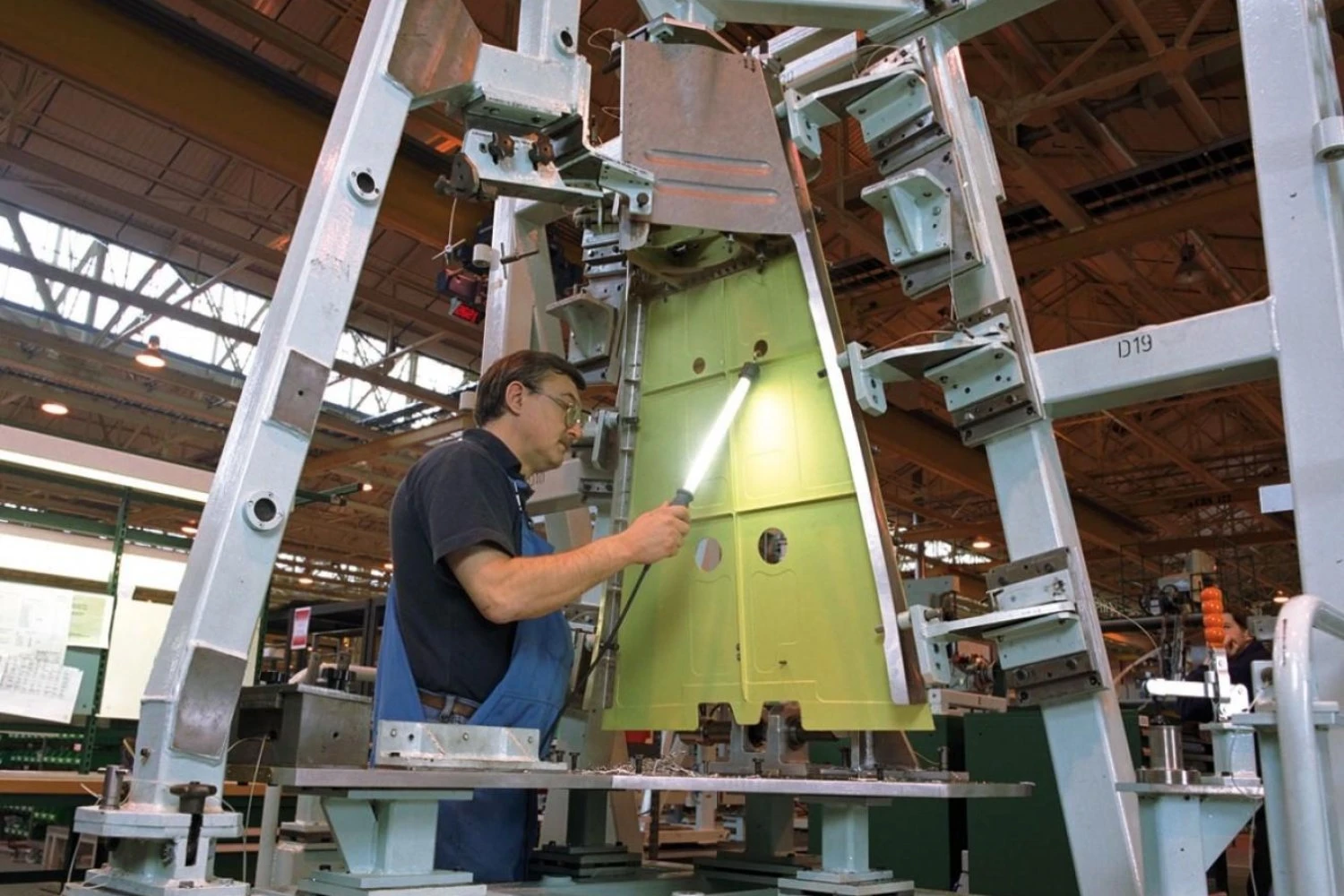
The aircraft will be produced through the existing multinational Eurofighter industrial network. BAE Systems manufactures major fuselage structures and handles final assembly for the Turkish order, while Airbus and Leonardo supply other airframe sections, electronics and equipment.
A separate training and support agreement signed in March 2026 covers pilot and ground crew instruction, simulators, spare parts and technical assistance. The British government said the program would train ten Turkish pilots and nearly 100 maintenance technicians in the United Kingdom.
Training has already started. In September, the Royal Air Force announced that two Turkish pilots had begun Typhoon conversion training with No. 29 Squadron at RAF Coningsby, ahead of the aircraft’s introduction into Turkish service.
The 20 newly manufactured fighters are part of Ankara’s efforts to modernize its combat aircraft fleet, which remains heavily dependent on the F-16.
Türkiye considers additional Typhoons
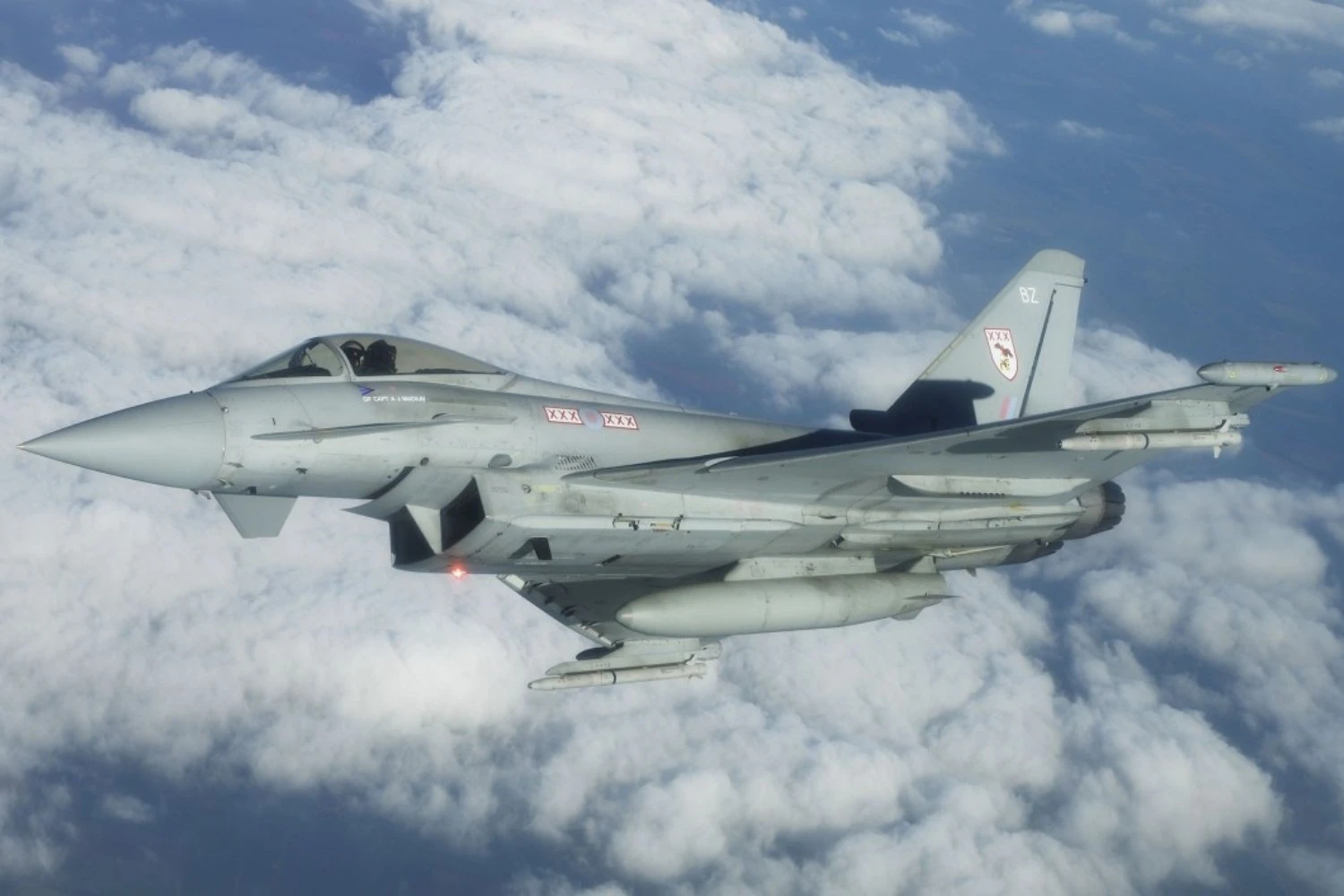
Türkiye has also been discussing the possible acquisition of second-hand Typhoons from Qatar and Oman, potentially allowing the Turkish Air Force to introduce the type before its first newly built aircraft arrive.
Separately, the Eurofighter consortium has identified a potential follow-on order for another 24 new aircraft for Türkiye among its commercial opportunities. No additional contract for those fighters has been announced.
The Typhoon acquisition comes as Türkiye continues development of its domestically produced KAAN fighter. The two programs have different schedules, with the Eurofighter intended to provide an established combat aircraft capability while the indigenous program progresses.
The latest manufacturing milestone confirms that major structural sections of the first Turkish Typhoon are now being assembled in two countries, ahead of their eventual integration and final assembly in Britain.
