


Pilots are naturally inclined to assign high importance to the aerial component of any war. Not everyone does. I was surprised to find that the article on World War I in my 1958 Encyclopedia Britannica (Volume 23, VASE to ZYGO) gave only the briefest mention to the “tumult in the clouds.” Its effect, the author suggested, was principally psychological.
I experienced a similar disappointment recently when, reading Alan Bullock’s Hitler: A Study in Tyranny, I found that author passing swiftly by the Battle of Britain (even though, as Winston Churchill had famously intoned, “never in the field of human conflict was so much been owed by so many to so few”), and then glancing back several hundred pages later only to briefly remark that the Luftwaffe had been “roughly handled” there.
If you're not already a subscriber, what are you waiting for? Subscribe today to get the issue as soon as it is released in either Print or Digital formats.
Subscribe Now
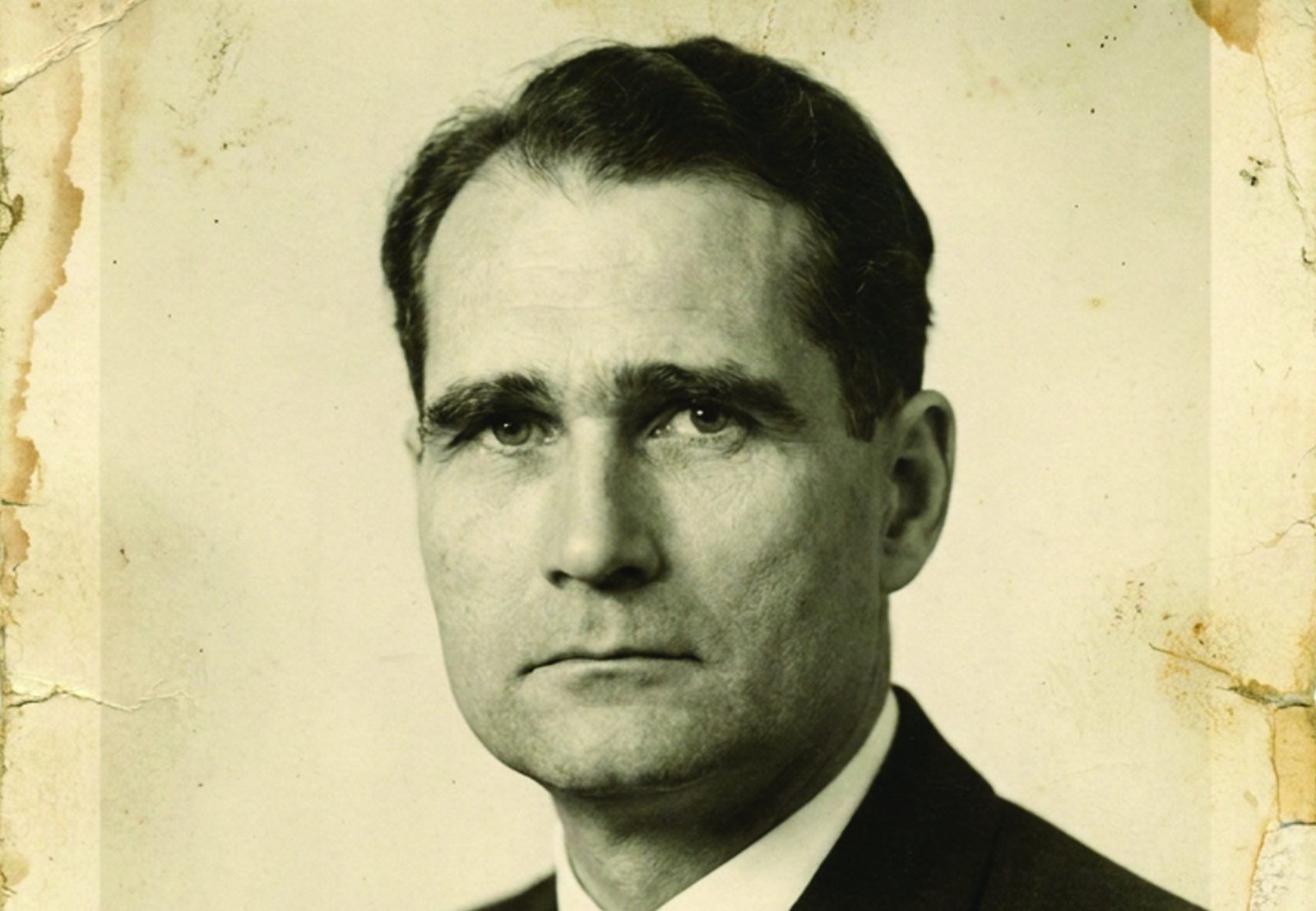
I suppose that people who have no special affinity for airplanes may regard them as insignificant actors in warfare, which is ultimately, after all, about control of the ground. Whatever else may be said about airplanes in war, however, they produce some good stories. A curious one from World War II is that of the freelance peace mission of Adolf Hitler’s deputy, Rudolf Hess.
Hess (who, by the way, doesn’t even get a mention in Volume 11, GUNN to HYDROX) had been a devoted apostle of Hitler’s since the 1920s, when he participated in the abortive uprising, the so-called “beer hall putsch,” that landed Hitler and a bunch of his fellow Nazis in jail. Their sentences were light since many in the court were sympathetic to the Nazis’ patriotic-populist messaging, and their prison was a comfortable place. Hess served as Hitler’s secretary there, writing down Mein Kampf while the notoriously long-winded Führer dictated.
- READ MORE: Hero Civilian Astronaut Was Man Without Enemies
- READ MORE: My Own Private GPS
Hitler had a partiality toward the British, and for a long time he believed that if only that obstinate fellow Churchill did not stand in the way, England and Germany, whose royal families had been closely related since the 17th century, might come to terms. It was only after a number of his efforts to negotiate with England had been rebuffed that Hitler decided in summer 1940 to invade her instead.
The idea of a linkage with England evidently lingered, however, in the mind of Hess.
A year later, the “rough handling” of the Luftwaffe by the RAF’s Spitfires and Hurricanes had put the invasion on hold, and Hitler had turned his attention to his nemesis, Bolshevik Russia. Now Hess decided on his own to try to forge a separate peace with England.
Hess was a pilot. He had flown in World War I and continued to fly thereafter, and so, close as he was to Hitler, he was able to get a Messerschmitt Bf 110D assigned to him as his personal aircraft. The 110 was big for a fighter, 10,000 pounds empty, 54-foot span, with a pair of 1,100 hp engines and two seats in tandem. A navigator-radio operator normally occupied the rear seat and was also provided with a defensive machine gun.
Hess’ airplane, its heavy armament removed on the pretext that it was to be used for secret research, was fitted with long-range drop tanks, and the controls of its navigational radios were moved to the front cockpit.
Hess’ scheme was to fly to Scotland and present a peace proposal to the Duke of Hamilton, whom he believed, incorrectly, that he had met at the 1936 Berlin Olympics. Hess thought Hamilton would be willing to carry his message to Churchill, but he turned out to be wrong about that too.
Hess took off on the afternoon of May 10, 1941, from the Messerschmitt factory field at Augsburg in southern Germany. Hamilton’s estate, Dungavel, south and west of Glasgow, was 830 great-circle miles away, but Hess’ planned route had many zigs and zags and would be much longer.
He flew northward, unmolested by the Luftwaffe. Crossing the coast near the Netherlands border, he dropped very low to avoid detection and dead-reckoned northwestward over the North Sea for several hours. When he encountered the 247-degree radial of a Norway radio beacon used to guide German bombing missions over England, he turned south of west, and, after circling for 40 minutes to kill time until dusk, he crossed the English coastline a little south of the Scottish border.
Hess flew at the lowest possible altitude in hope of evading British radar. He was nevertheless detected and designated “Raid 42,” although his flight track, low altitude, and lack of company did not fit the pattern of German bombing raids. The RAF scrambled some Spitfires and a Boulton Paul Defiant, but they failed to find the intruder. The northern twilight was long, however, and ground spotters easily identified the passing airplane as a Bf 110.
Up to this point, Hess’ flight had been a master class in navigation and evasion. But now things began to go awry. The moon, though nearly full, was still low behind him, and the lingering brightness of the western sky made the dark landscape below more difficult to see. Hess, who had navigated with sufficient precision to pass close by Dungavel House if not directly overhead, now flew past it. Thirty miles farther along he reached the ocean at the Firth of Clyde and realized he had gone too far. Turning back, he tried to follow a rail line back toward Dungavel. All this time, British radar was tracking him.
He had now been airborne for almost five and a half hours, battered by the roar of the engines and stress of flying close to the deck. Knowing that he must be near his destination, and with his fuel gauges reading empty, Hess decided it was time to abandon his plane.
Whether he had ever intended to land it is unclear. Under ideal daytime conditions the barely discernible 2,300-foot grass strip at Dungavel might have
accommodated a skillfully piloted 110 at its empty weight—but not in darkness.
Hess had never parachuted before. Now he climbed to 6,000 feet, opened the canopy, and tried to climb out of the airplane. The wind slammed him against the canopy frame, and he dropped back into his seat. He then tried pulling up into a stall but became disoriented in the near darkness. What happened next is unclear. Hess somehow clambered out of the airplane or was thrown clear of it. His chute opened automatically. When he found himself on the ground, one of his ankles was broken. The Messerschmitt had crashed nearby.
Shortly a farmer, roused by the noise of the diving airplane, arrived, armed with a pitchfork, to confront Hess. The square-jawed and bushy-eyebrowed intruder proved to be amiable and polite, and limpingly accompanied the farmer to his house. There they sat down to chat—Hess declined tea, citing the lateness of the hour—and to await the arrival of the authorities.
The whole thing could have been a movie. But was it a thriller or a farce? Even Churchill couldn’t decide. Informed of the bizarre event while watching Marx Brothers films at a house party outside London, the Great Man, perhaps having had a few as was his custom, decided it was comedy. Only the next morning did he grasp that the visitor was part of Hitler’s inner circle. He later describe Hess’ exploit as an act of “lunatic benevolence.”
Hess did get to deliver his message to the Duke of Hamilton, but neither the duke, himself an RAF officer, nor anyone else took the offer seriously. Hess became a prisoner of war. Efforts to determine whether he was sane or not kept multiple psychiatrists busy for years. He was tried at Nuremberg at the end of the war, and, because he had been found to be at least half crazy, he was sentenced to life imprisonment rather than death. He survived until 1987, the last remaining inmate of his prison, certain, to the end, that British doctors were poisoning his food.
This column first appeared in the September Issue 974 of the FLYING print edition.
