


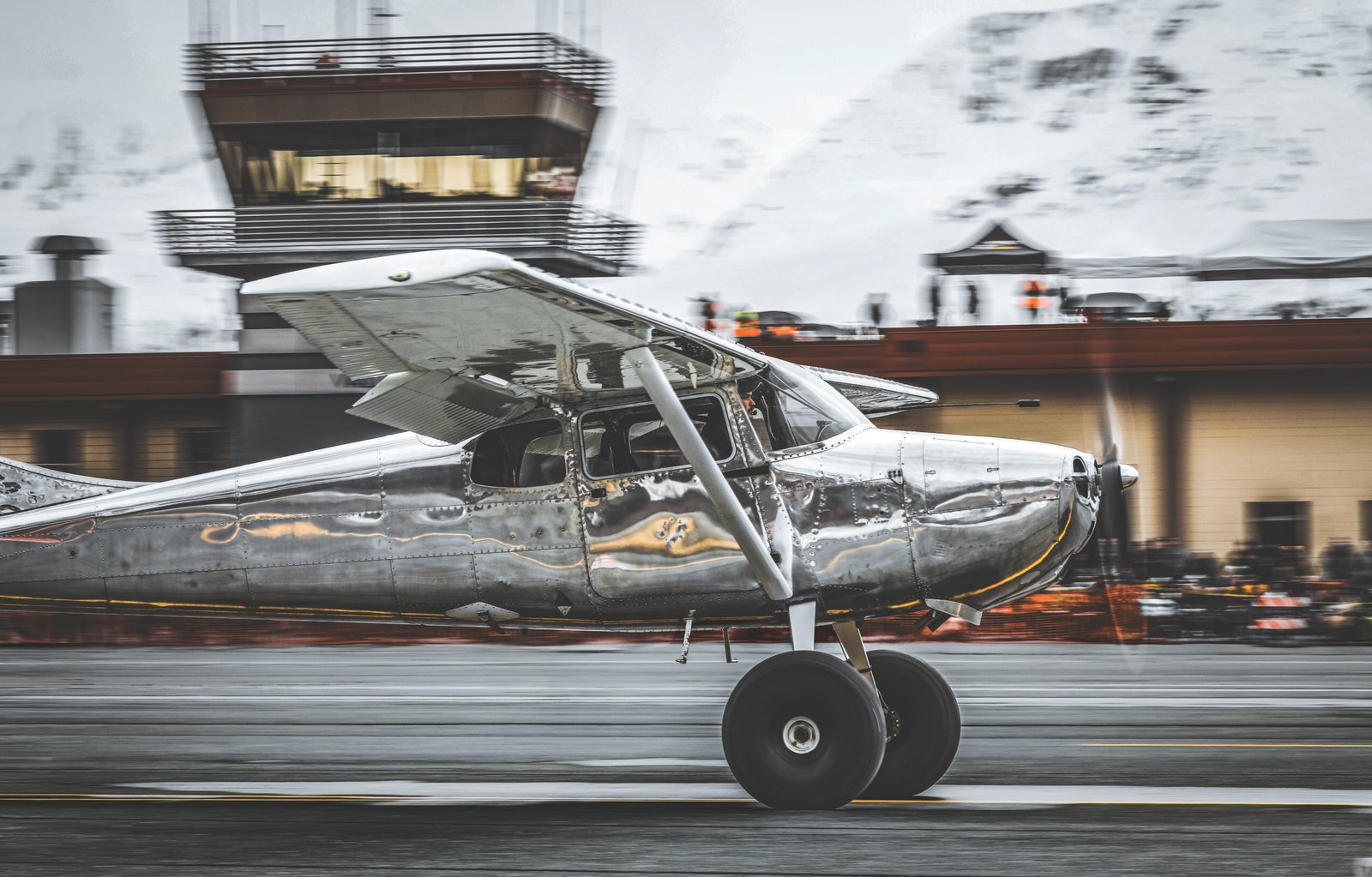
The airplane rolls to the line. The pilot glances at the line judge, and for a moment nothing happens. The crowd along the fence at Alaska’s Valdez Airport-Pioneer Field (PAVD) goes quiet. The brakes release, and the airplane is flying before your brain has finished processing that it moved at all.
Everyone knows this part. The annual Valdez Fly-In and Air Show did not invent STOL (short takeoff and landing) competition, but it became the proving ground that launched the modern movement. I recently talked with Rod Hanson, one of the Valdez STOL Competition’s founders, and Joe Prax, the Valdez Fly-In Association’s president, and the story they told was not about airplanes.
It was about a town.
Before Valdez, There Was Gulkana
Alaskans have been arguing about who can land shortest for as long as there have been two airplanes and a gravel bar to argue over.
Long before Valdez, pilots were holding landing contests on beaches near Kenai in the early 1970s. Stories from those early contests include names like Gerald Sibley and Jim Doyle and a trophy known as the “BS Eliminator.” It was pure Alaska—bring your airplane to the beach and let your flying do the talking.
By the 1980s, they were gathering at Gulkana for organized STOL competitions.
“Up in Gulkana, it was a group of Alaska pilots coming together, working pilots,” said Hanson. “[They were] people who flew for a living, guiding hunters. They’d compete with what they flew on a daily basis.”
The airplane you competed with on Saturday was the airplane hauling clients into sheep camp on Monday.
In Gulkana’s later years, Hanson remembers a STOL competitor arriving from the “outside” with a little Cub built to win.
“He came and kicked everyone’s butt,” he said.
Those outsiders were folks like Jerry Burr and his highly modified J-3 Cub and Denny Martel with his reported 18-foot takeoffs. Working airplanes still filled the field, but increasingly they shared the line with aircraft being pushed to see just how short they could go.
By then Gulkana had given Alaska more than a decade of competition, camaraderie, and a model worth preserving. Rising insurance costs made it difficult for a volunteer-run event to continue, and when it ended in the early 1990s, Alaska went nearly a decade without an organized STOL event.
But the pilots carried its format and culture with them until Valdez gave it a new home.
Roundtable at the College
Fast-forward to the early 2000s. Rod was the terminal manager for the Alyeska Pipeline in Valdez, and Randy Maag managed the Petro Star fuel terminal across town.
Both were private pilots invited to a monthly roundtable at the community college, where business leaders looked for ways to diversify an economy that swung between winter skiing and summer fishing, with a quiet stretch in between.
At one meeting, Hanson said he asked: “Has anyone ever thought about a fly-in?”
He described the Gulkana format—competition one day, an airshow for the community the next. Maag backed him. Valdez Mayor Bert Cottle asked why Gulkana had stopped. Hanson gave him the honest answer: The volunteers had given everything they had, and the insurance had outgrown what a handful of pilots could shoulder on their own.
What happened next is the reason Valdez exists, and it took about 90 seconds.
“[Mayor Cottle] said, ‘Well, don’t worry about insurance,’” Hanson said. “The city will pick that up.”
Cottle then turned to the college president and asked whether volunteers were ever a problem in Valdez. No, sir, she told him. Never a problem.
Come back with a plan, the mayor said. At the next meeting, Hanson and Maag proposed a nonprofit that could hold its own insurance and outlive any one volunteer. Cottle asked city attorney Bill Walker to help Hanson create the 501(c)(3) nonprofit. Walker would later become Alaska’s 11th governor from 2014 to 2018. So paperwork behind the world’s most famous STOL competition was drafted by the state’s future leader.
Hanson became the nonprofit’s first president and Maag its vice president. They recruited a small board and reached out to the pilots they knew. Bob Ylvisaker, a central part of the Gulkana event, showed them how it had been organized and run. The new group used it as the blueprint.
“Very little changed from what he did to what we did in Valdez,” Hanson said.
Town That Shows Up
Even the date came from homework. Organizers studied National Weather Service records and found that the last week of April into the first week of May offered a historically reliable break in the Alaskan coastal gloom.
They scheduled around it, moving later only when the Alaska Airmen’s Association shifted its Anchorage trade show.
The weather window did not always hold. Hanson remembers one year when inclement weather left only five airplanes on the field, and the town put on the event anyway, because the town was always the point.
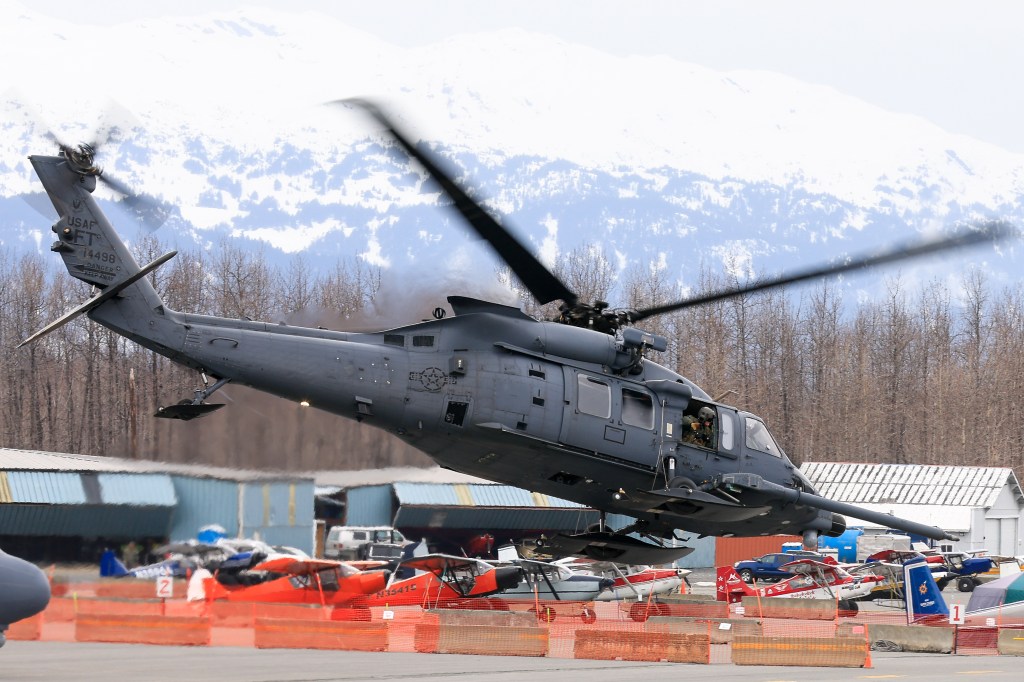
Volunteers made the event what it became. People like Jeff Glenny, an engineer who once worked with Hanson, took the lead on safety and still returns every year to run it. Marcus Paine, a former Army Ranger turned aerobatic instructor, built the airshow side of the weekend. Paine brought his Decathlon, and later a Stearman, to perform and instruct in. He was, in Hanson’s words, a “big, big part of it.”
Valdez offered the structure the event needed—a city willing to shoulder the early risk, a college ready to rally volunteers, and a community willing to give its time. When people ask why Valdez? Why pavement rather than a return to Gulkana? That’s when Hanson points to that support.
“You want to do that, we’ll support you a hundred percent,” he said. “But you have to get the volunteers to do it.”
From the Fence
The first Valdez years looked like Gulkana. The pilots who showed up flew for their living. Pilots like Chuck McMahan, Paul Claus, and the Ellis brothers competed in stock working machines, the same airplanes that hauled hunters and cargo all season.
As the event grew, the airplanes evolved with it. Alongside the stock aircraft came specialized competition machines, raising questions about how they would perform with a practical load. For several years, organizers answered with a loaded fly-off, with each airplane carrying 300 pounds of sandbags to represent moose meat. They eventually discontinued the fly-off when the added risk was no longer justified.
With city support and a nonprofit built to outlast any one season, Valdez could absorb growth. The event became where the modern STOL revolution played out before a live audience.
“What we’re proud of is that we did a little marketing, some outreach, and it became a boom for innovation and technology,” Hanson said. “Now it’s worldwide.”
Valdez gave pilots, builders, and designers a visible place to compare ideas. Vortex generators went from curiosity to common additions. Wings grew in span and chord; flaps grew deep and double-slotted; airframes shed weight. Tundra tires swelled into today’s giant bushwheels.
One of those builders was Wayne Mackey. His articulating leading-edge slats grew from designs used on earlier STOL aircraft, which Mackey studied, adapted, and improved for his STOLQuest (SQ) airplanes.
At Valdez, the result was unmistakable—an airplane moving at what hardly looked like flying speed yet still responding to its pilot. Mackey said he still enjoys standing at the fence and watching ideas he helped develop fly past on others’ airplanes. That is the quiet reward of a proving ground.
The field also became a portrait of general aviation. There were working pilots when May’s weather let them escape, builders showcasing their designs, and pilots arriving in a Taylorcraft or Champ knowing that they probably won’t get on the podium but wanting to challenge themselves.
Prax, who runs the event today, sees it from the other side of the fence.
“I love seeing a Wayne Mackey, a Paul Claus, or a Chuck McMahan wandering around,” Prax said. “Those are Alaska rock stars.”
People Who Say Yes
Two decades on, Prax is president of the Valdez Fly-In Association. Asked why the event works, he begins with what the place gives away for free—an 8-to-10-knot sea breeze, low density altitude, a state runway with no Alaska Airlines traffic to work around, and a setting that does half the marketing.
Then he delves into the part no one sees.
“Things keep growing, and many people don’t have an appreciation of how complicated it is,” Prax said.
There is an aerobatic box, airshow movement coordination, and a STOL competition, all at a state-owned airport. When Prax and another organizer attended an international airshow convention last year, they met the teams behind much-larger, professionally run events. It put into perspective what a handful of Valdez volunteers accomplish each May.
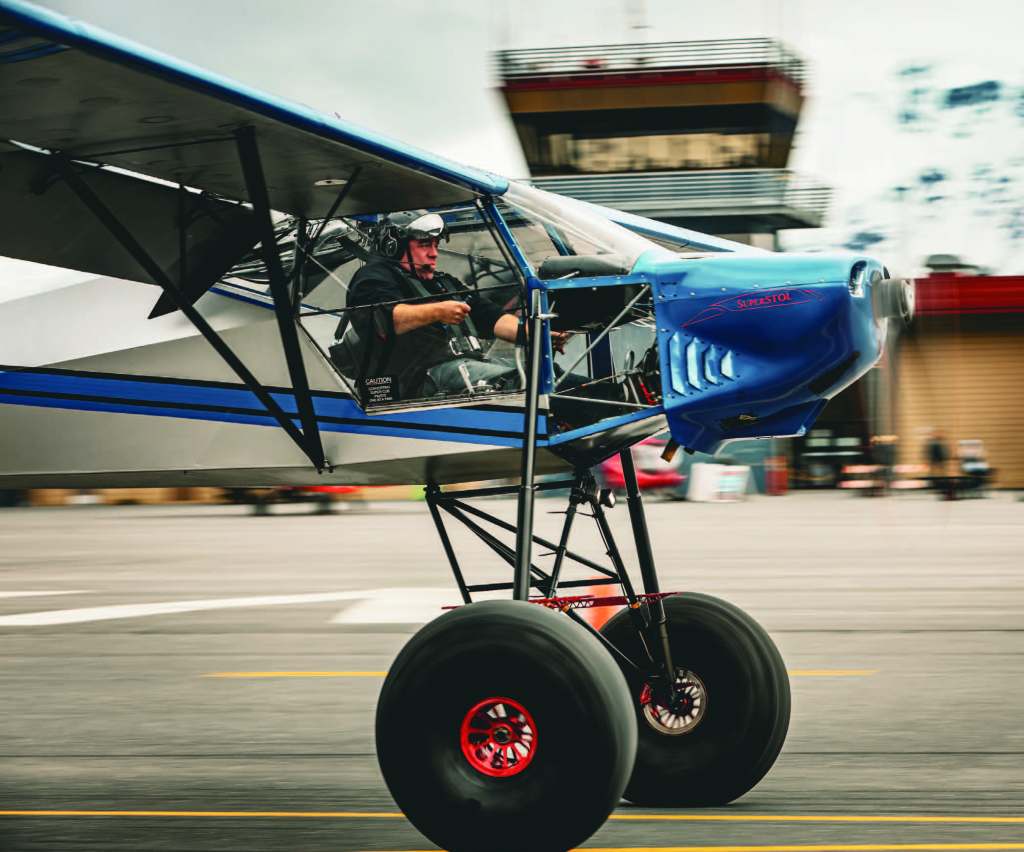
Prax’s explanation was simple: “It’s just what we’ve always done.”
Like Hanson, Prax credits the people around him.
Board member Mike Williams untangles bureaucracy and dreams up ideas like the balloon pop. Former Alaska Department of Transportation airports official Melissa Osborn meets nearly every suggestion with, “Well, I can do that.” Vice chair Abby Sears Austin has helped broaden the weekend for families.
Prax still has old photographs of children from the balsa-wood airplane contests who are pilots now. He also speaks fondly of the air traffic controllers. They keep a very busy weekend moving safely, and Valdez has become a coveted assignment.
“I’m just floored at the quality and the commitment those folks have,” he said of the event team. “It’s still a pretty small group. It’s about 10 core people that really make it go.”
City sponsorship covers what the gate cannot.
“I don’t think we’d be able to put on the aerobatics without the city sponsorship,” Prax said.
In return, the fly-in does exactly what that first roundtable hoped, filling Valdez before the tourist season begins.
Its reach still surprises Prax. Once, while broken down in Watson Lake, Yukon, he said he mentioned where he was from. The Canadian mechanic launched into an unprompted monologue about the Valdez STOL Competition and his own ultralight, never realizing he was talking to the man who runs it.
At the fly-in, Prax met a family of four from Nome, Alaska, attending for their 10th year. It was the highlight of their year, the mother told him.
“Honestly, I get a little teary when I hear how much it means to people and the effort they make to come,” he said.
People Are the Event
As Valdez moves forward, Prax wants every part of the weekend to keep getting better, but he talks most affectionately about the fly-out into Prince William Sound past Cordova, a version of the beach landing the founders ran in the earliest years.
“No other place can do that,” he said.
Two decades later, the man running the world’s most famous STOL competition mostly wants to go flying with his friends around Prince William Sound.
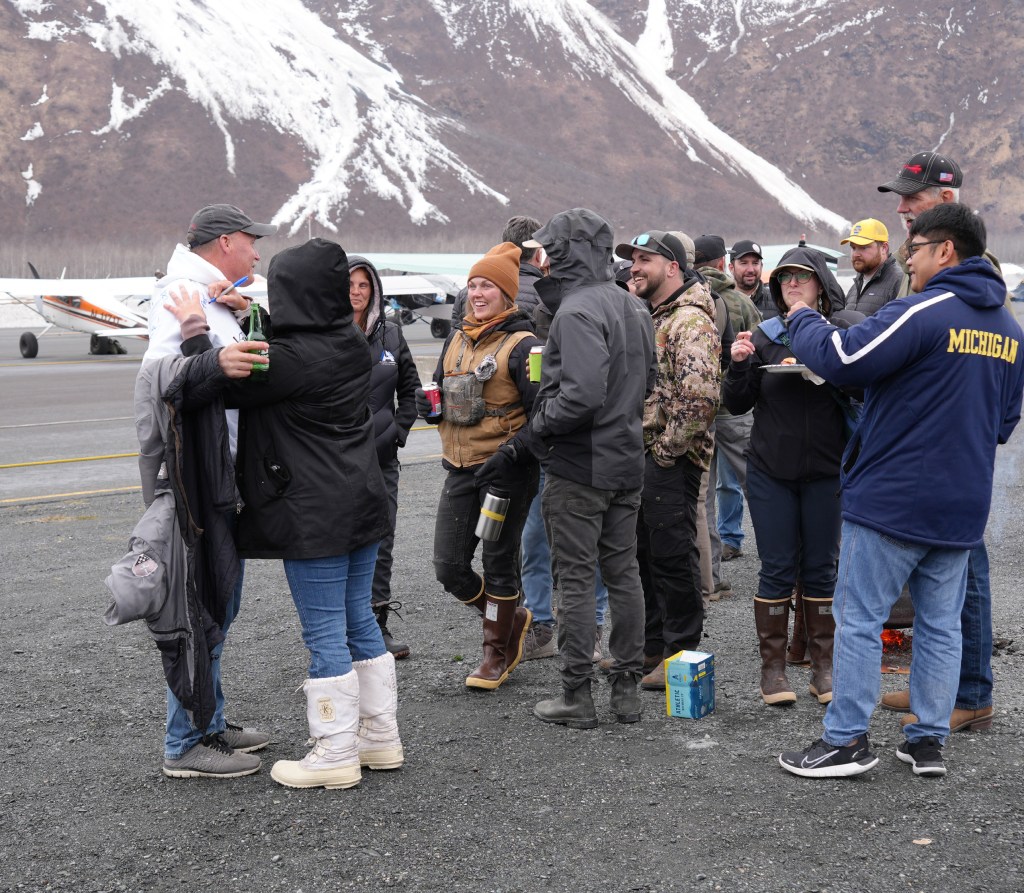
Year after year, fans return because the weekend feels as much like a reunion as a competition. The crowd knows the regulars, their airplanes, and what they might do before they ever reach the line.
The late Mike Olson was one of those. He flew Kazoom, supported the event for years, and helped keep it going through his contributions.
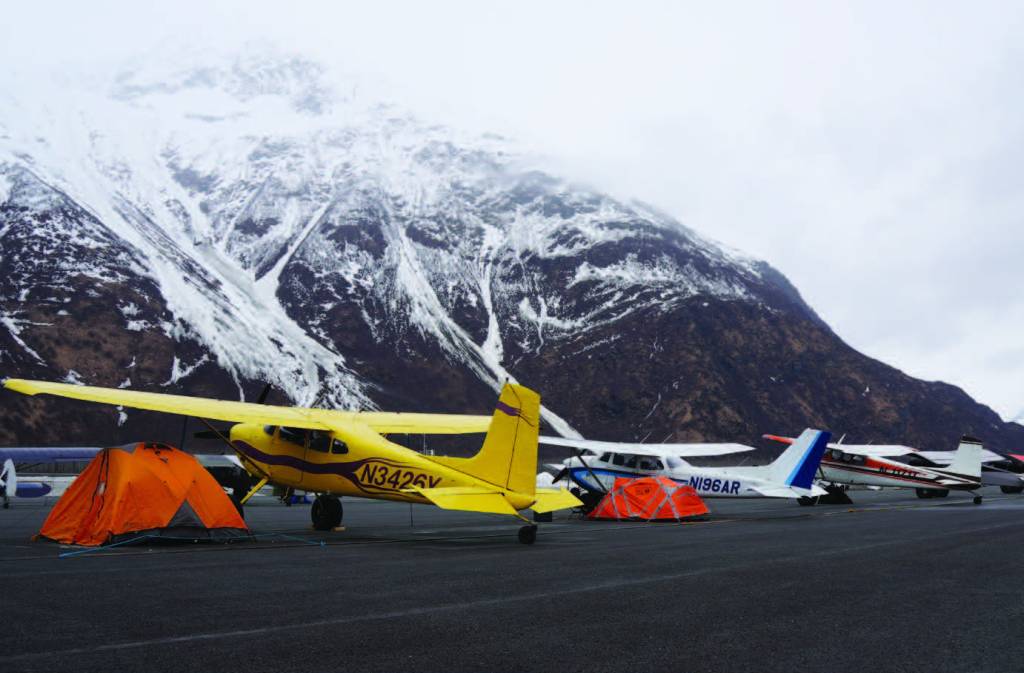
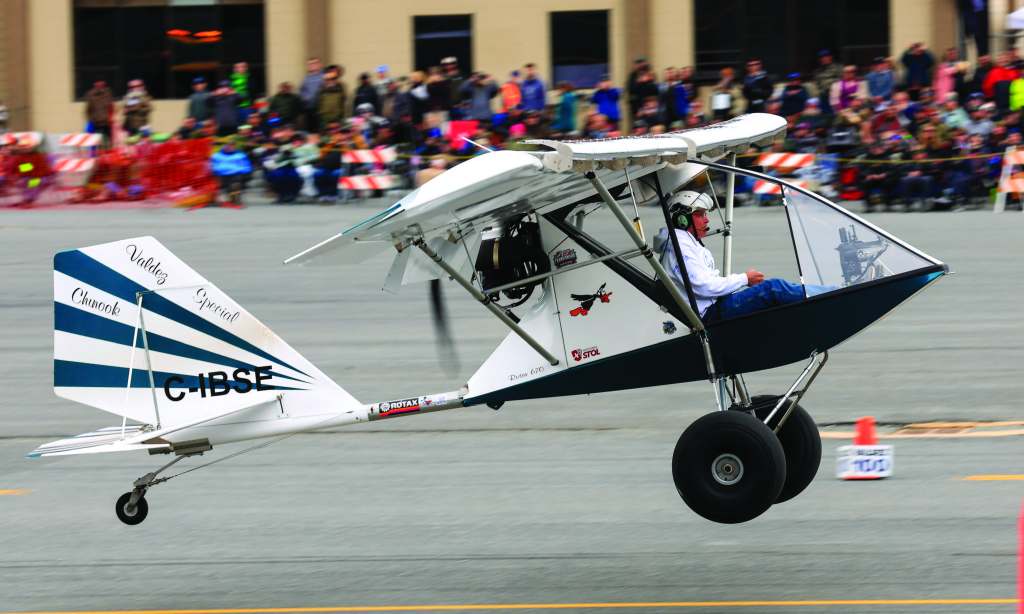
Dan Reynolds brings his own kind of energy in his Chinook Valdez Special. Reynolds’ takeoffs and landings leave people wondering how an airplane can move that slowly, but his impact reaches beyond the competition line. He makes time for new pilots and brings smiles to the crowd with his showmanship.
CubCrafters has stood behind Valdez from the beginning, offering the kind of long-term support an event like this needs. Frank Knapp became part of event history in 2017 when his takeoff and landing in Lil’ Cub totaled a record-setting 25 feet.
Then there are the Alaskan and Canadian pilots who return annually, familiar faces in familiar airplanes that spectators have come to recognize. There are the first-timers, like Jared Garetson, who arrive because they understand what it means simply to compete at Valdez. This year, Jared won in the Badlands Traveler with a combined score of 85 feet.
Every one of them becomes part of the event’s living history. Together, along with the community, they give Valdez its personality, continuity, and the feeling that brings people back each May.
The STOL world Valdez ignited has grown beyond anything that roundtable imagined. Strip away the world records and viral clips, and what remains is what was there at the beginning—a town that said yes, volunteers who were never a problem, and a handful of people who thought Alaska’s pilots deserved a place to gather.
The airplanes change. But the people are why it works.
The mains touch down past the line. The airplane stops in less than its own length. The town counts the feet.
This article first appeared in the September/October 2026 Issue of Plane + Pilot magazine.
