



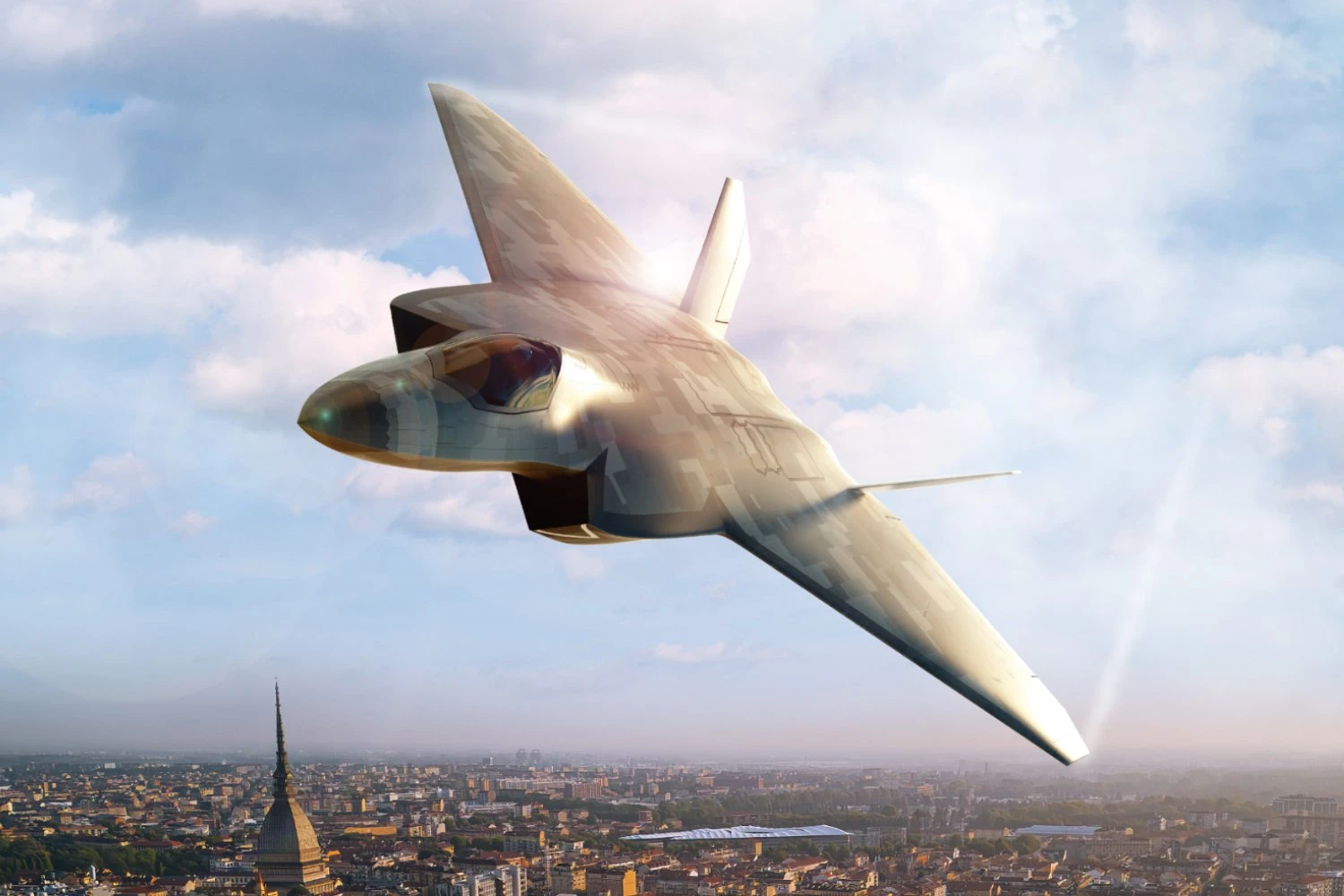
Italy has denied opposing Germany‘s entry into the Global Combat Air Programme (GCAP), the next-generation fighter project it is developing with the United Kingdom and Japan. The Italian government said on Saturday, November 14, that it supports Berlin’s participation and has proposed granting Germany observer status as an initial step towards full membership.
The statement followed a Financial Times report that Italian Defence Minister Guido Crosetto had resisted allowing Germany to join GCAP as an equal partner. Citing three people familiar with the discussions, the newspaper reported that Crosetto opposed the proposal during a videoconference with his British and Japanese counterparts earlier in the week.
According to the Financial Times, Crosetto instead suggested giving Germany the same observer status already held by Canada. Such an arrangement would allow Berlin to follow the programme without participating in the aircraft’s design or development.
The Italian Defence Ministry disputed the newspaper’s interpretation, describing the suggestion that Rome wanted to block Germany as misleading. It confirmed the observer-status proposal but said the arrangement was intended to accelerate information-sharing and prepare Germany for eventual full membership.
Rome also stressed that any expansion must preserve the programme’s development schedule. GCAP aims to introduce a sixth-generation combat aircraft in 2035, replacing the Eurofighter Typhoon in British and Italian service and the Mitsubishi F-2 in Japan.
Industrial interests complicate Germany’s entry
The Financial Times reported that Italy and Japan were concerned about the consequences of adding another major industrial partner to a programme whose responsibilities have already been divided among the three founding nations.
Germany could contribute substantial funding and increase the number of aircraft eventually ordered. However, bringing German manufacturers into the programme could require existing partners to surrender some development work.
Airbus would be a particularly important participant. The European aerospace group was responsible for Germany’s involvement in the Future Combat Air System (FCAS), the rival fighter programme previously pursued with France and Spain.
Follow Air Data News: WhatsApp | Instagram | LinkedIn | Twitter | Facebook
According to the newspaper, officials from Italy and Japan feared that accommodating Airbus and other German companies could reduce work allocated to their domestic aerospace industries. They also expressed concern that renegotiating the industrial structure could delay the aircraft’s development.
The German response was equally significant. An official quoted by the Financial Times described the proposed observer arrangement as unacceptable.
Germany wants a role proportionate to its financial contribution, including substantial participation in the aircraft’s development and production. Defence Minister Boris Pistorius has said any decision must take account of industrial work allocation, costs and the programme’s timetable.
The United Kingdom has expressed openness to discussions with Germany, although a British official told the newspaper that London was not attempting to force Berlin’s admission. The priority remains delivering the aircraft on schedule.

Germany searches for an alternative to FCAS
Germany’s interest in GCAP follows the collapse of its fighter development partnership with France in June 2026.
The aircraft component of FCAS, also known as the Future Combat Air System, had become paralysed by disagreements over industrial leadership and the distribution of development responsibilities, particularly between Dassault Aviation and Airbus.
The programme was intended to produce a new combat aircraft and associated systems for France, Germany and Spain. Its breakdown left Berlin searching for another way to develop a successor to its current combat aircraft.
GCAP is an obvious candidate because it already has an established development structure and a target entry-into-service date. Its principal industrial participants are Britain’s BAE Systems, Italy’s Leonardo and Japan’s Mitsubishi Heavy Industries, through the Japanese industrial consortium JAIEC.
Germany is also examining other possibilities, including cooperation with Sweden’s Saab. Spain, which was involved in FCAS, remains relevant to Berlin’s search for a new industrial partnership.
Pistorius has indicated that Germany expects to decide on its next steps by the end of March 2027. That timetable concerns Berlin’s choice of direction rather than a confirmed date for joining GCAP.
Observer status offers a possible first step
Canada became GCAP’s first observer in July 2026, gaining access to information about the programme without acquiring decision-making authority over the aircraft’s development.
Italy argues that a similar arrangement would allow Germany to begin participating immediately, with the possibility of becoming a full partner once the programme is sufficiently established.
The proposal also reflects a position Crosetto had expressed publicly months before the current disagreement. In June, the Italian minister said Germany and other countries would be welcome to participate because additional partners could help distribute development costs.
Leonardo executives have likewise described Germany as a potentially valuable industrial partner, citing the country’s aerospace expertise.
