


Borderlands Mexico is a weekly rundown of developments in the world of United States-Mexico cross-border trucking and trade. This week in Borderlands Mexico: Texas cross-border traffic rises by 400 trucks through Saturday pilot; Truck freight between US and Mexico reaches $75.4B in September; and Teleflex invests $5M in new medical device manufacturing facility in Mexico.
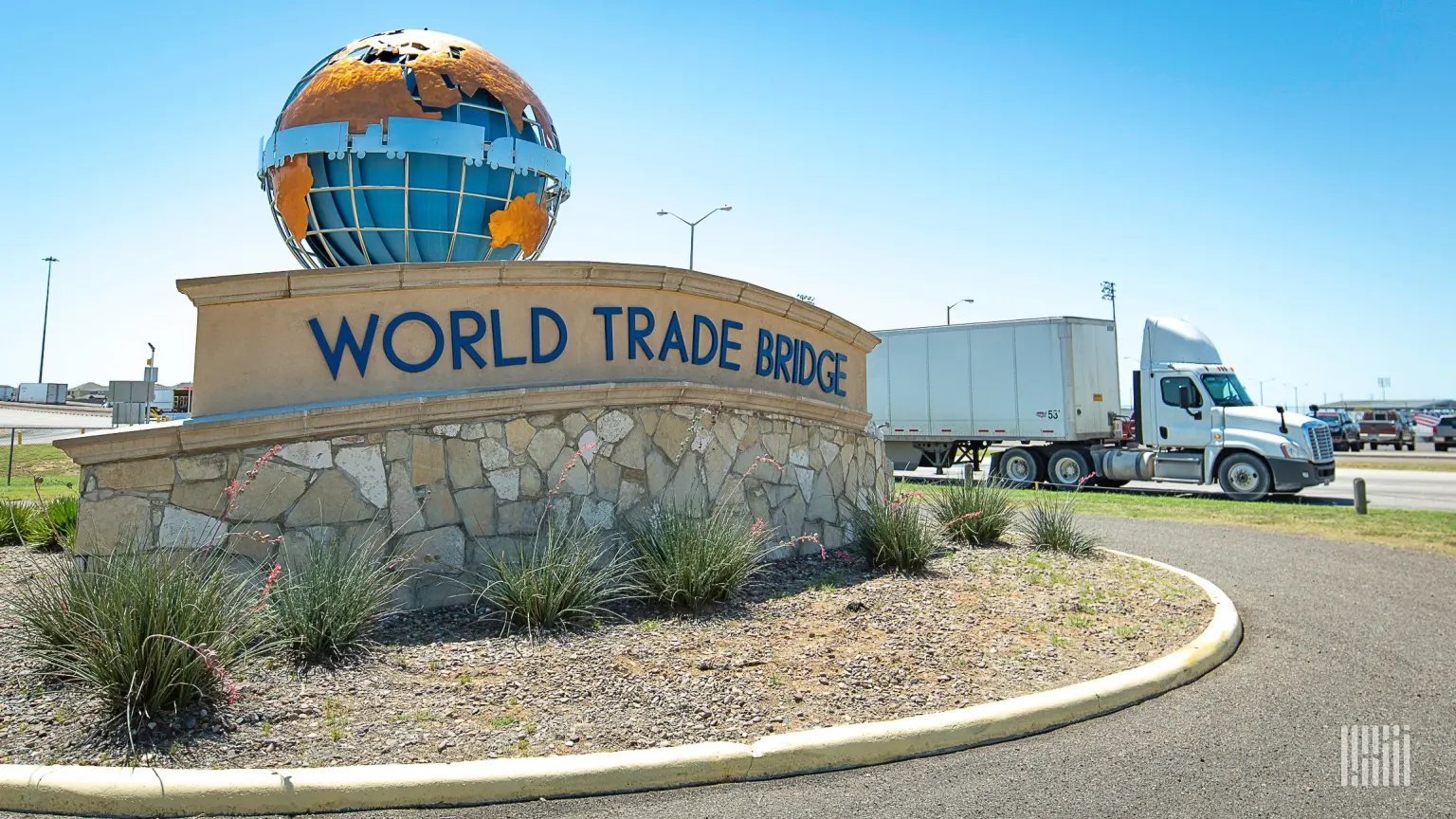
U.S. Customs and Border Protection expects to extend a pilot program expanding Saturday commercial truck operations at the World Trade Bridge in Laredo, Texas, for another 90 days as officials evaluate changes in cross-border freight traffic.
The pilot, which began Sept. 5, extends Saturday commercial processing by three hours, with operations running from 8 a.m. to 7 p.m. The expansion was requested by Mexico’s National Customs Agency (ANAM) and trade stakeholders seeking to improve import and export truck flows.
Armando Taboada Jr., assistant director of field operations for CBP’s Laredo Field Office, said the expanded schedule has been accompanied by increased Saturday truck traffic and declining Sunday volumes.
Taboada said Saturday commercial truck traffic has increased by approximately 400 to 500 trucks, while Sunday crossings are averaging about 300 to 400 fewer trucks.
“It appears that some importers/carriers are shifting some truck crossings from Sundays to Saturdays,” Taboada told FreightWaves.
The shift suggests some cross-border trucking companies and importers are taking advantage of the expanded Saturday operating schedule rather than increasing their overall weekend freight movements.
The initial 90-day pilot is scheduled to conclude in early December, but CBP expects the program to continue for another three months to gather additional data on commercial cargo processing.
“It will depend on the final pilot numbers and input from the City of Laredo, Trade Stakeholders, and CBP,” Taboada said. “The pilot is expected to be extended another 90 days to get a proper gauge of commercial cargo truck processing results.”
Despite the increase in Saturday crossings, CBP has not observed significant congestion or processing delays at the World Trade Bridge.
“For the most part, traffic is steady and no major wait times or processing delays are being experienced,” Taboada said.
He credited improvements in the bridge’s commercial vehicle inspection infrastructure with helping CBP accommodate truck traffic.
Through the City of Laredo’s Donations Acceptance Program contributions, the World Trade Bridge expanded from seven primary inspection lanes to 19, including 15 regular lanes and four Free and Secure Trade (FAST)/Customs Trade Partnership Against Terrorism (CTPAT) lanes.
Taboada said the additional inspection capacity has improved commercial truck processing during weekdays and weekends.
However, weekend commercial traffic remains substantially lower than weekday volumes.
CBP also released preliminary commercial truck and rail crossing statistics covering Aug. 23 through Nov. 7 across the eight ports of entry administered by its Laredo Field Office.
The figures include commercial truck movements at the World Trade Bridge, Colombia-Solidarity Bridge, Eagle Pass, Brownsville, Pharr, Hidalgo and other South Texas crossings.
The report also includes rail activity at Laredo, Eagle Pass and Brownsville, offering a broader view of commercial freight movements between Mexico and the United States.
The World Trade Bridge continues to account for a substantial share of commercial truck traffic in the Laredo Field Office, underscoring the importance of the crossing to U.S.-Mexico trade.
Truck freight between US and Mexico reaches $75.4B in September
The value of goods transported by trucks between the U.S. and Mexico reached $75.4 billion in September, accounting for approximately 78% of the $96.3 billion in total trade between the two countries, according to the Bureau of Transportation Statistics (BTS).
Total U.S.-Mexico freight trade increased 34.2% compared with September 2025, according to a BTS report released Friday.
Across both the U.S.-Mexico and U.S.-Canada borders, trucks transported $109.7 billion in freight during September, a 27.6% increase compared with the same month last year.
Combined North American transborder freight totaled $161.1 billion, up 23.4% year over year. U.S.-Canada freight accounted for $64.8 billion, a 10.1% increase.
Rail shipments between the United States and Mexico totaled $8.3 billion in September, followed by vessel freight at $6.5 billion, air cargo at $2.8 billion and pipeline shipments at $900 million.
Laredo, Texas, remained the leading U.S. truck freight gateway, with $38.1 billion in total cross-border freight across transportation modes during September, according to BTS. El Paso, Texas, and Otay Mesa, California, were also among the leading truck crossings for U.S.-Mexico trade.
The figures underscore trucking’s dominant role in North American trade, particularly along the U.S.-Mexico border, where manufacturers and shippers rely heavily on commercial vehicles to move goods between the two countries.
Teleflex invests $5M in new medical device manufacturing facility in Mexico
U.S.-based medical technology manufacturer Teleflex has inaugurated a $5 million machining facility in Chihuahua, Mexico, expanding its manufacturing capabilities for medical devices and specialized components.
The new 8,073-square-foot facility will manufacture high-precision tooling and components used in medical device production, according to a report by Mexico Industry.
The investment strengthens Teleflex’s existing manufacturing operations in Chihuahua, where the company operates four production plants employing approximately 2,000 workers.
The new machining workshop is designed to expand the company’s ability to produce specialized tools and precision components required for medical equipment manufacturing.
Headquartered in Wayne, Pennsylvania, Teleflex develops and manufactures medical technologies used in vascular access, interventional cardiology, anesthesia, surgery, urology and emergency medicine. The company serves U.S. healthcare providers and hospitals.
Teleflex operates in 36 countries and serves health care providers in more than 150 markets.
Why it matters: U.S. Customs and Border Protection officials say extended weekend hours could provide more scheduling flexibility for cross-border carriers and shippers without significantly increasing processing delays.
