


This story is from an installment of The Oeno Files, our weekly insider newsletter to the world of fine wine. Sign up here.
“Almost no one begins the conversation with, ‘Let’s drink a wine from Provence!’ when I start asking what guests like about wine,” says Tracy Latimer, lead sommelier at Fleurette, a Mediterranean-French restaurant in San Diego. “If the somm isn’t recommending wines from off-the-beaten-path regions, then guests are not purchasing them.” The subject at hand is red and white wine from Provence, a surprisingly diverse wine region despite its popular image as home to some of the world’s best rosé and nothing else. While you can’t make rosé without red grapes (and in some cases, a small infusion of white), sometimes the realities and economics of the market make it almost impossible for wineries to make anything but exactly what’s being produced next door.
Through the ongoing rosé boom, a handful of wineries in several of Provence’s AOCs have maintained a commitment to high-quality red and white wines prized by collectors and sommeliers. Out of the 600-plus selections on her list, Latimer serves 30 that are not rosé from Provençal AOCs. Among those is Domaine Hauvette Cornaline Rouge, an Alpilles IGP Grenache blend from the area between Avignon and Arles. “The most important thing about the Cornaline is its deliciousness factor,” she says. “Take all of the pretty parts of southern Rhone wines—the garrigue, the flowers, and the deep ripe fruit—and add a touch of baked clay and the dustiness of a gravel drive in summer.” Calling it “focused and precise like a violin solo,” she adds, “This is a wine that feels substantial enough to satisfy drinkers that crave big, bold reds but is lithe and lifted to pair with our coastal cuisine.”
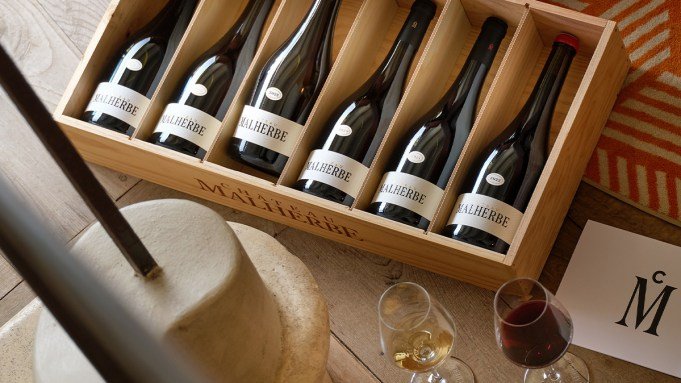
Asked if it would be easier to just give up and start producing rosé, Adélie Ferrari, business development manager of Château Malherbe in Côtes de Provence replies, “Economically, it would make sense. Rosé sells quickly and within a season. Our whites and reds need months in barrel, time in bottle, and wine lovers willing to be curious. For a family estate, that is a real commitment.” While rosé accounts for 90 percent of production in AOC Côtes de Provence, it makes up only 20 percent of the wines made at Château Malherbe, with the balance divided evenly between whites made with Rolle (the local name for Vermentino), Sémillon, and Ugni Blanc and reds made from Grenache, Cinsault, Mourvèdre, and Syrah. “When one style is that successful, it ends up defining the whole region,” Ferrari says. “But Provence has always made white and red wines, especially along the coast, where these varieties have been grown for generations. They never disappeared. They were just overshadowed.”
A member of Malherbe’s fifth generation, Ferrari is most proud of their top cuvees, Château Malherbe Louis Ferrari, a white named for her grandfather, and Château Malherbe Madame Ferrari, a red named in honor of her grandmother Mireille, who shifted the family business from grape-growing to winemaking. A blend of Rolle and Sémillon, the Louis Ferrari is created from one of the château’s finest plots, where the two varieties are planted side by side. Madame Ferrari comes from old vines, including Grenache planted around 1940 and Mourvèdre more than 60 years old. Older vines give small yields and a natural balance, so the concentration comes from the vineyard, not from extraction. Rory Pugh, senior wine and beverage director for Jean-Georges Management, which operates restaurants around the world including Jean-Georges in New York City, has both wines on his list; the lineup includes around a dozen red and white wines from Provence, a region he says carries weight with his guests. “While they associate it with rosé, they are thrilled to explore new styles.”
A stunning setting for a vineyard
Château Malherbe
“Making only rosé would be boring and both white and red have so much to say,” says Daniel Ravier, director and winemaker at Domaine Tempier in Bandol. While almost half of the domain’s production is rosé and a small amount is white, the balance of its production is divided among three high-end reds, La Migoua, La Tourtine, and Lulu & Lucien, named for the domain’s late proprietors, Lulu and Lucien Peyraud, whose sons now own the estate. Made with Mourvèdre, Grenache, Cinsault, Carignan, and Syrah from organically and biodynamically farmed vineyards, they are among the region’s most coveted bottles. Other producers to keep an eye out for are Château Simone from AOC Palette, Château Pradeaux in Bandol, Domaine de Trevallon in IGP Alpilles, and its neighbor Domaine Fontchêne, where Rene Milan is quickly becoming one of the most sought-after winemakers in the south of France.
At upscale Middle Eastern restaurant Bavel in Los Angeles, wine director Claudia Rosellini serves an interesting assortment of Provençal whites and reds, including Domaine Hauvette Clairette, a white made from an ancient, historic variety. An admirer of winemaker Dominique Hauvette’s biodynamic farming and deep commitment to the health of her land, Rosellini says, “Her wines are rooted in the wild garrigue and limestone landscape of the Alpilles, which feels closely connected to our cooking, with its aromatic seeds, spices, and fresh green herbs. I love the idea that the wine and food speak the same Mediterranean language.” Rosellini says that with all the emphasis on rosé from Provence, guests are often surprised by a serious white from the region: “The discovery usually sparks curiosity about what else Provence can offer.”
Perhaps the most important point is that the wines are not just interesting; they are excellent. No one needs to be convinced that red and white wines from the Rhône Valley are among the best in the world, but move south a little bit and the conversation shifts. Although Ferrari and her family enjoy rosé, when it comes to wine from Provence, she says, “It would feel strange to devote our lives to wines we don’t open ourselves. Most evenings, we drink white or red.” It’s time for more people do the same.
Do you want access to rare and outstanding reds from Napa Valley? Join the Robb Report 672 Wine Club today.
Authors

Mike DeSimone and Jeff Jenssen

