


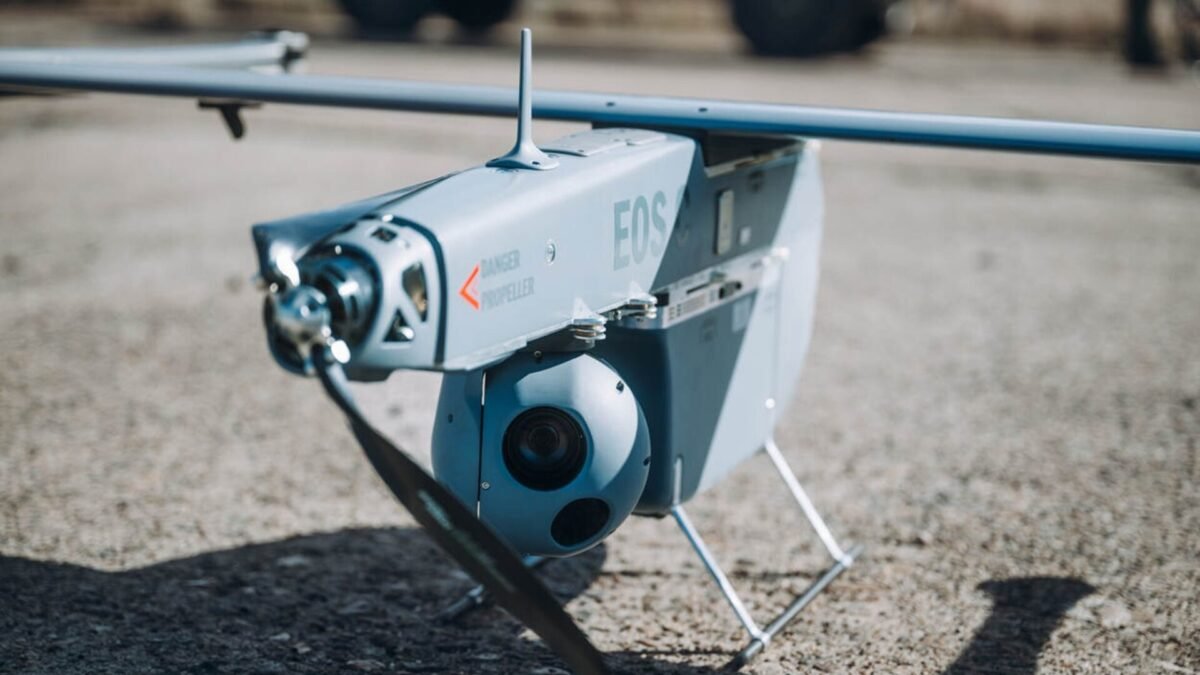
Estonian authorities have detained eight suspects following an attempted arson attack on drone manufacturer Threod Systems, which the country’s Internal Security Service (KAPO) attributes to Russia’s military intelligence agency, the GRU.
The attack took place at 03:06 local time on November 14, 2026, at the company’s facility in Viimsi, near Tallinn, the Estonian Prosecutor’s Office said in a statement published on November 15, 2026. The attackers intended to cause an explosion and set the building on fire.
Threod Systems suffered no significant damage, thanks to “the company’s preparedness and the quick response of a security guard”, according to prosecutors.
Founded in 2012, Threod Systems develops and manufactures unmanned aircraft systems for military surveillance, reconnaissance, and target acquisition. Its products include the Eos C and Eos D vertical takeoff and landing (VTOL) drones, electro-optical sensor systems, and launchers for one-way attack drones. According to the company, it has delivered its equipment to 27 countries, including 14 NATO members and Ukraine.
The Estonian government said separately that no one was injured and that the company’s production and deliveries were unaffected.
Estonian intelligence attributes attack to Russia’s GRU
KAPO and the Police and Border Guard Board detained eight suspects, five of whom prosecutors have asked a court to remand in custody.
Prosecutor General Astrid Asi said the case is being investigated under a provision of Estonia’s Penal Code covering acts against national security carried out on behalf of a foreign intelligence or security service. The statement did not identify the suspects.
KAPO Director General Margo Palloson said intelligence gathered by the service indicated that the attack had been ordered by the GRU. He accused Russian intelligence services of targeting defense companies in Estonia and elsewhere in Europe to spread fear, disrupt production and technological development, and obstruct deliveries to Ukraine.
Latvian security service seizes explosives in coordinated raids
The Estonian government identified the suspects as residents of Latvia. Latvia’s State Security Service (VDD) said they were eight Latvian nationals detained on Estonian territory.
VDD said it had passed intelligence about possible sabotage plans to KAPO on November 13 and 14, 2026, allowing the two services to coordinate their response.
On November 14, 2026, Latvian authorities searched nine locations linked to the suspects, seizing explosive devices, pyrotechnics, ammunition, and numerous phones and data storage devices.
According to VDD, Russian intelligence services have increasingly recruited foreign nationals to carry out sabotage across Europe in 2026, a tactic the agency believes is intended to obscure Moscow’s involvement.
Estonia plans to close border with Russia
In response to the attack, the Estonian government plans to close its road border crossings with Russia from December 1, 2026, the Ministry of Foreign Affairs announced.
Foreign Minister Margus Tsahkna said he would push for tougher sanctions and a stricter visa policy at the EU foreign ministers’ meeting in Brussels on November 16, 2026. Prime Minister Kristen Michal has also convened the government’s security cabinet for November 20, 2026, to discuss the threat of further sabotage.
The attempted attack follows an arson incident targeting Estonian unmanned ground vehicle manufacturer Milrem Robotics in August 2026. KAPO attributed that attack to Russian intelligence services the following month.
Michal said Estonian defense companies had received security recommendations both before and after the Milrem attack, and that Threod Systems had followed them.
Similar incidents have been reported elsewhere in Europe. On September 1, 2026, Germany blamed Russia for a failed explosive drone attack targeting an Antonov An-124 at Leipzig/Halle Airport (LEJ). Lithuania also suspects Russian sabotage in an attempted arson attack on a Starlink ground station in Vilnius on October 18, 2026.
