


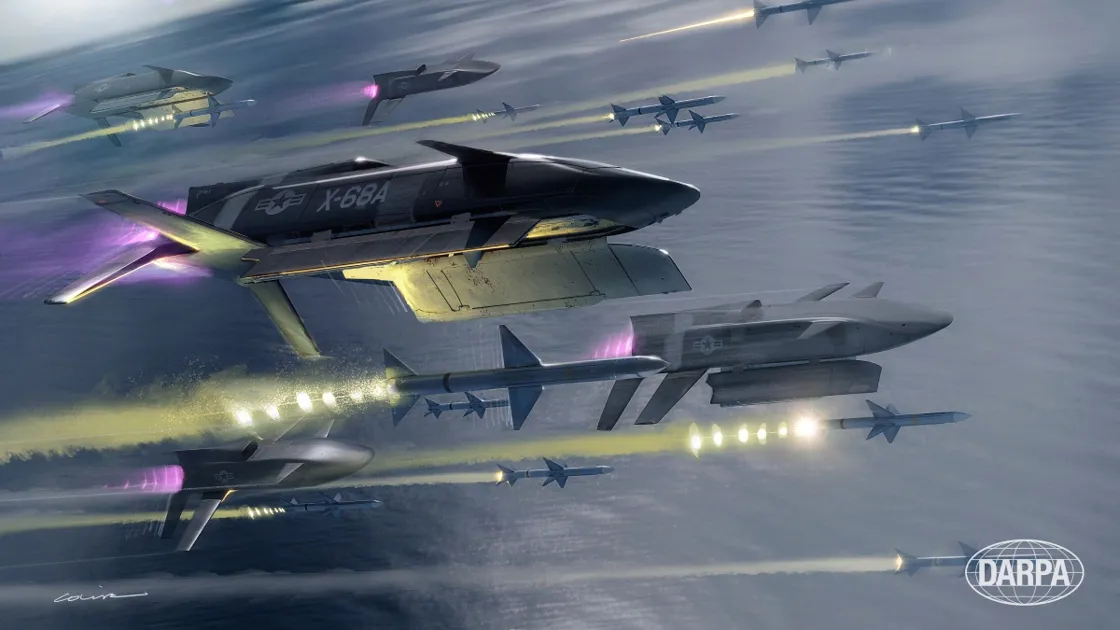
“LongShot burns down significant technical risk and presents a viable path for the military services to increase air combat reach and effectiveness from uninhabited, air-launched platforms,” said Col John Casey, LongShot program manager at DARPA.
“With the help of our partners, we’ve completed critical milestones necessary for the integrated flight test campaign, which will validate vehicle performance and lay the foundation for efficient follow-on development.”
General Atomics Aeronautical Systems is the industry lead responsible for designing, building and demonstrating the aircraft. According to DARPA, the X-68A is being designed to be ‘host-platform agnostic’, with different variants of the vehicle capable of being launched from both fighters and bombers, or even deployed as a palletised munition from transport aircraft.
With ground and integration testing now underway, the LongShot programme is targeting a flight test campaign to begin at the end of this year. DARPA said these tests will aim to prove the safe and effective deployment of the X-68A from an F-15 fighter jet, confirming the flight worthiness of the vehicle as well as demonstrating its ability to ‘safely eject a captive sub-munition’.
Alongside DARPA and General Atomics, project contributors include various branches of the US Air Force, the Air Force Research Laboratory, the Naval Air Warfare Center Aircraft Division, the US Army Engineer Research and Development Center, and NASA.
