


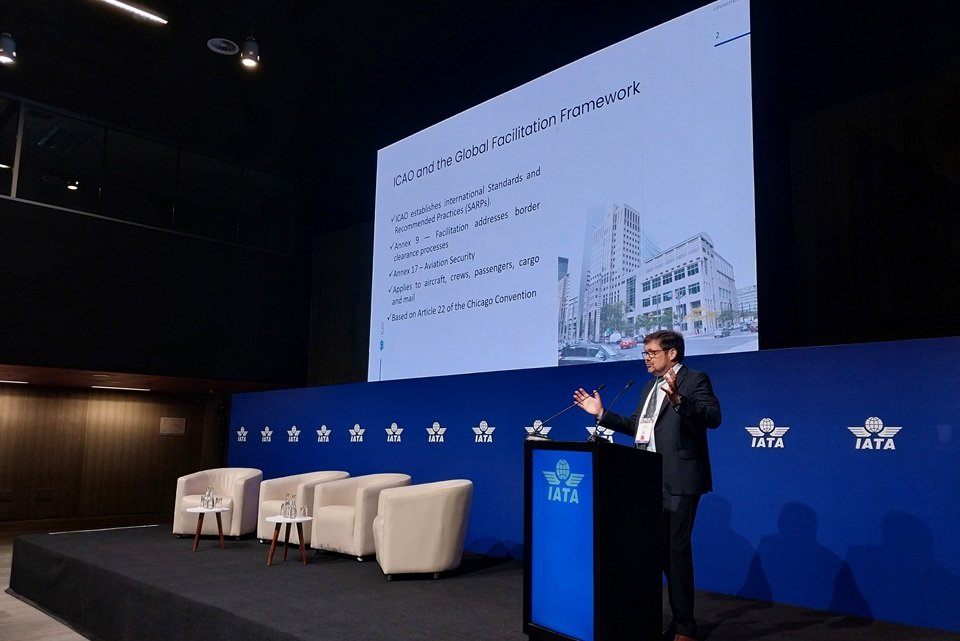
Air cargo governance often develops in parallel to overall aviation governance and planning and should be more involved in the development of policy frameworks, according to one speaker at the IATA World Cargo Symposium in Peru.
Leonardo Boszczowski, ICAO regional officer, aviation security and facilitation, said it was not uncommon for aeronautical policy frameworks to overlook air cargo development.
Meanwhile, airport master planning and infrastructure development can also lack the involvement of air cargo stakeholders, as can airport operational planning.
For example, he said, at many airports it is common for the aviation security manager to focus only on the passenger side of the operation, for instance, access control, baggage security, and not have the same knowledge of the cargo side of the airport.
“When the national inspector wants to see the air cargo process, then it is very common for the aviation security manager to call the cargo guy because they understand the air cargo side is not part of the airport,” Boszczowski said.
Service-level targets were another area identified by Boszczowski where passenger and cargo were operating in parallel rather than in coordination.
He pointed out that it was common for the passenger side of the airport to measure performance in terms of queue time for immigration, the check-in process and other areas, whereas “we don’t see discussions about this kind of level of service related to air cargo terminals”, he said.
“Cargo is often treated as a niche rather than a core component of the aviation sector and it could limit the system performance of air cargo,” Boszczowski said.
He encouraged air cargo stakeholders to become more involved in the national air transport and airport facilitation committees that serve as platforms for interagency coordination and identify and solve bottlenecks and operational gaps.
“It is important to position cargo within the operational governance and that governance must align with the operational performance and be fully integrated with the airport system,” he said.
“Stakeholders working together can deliver coordinated and integrated solutions, for example, setting measurables and outcomes, to improve the competitiveness of a state.”
