


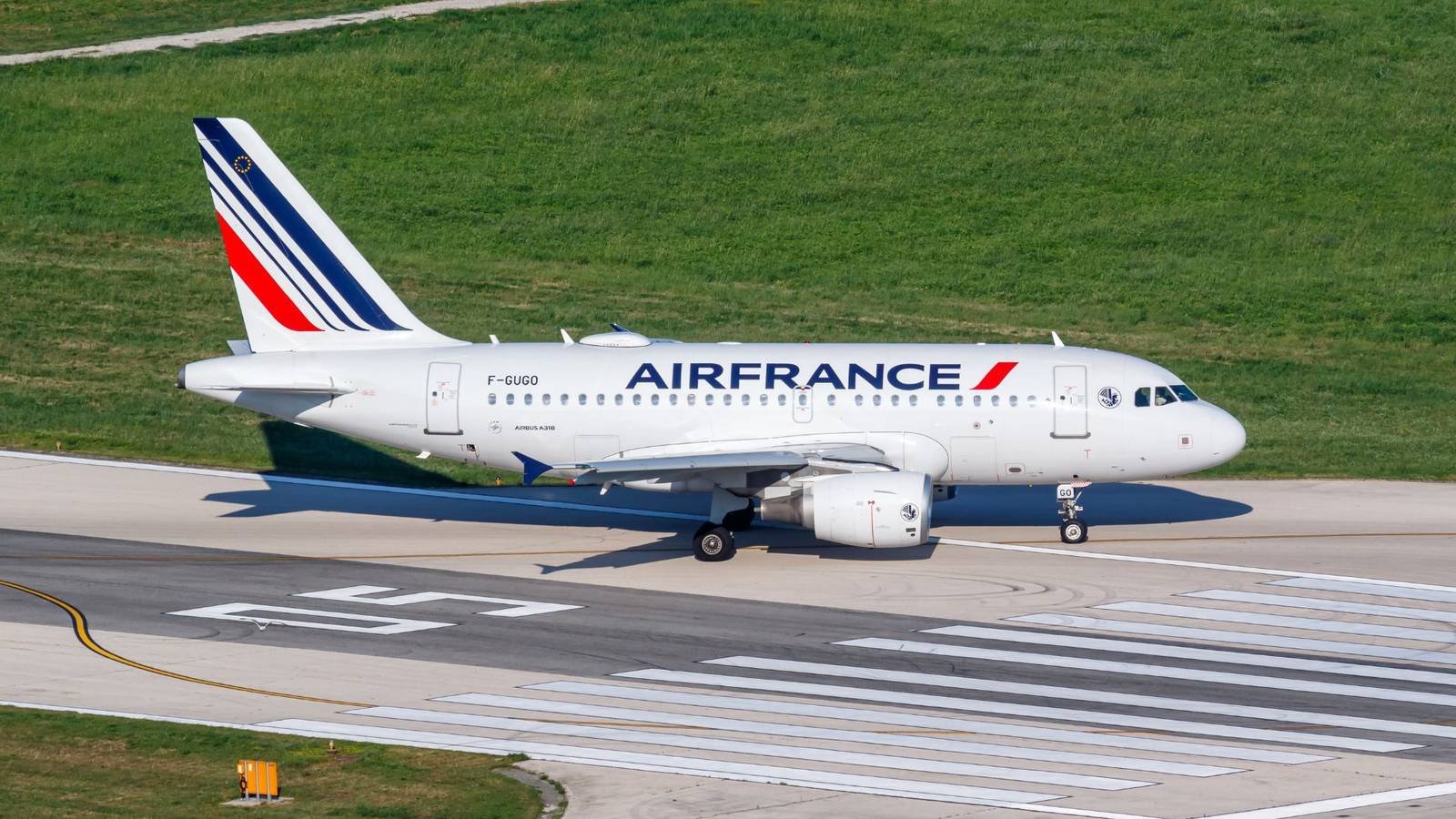
Air France has completed the sale of one of its few remaining Airbus A318 aircraft, further reducing the already tiny global fleet of the smallest A320-family variant. The aircraft was transferred in February 2026 as part of a multi-aircraft agreement with FTAI Aviation. The transaction marks another step in Air France’s long-term fleet simplification strategy, underscoring the declining relevance of very small mainline jets. With few operators remaining, the Airbus A318 is now approaching the end of its commercial lifecycle.
Often nicknamed the “Baby Bus,” the Airbus A318 was designed to offer A320-family commonality in a smaller package, but market conditions ultimately worked against it. Rising fuel prices, shifting passenger demand, and improved efficiency in newer aircraft types narrowed its economic appeal.
Air France’s Step Away From the Airbus A318

The Airbus A318 sold by Air France was part of a broader package of seven Airbus narrowbodies transferred to FTAI Aviation. The A318, powered by CFM56 engines, is now more valuable for its components and engine support potential than for continued passenger operations. Only around 80 A318s were ever produced globally, making it the rarest member of the A320 family by a wide margin. Fewer than one-quarter of those aircraft are believed to remain airworthy today.
Air France’s decision reflects a broader industry shift toward fewer aircraft subtypes and higher average seat counts. Compared to an A320, the A318 typically carries 25–30% fewer passengers while burning only marginally less fuel, resulting in weaker per-seat economics. Newer-generation aircraft such as the A220 and Embraer E-Jet Family offer lower fuel burn per seat and greater operational flexibility. For lessors like FTAI Aviation, end-of-life aircraft now represent a strategic asset rather than a flying asset. Stacy Kuperus, Chief Operating Officer at FTAI Aviation, said:
“We are pleased to partner with Air France and secure additional engine and module feedstock for our Aerospace Products and Power platforms. As demand for our maintenance, repair and exchange solutions continues to grow, expanding access to CFM56 engines is critical. We value our long-standing partnership and look forward to supporting Air France’s evolving fleet strategy in the future.”
Why The ‘Baby Bus’ Struggled To Find A Long-Term Market

When the A318 entered service in the early 2000s, it was positioned to replace older short-haul aircraft while maintaining fleet commonality. However, the rapid advancement of regional jets and the emergence of more efficient narrowbodies squeezed the aircraft from both ends of the market. Airlines increasingly found that slightly larger aircraft produced significantly better margins. This left the A318 confined to niche missions rather than widespread adoption.
In contrast, the A319 recorded more than 1,400 deliveries, while the A320 surpassed 10,000 orders across multiple variants. This disparity highlights how sensitive airline demand is to seat count and unit cost rather than absolute aircraft size. Over time, operators favored aircraft that could absorb demand fluctuations without sacrificing efficiency. The A318’s limited payload-range envelope further reduced its competitiveness.
Several retired A318s have transitioned into corporate, government, or VIP roles, where cabin space and runway performance are prioritized over seat economics. However, these conversions represent a niche market and cannot absorb the remaining fleet at scale.

Baby Bus: Why Did British Airways Operate The Airbus A318?
The A318 was never intended to be a flagship aircraft but rather a response to a niche demand.
What Comes Next For The World’s Remaining Airbus A318s

At its peak, the Airbus A318 served fewer than 20 airline operators worldwide. The type’s average fleet age now exceeds 18 years, placing most remaining airframes well into the retirement phase. Engine commonality with larger A320-family aircraft has become its most valuable feature. This makes part-out and component harvesting increasingly attractive to asset managers.
The decline of the A318 also reflects a broader trend away from “right-sized” mainline jets toward scalable aircraft families. Airlines now favor models that can support multiple cabin layouts and route profiles with minimal cost penalties. As sustainability pressures intensify, efficiency per seat has become a dominant metric. Aircraft that cannot meet those benchmarks face accelerated retirement.
With Air France stepping away from the type, the Airbus A318 transitions from an active airline aircraft into a largely historical and specialist platform, an uncommon footnote in an otherwise highly successful aircraft family.
