


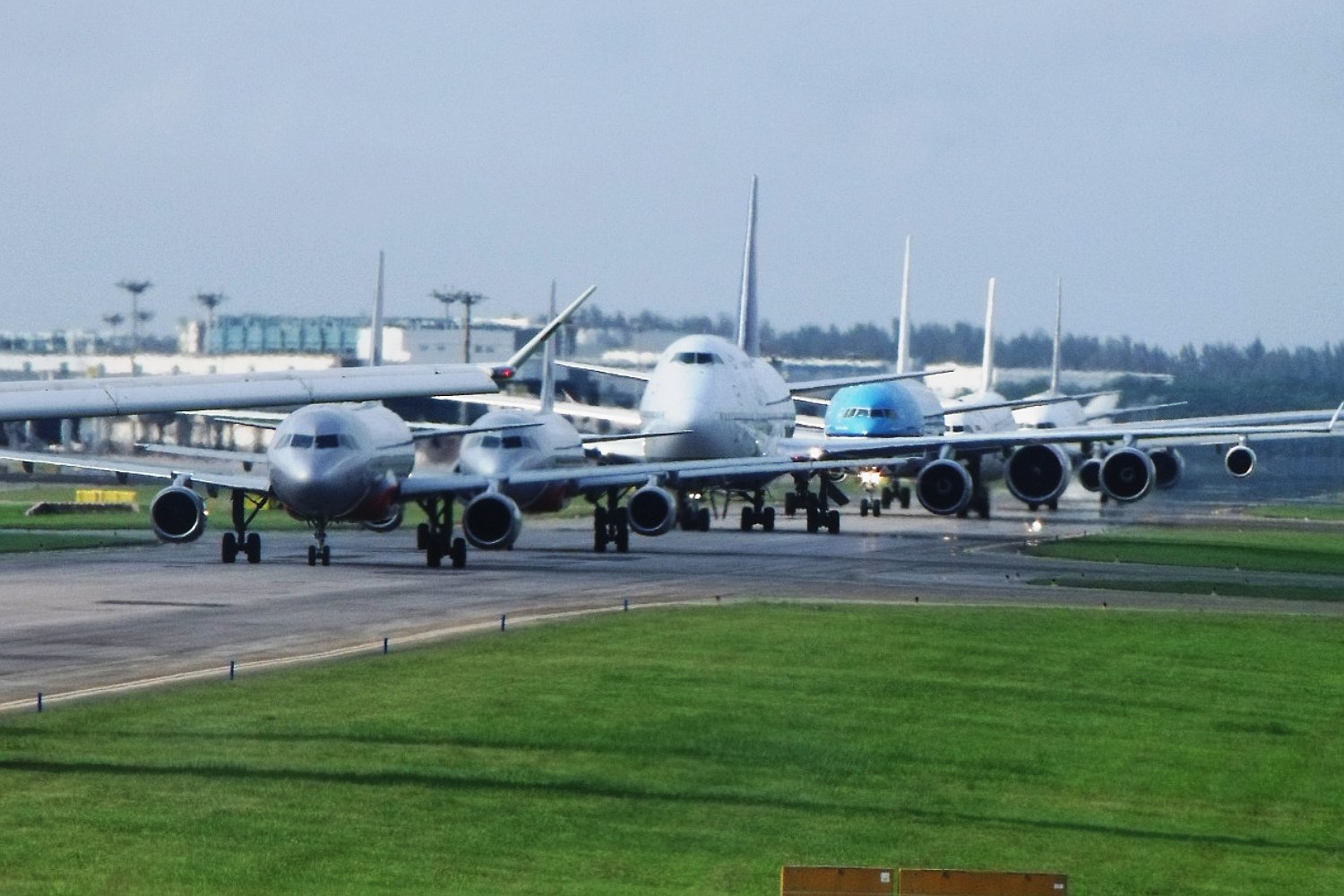
Global air travel demand is expected to more than double by 2050, according to long-term projections released by the International Air Transport Association (IATA).
Under its central scenario, passenger demand will reach 20.8 trillion revenue passenger kilometers (RPKs) by mid-century, up from 9 trillion in 2024, representing a compound annual growth rate of 3.1%. Higher and lower growth scenarios range between 19.5 trillion and 21.9 trillion RPKs, depending on variables such as economic performance, fuel prices, population trends and the pace of the energy transition.
“The outlook for air travel is positive,” said Willie Walsh, noting that demand is projected to expand across all modeled scenarios. He added that the findings highlight the need for investment in infrastructure, regulatory alignment and access to sustainable energy sources.
Follow us: WhatsApp | BlueSky | Google News | Instagram | LinkedIn | Facebook
Growth will be uneven across regions. Asia-Pacific and Africa are expected to lead expansion through 2050, with annual growth rates of 3.8% and 3.6%, respectively. In contrast, more mature markets such as Europe and North America are projected to grow at slower rates of 2.5% and 2.8%.
Among the fastest-growing traffic flows are intra-African routes and connections between Africa and Asia-Pacific, alongside strong expansion within Asia-Pacific itself and between the region and the Middle East. Several Europe-centered markets are expected to rank among the slowest-growing segments.
The report also points to structural changes following the COVID-19 pandemic. Unlike previous downturns, the collapse in demand during the crisis created a lasting gap, with traffic not expected to return to its pre-pandemic growth trajectory relative to GDP, even over the long term.
At the same time, the pace of growth is gradually slowing as markets mature. Historical data shows average annual expansion declined from 6.1% between 1972 and 1998 to 4.5% between 1998 and 2024. IATA expects this trend to continue, with growth moderating to around 3.1% annually through 2050, even as total passenger volumes rise significantly.
The projections are based on IATA’s econometric model, which incorporates variables such as population, income levels, air connectivity and fleet capacity across more than 40,000 country pairs. The model also integrates long-term economic scenarios from the Organisation for Economic Co-operation and Development and factors in the potential impact of the global energy transition on aviation demand.
