


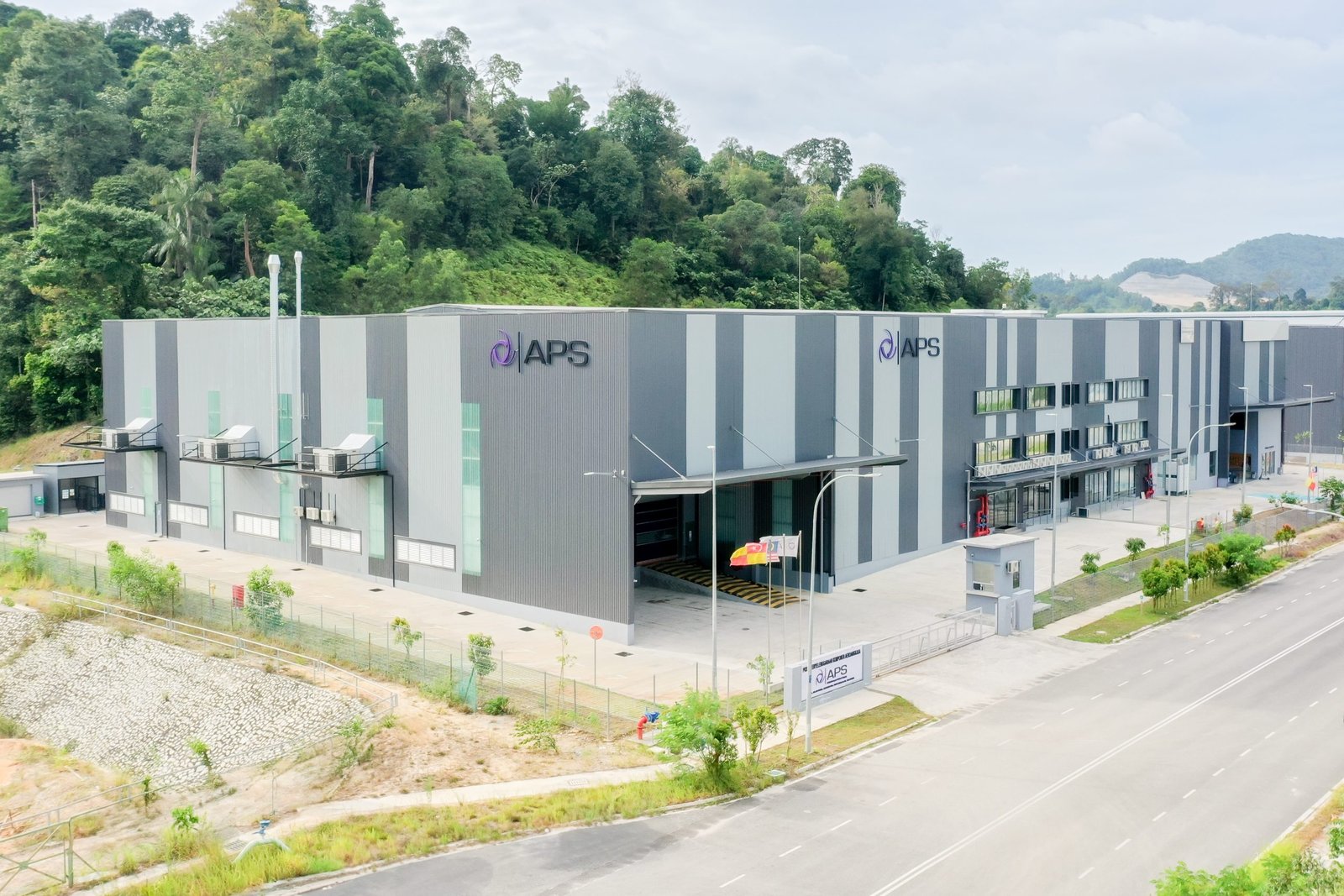
Aircraft Propeller Services (APS) has strengthened its Asia-Pacific footprint after receiving new regulatory approvals from the Civil Aviation Authority of Nepal (CAAN) and the Civil Aviation Authority of the Philippines (CAAP), alongside achieving AS9100 certification, the globally recognised quality management standard for the aerospace industry.
The approvals certify APS’s Subang-based maintenance centre to maintain, repair and overhaul (MRO) propellers used on ATR turboprop aircraft, enabling operators in Nepal and the Philippines to access regional support for Collins Aerospace 568F propeller systems.
Reduced Turnaround Times for ATR Operators
With the new certifications in place, ATR operators in both countries can now send propeller systems to APS Malaysia, eliminating the need to ship components to Europe or North America.
“Airlines in Nepal and the Philippines previously had to ship their propellers to North America or Europe for repairs and overhaul,” said Fergus Lopez, Managing Director of APS Asia Pacific. “Keeping the propellers in-region by sending them to our Malaysia facility reduces turnaround times, simplifies logistics, and improves fleet availability.”
Only OEM-Licensed 568F MRO in Asia-Pacific
APS Malaysia is currently the only MRO organisation in Asia-Pacific licensed by the original equipment manufacturer (OEM) to service Collins Aerospace 568F propeller systems. All work is carried out using OEM-approved processes and materials, supported by direct access to Collins Aerospace technical publications.
The Subang facility already holds certification from the US Federal Aviation Administration (FAA) and the Civil Aviation Authority of Malaysia (CAAM).
“The certifications from CAAP and CAAN are significant, as both countries operate large ATR fleets,” Lopez added. “Combined with our AS9100 certification, these regulatory validations reinforce APS Malaysia as a trusted regional hub for propeller and component MRO.”
Supporting Critical Domestic Connectivity
There are currently 26 active ATR aircraft in the Philippines and 23 in Nepal, where turboprop aircraft play a critical role in domestic connectivity.
Both countries rely heavily on ATR aircraft due to challenging operating environments — from Nepal’s high-altitude mountain airports to the Philippines’ archipelago of more than 7,000 islands. Short runways and steep approaches make the ATR platform particularly well-suited, providing an essential lifeline for remote and regional communities.

