


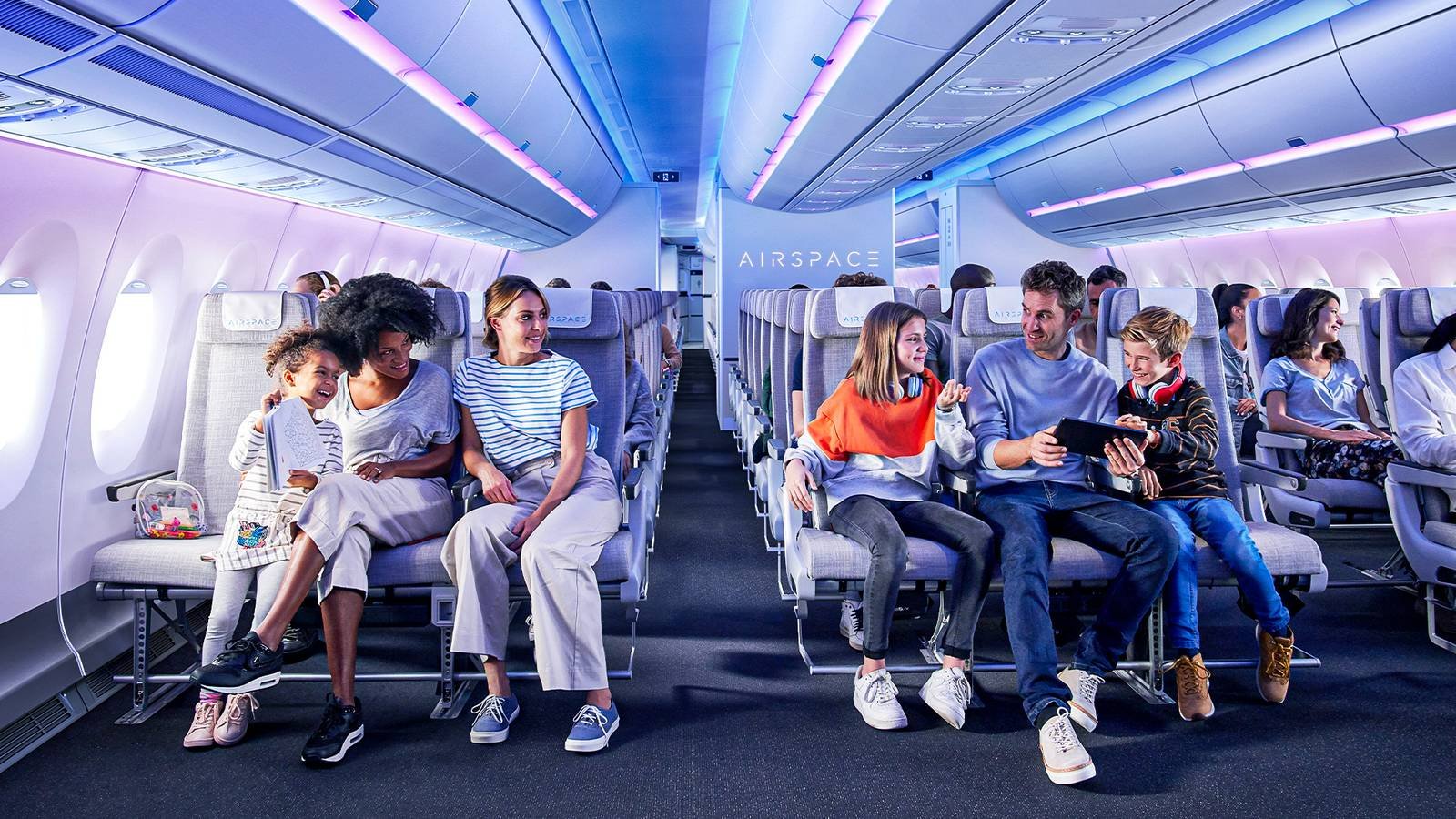
Stepping into a pressurized fuselage is a transition into a highly engineered life-support system that operates in a near-vacuum. The view from the window seat suggests a serene glide through the stratosphere, but the reality is a constant mechanical battle to maintain a survivable atmosphere against the thinning air of 40,000 feet. This guide analyzes the invisible science of the cabin, exploring why your body reacts to the unique physics of the clouds.
The evolution of flight has moved from the simple goal of arrival to the sophisticated optimization of human recovery. Aluminum airframes forced a compromise, a balance between structural integrity and passenger well-being, that tips more in favor of the aircraft over the passenger. Carbon-fiber composites and advanced sensors sought to balance the scales and did so effectively. So why does stepping off a new Airbus A350 or Boeing 787 feel fundamentally different from disembarking from the jets of the previous decade?
A Fast Moving Balloon
High-altitude flight is limited by the thinness of the atmosphere, which lacks the partial pressure of oxygen required for human lungs to effectively transfer molecules into the bloodstream. At 40,000 feet, the ambient pressure is just below three pounds per square inch, a level that would lead to rapid unconsciousness and hypoxia without immediate mechanical intervention. Pressurization systems are, therefore, a biological necessity, artificially thickening the air to mimic an environment much closer to sea level than the hostile vacuum outside.
The mechanism behind this artificial environment is the outflow valve, a precise gate usually located near the rear of the fuselage that regulates how much air escapes. Constantly pumping fresh air into the cabin and then restricting its exit through this valve, the aircraft transforms into a structural pressure vessel. This creates a stable internal density regardless of the external atmospheric conditions. This system is managed by digital controllers that track the rate of climb and descent with millimetric precision to avoid the sharp pressure spikes that lead to physical discomfort.
8,000 feet was the best you could get, a compromise dictated entirely by the metallurgical limits of aluminum. Fuselages expand and contract with each flight cycle like a balloon, and keeping the internal pressure higher would have accelerated metal fatigue and drastically shortened the operational lifespan of the airframe. The current 6,000-foot standard is a direct result of the superior tensile strength of carbon-fiber-reinforced polymers. Carriers that have these newer generation aircraft can now maintain a more oxygen-rich environment, ensuring that passengers arrive with a resting heart rate closer to their ground-level baseline.
Dropping The Levels

Aluminum was always the industry standard due to its predictable properties and ease of repair, but it faced a fundamental limitation in its inability to withstand high-pressure differentials over thousands of flight cycles. Carbon-fiber-reinforced polymers (CFRP), used in the construction of the Boeing 787 and Airbus A350, possess a strength-to-weight ratio that is dramatically superior to metal. These materials can endure the constant expansion and contraction of the fuselage without the risk of fatigue cracking or corrosion, allowing engineers to maintain a higher internal air pressure.
Human physiology had to be considered, specifically regarding blood oxygen saturation levels. In an aluminum aircraft pressurized to 8,000 feet, the average passenger’s oxygen saturation drops by approximately 4%, often dipping into the low 90s. This reduction triggers a compensatory response where the heart must beat faster to circulate the limited oxygen available. Lowering the cabin altitude to 6,000 feet, composite aircraft keep oxygen levels significantly higher, which stabilizes the heart rate and prevents the mild hypoxia that causes headaches and lethargy commonly associated with jet lag.
Aircraft Model | Fuselage Material | Standard Cabin Altitude | Average Oxygen Saturation (SaO2) |
Boeing 747-400 | Aluminum | 8,000 Feet | 89% – 91% |
Airbus A330neo | Aluminum | 7,000 – 8,000 Feet | 90% – 92% |
Boeing 787-9 | Composite (CFRP) | 6,000 Feet | 94% – 96% |
Airbus A350-1000 | Composite (CFRP) | 6,000 Feet | 94% – 96% |
Boeing 777-9 | Aluminum (Advanced) | 6,000 Feet | 94% – 96% |
Modern engineering has reached a point where even the latest aluminum models, such as the Boeing 777-9, are utilizing advanced alloys and reinforced structures to match the 6,000-foot benchmark set by composites. What this inevitably means is the physical toll of a 14-hour journey is less about survival and more about true relaxation. At the core of the refinement of the travel experience are the invisible properties of molecular bonding and structural physics that make this a possibility.

Why The Airbus A350 Has Such An Ultimate Passenger Experience
Discover why the Airbus A350 offers the ultimate passenger experience — quieter cabins, roomier seats, and comfort praised by flyers worldwide.
Perfect Selling Point

The relative humidity of an aluminum aircraft is intentionally restricted to approximately 10% to protect the airframe from the catastrophic effects of condensation and corrosion. Metal reacts poorly to moisture trapped between the outer skin and the insulation blankets, which is where environmental control systems (ECS) are engineered to keep the cabin as dry as possible. This mechanical necessity, however, comes at a high physiological cost to the passenger, leading to a scratchy throat, dry eyes, and skin irritation that plague the experience onboard.
Key to the material change is that carbon-fiber-reinforced polymers are naturally resistant to the oxidation that plagues aluminum. On advanced aircraft like the Boeing 787 and Airbus A350, engineers can safely increase the relative humidity to around 25%, a level that significantly improves the integrity of the body’s mucosal barriers. These barriers are the first line of defense against airborne pathogens; when they remain hydrated, they are far more effective at trapping and neutralizing viruses and bacteria.
Plenty of carriers have brought this technology into the core of their respective products, where humidity control is marketed as a core wellness feature. Airlines now have the tools to reduce the rate of trans-epidermal water loss, meaning your body doesn’t have to work as hard to maintain its internal fluid balance; a subtle and invisible improvement that ensures the physical transition between time zones is as seamless as possible.
Near Perfect Cleaning

The air within a modern cabin is not a static volume but a dynamic mixture that is entirely refreshed every two to three minutes. It relies on a precise 50/50 split between sterilized recirculated air and fresh outside air drawn through the engine compressors. Before the outside air enters the cabin, it is cooled at extreme temperatures and filtered, while the internal air is pulled through High-Efficiency Particulate Air (HEPA) systems. This constant cycling ensures that the atmosphere remains oxygen-rich and free of the carbon dioxide buildup that often plagues enclosed terrestrial spaces.
One of the most misunderstood aspects of cabin health is the direction of airflow, which is engineered to move vertically rather than horizontally. Air enters from overhead vents and is immediately pulled downward toward floor-level exhausts, creating a localized air curtain around each seat row. This downward trajectory is a critical safety feature, as it prevents the lateral spread of respiratory droplets between passengers.
The efficiency of HEPA filtration in aviation is staggering, with modern units capable of removing 99.97% of particles, including bacteria and viruses as small as 0.3 microns. Air is so frequently exchanged that passengers breathe air that is technically cleaner than that found in a standard office building or a crowded restaurant. This level of purity is maintained by high-output fans that ensure the circulation never stagnates, even during ground operations when the main engines are not providing bleed air.

Airbus Files Patent Reimagining The Business Class Seat: What To Expect
The planemaker has big plans for the reimagining of business class travel.
Why Food Isn’t Too Great

Food on board an aircraft is always known to be average, often at times inedible. The true culprit is not the kitchen but actually the biological impact of the cabin environment on human sensory perception. When seated eight miles above the earth, the combination of extremely low humidity and high atmospheric pressure effectively numbs your sense of taste and smell, making even the most seasoned gourmet meal seem uninspiring.
The effect begins in the olfactory receptors, which require a layer of moisture to function correctly. In the low humidity of an aluminum aircraft, the nasal passages dry out, significantly reducing the ability to detect the subtle aromas that constitute 80% of what we perceive as flavor. Simultaneously, the low-pressure environment reduces the sensitivity of the taste buds, specifically to salt and sugar, by approximately 30%. This creates a sensory gap that forces the industry to over-season meals with heavy amounts of sodium and refined sugars to compensate for the atmospheric deficit.
The only flavor profile that remains robust at 40,000 feet is umami, the savory fifth taste found in foods like tomatoes, soy sauce, and mushrooms. This explains the enduring popularity of tomato juice as a cabin beverage. With this seemingly unimpressive beverage on the ground, the glutamic acid within it remains highly detectable even when sweet and salty notes have faded. Moving away from the dinner table, research suggests that the 85-decibel white noise of the engines creates an acoustic distraction for the brain, further suppressing sweet-taste intensity while paradoxically augmenting the perception of savory flavors. This cross-modal perception is a key factor in why airlines are increasingly designing menus that prioritize deep, savory bases to ensure the dining experience remains satisfying despite the physiological hurdles.
Removing The Stressors Of Flight

Cabin lighting was typically a binary choice between harsh fluorescent on or off, which disregarded the human circadian rhythm, but now, LED mood lighting is used as a biological tool to manipulate melatonin production. Airlines can artificially signal to the brain that it is time to wake up or rest by emitting specific amber wavelengths during the flight’s night phase and shifting to high-intensity blue light before arrival. For passengers crossing multiple time zones, this is a lifesaver, as it begins the process of entrainment before the aircraft even touches the runway.
This visual engineering is becoming increasingly sophisticated with the rollout of the Panasonic Astrova and the MAYA cabin concepts. These systems synchronize the overhead LED panels with the passenger’s individual 4K OLED screen. If a traveler selects a Sunset Meditation program, the entire suite’s ambient lighting dims and shifts to deep oranges and purples, acting as a visual sedative that prepares the nervous system for sleep. What this strongly ensures is that the cabin is no longer a static room but a responsive space that adapts to the occupant’s biological needs.
Across the industry, the focus of cabin engineering is shifting toward the reduction of acoustic fatigue through active noise cancellation built directly into the seat headrests. The newest engines are already significantly quieter, but the low-frequency drone of flight still triggers the release of cortisol, the body’s primary stress hormone. Through neutralizing these frequencies at the source, future cabins will feel even more restorative. Ultimately, the modern flight experience is defined by the airframe rather than the ticket price alone.
