


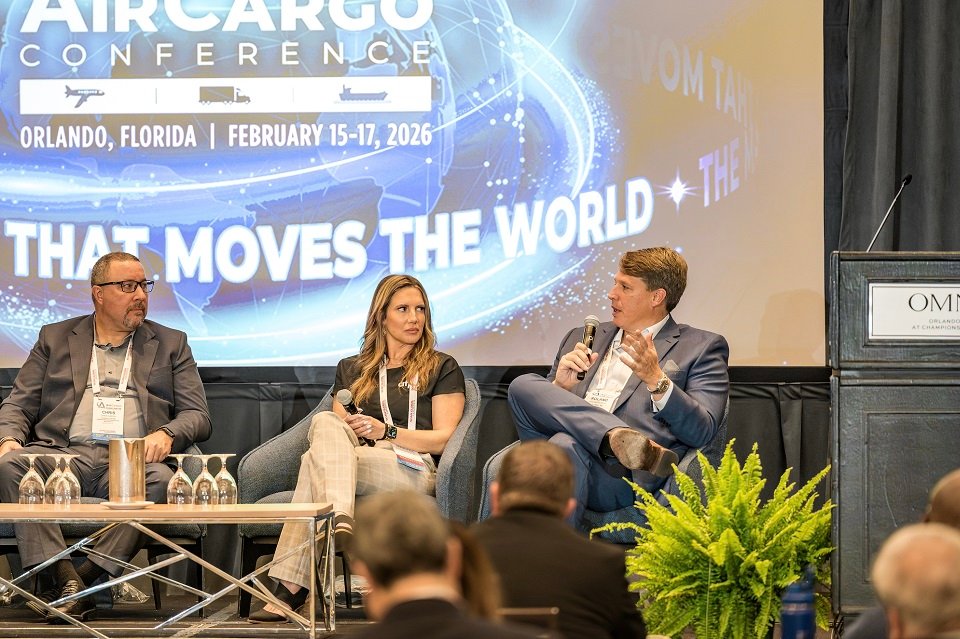
US air cargo screening company Global K9 (GK9) has called for more clarity around the use of dogs for screening dangerous goods.
Speaking at the recent Air Cargo Conference, GK9 chief operating officer Roland Beason called on the Transportation Security Administration (TSA) to clarify regulations around canine screening for dangerous goods.
GK9 chief commercial officer Chris Daniels explained to Air Cargo News that the TSA does not publish standalone, K9-specific protocols for dangerous goods screening.
Instead, dangerous goods oversight is governed by existing aviation security and hazardous materials regulations, with operational responsibility resting with the air carrier under its TSA-approved security programme.
“Therefore, regulations differ depending on the air carrier, and are not harmonised across the industry,” Daniels said.
“From a dangerous goods standpoint, the Third-Party Canine-Cargo (3PK9-C) programme is not clearly defined,” said Beason.
“As items, such as lithium batteries, continue to be prolific in air cargo shipments, it is only becoming more important that we have clearly defined, indisputable regulations tailored to specific items – it is paramount to ensuring compliance and safety.”
The 3PK9-C programme was developed under TSA’s Certified Cargo Screening Programs (CCSP) and initially focused on the detection of explosives.
“The goal of these programmes should be to harmonise screening operations across the board, making sure that every canine team for every screening provider is operating to the same standard,” added Beason.
“We are hopeful that later this year, changes to the 3PK9-C programme will be confirmed in line with our recent edits and comments, of which the TSA has accepted the vast majority.”
Beason was joined on the panel by Sandy Gregory, of Gregory Logistics, Jim Powell of Transportation Development Group, Jennifer Kirkland of AllTransPack and Christopher Garcia of the Federal Aviation Administration.
