


DHL Group aims to strengthen its life sciences & healthcare (LSH) logistics capabilities with an expanded dedicated airfreight cold chain network.
The global network gives customers full end-to-end visibility for highly sensitive healthcare products, including temperature-sensitive medicines, vaccines, pharmaceutical products and cell & gene therapies, said DHL.
The expansion adds capacity for temperature-sensitive pharmaceutical and medical shipments and connects key markets through more than 30 GDP-compliant aviation hubs and gateways, said DHL.
Part of DHL’s €2bn strategic investment in DHL Health Logistics, the network will first connect major DHL hubs, including Brussels (BRU) – Cincinnati (CVG), with additional routes in Europe, the Middle East, Asia, and Latin America to follow.
The BRU-CVG corridor connects the US Midwest, home to leading pharma companies, directly to one of Europe’s most advanced life sciences ecosystems.
By avoiding coastal congestion, the lane provides a seamless, temperature-controlled pathway for high-value biologics and time-critical cell and gene therapies, explained DHL.
At the Brussels end, the route is supported by 45,000 sq m of pharma-only zones at BRUcargo.
Countries prioritised for further expansion of the airfreight cold chain network include India, Singapore, Japan, South Korea, Brazil, the US, Germany, and Ireland. These routes are designed to meet strict regulatory requirements and maintain product quality throughout the supply chain.
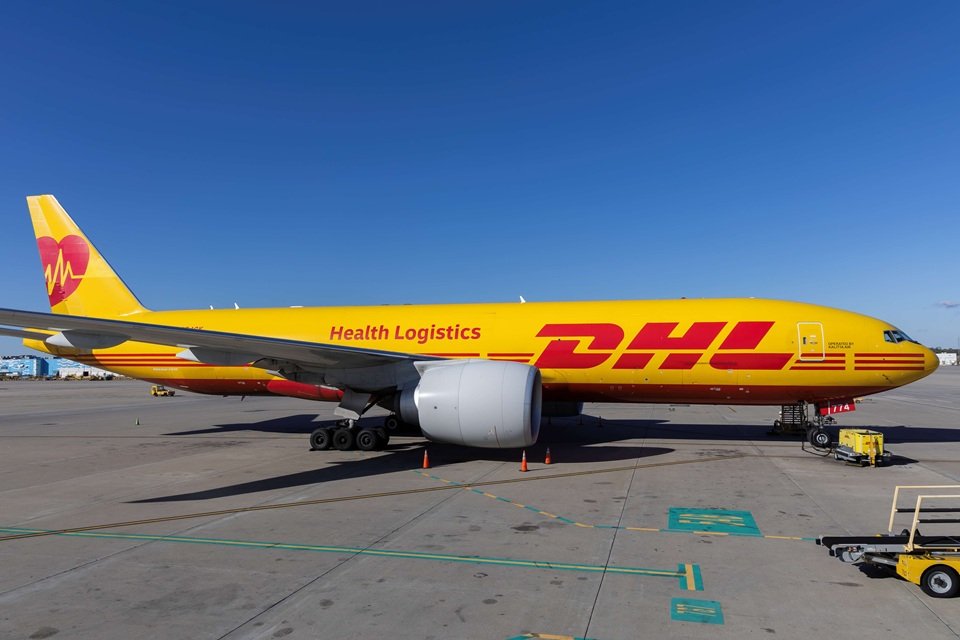
To support the expanded network, DHL has introduced a dedicated Boeing 777 freighter operating between BRU and CVG.
The aircraft features the new “DHL Health Logistics” livery and its dedicated routing provides consistent, controllable capacity on one of the most critical pharma lanes.
DHL aims to improve product integrity and temperature control, while reducing heavy, costly packaging and refrigerated airfreight containers.
Additionally, the company said, reducing reliance on third-party carriers and commercial airlines will help increase supply chain resilience amid geopolitical tensions, capacity shortages, and growing regulatory complexity.
“Life sciences and healthcare companies expect cold chain solutions that are reliable, compliant, and transparent from end to end — and those expectations are rising fast,” said Oscar de Bok, chief executive of DHL Global Forwarding, Freight.
“At the same time, they’re looking for ways to simplify supply chains and reduce costs. Our expanded network brings together DHL Aviation’s global air connectivity, our GDP-compliant station network, and our major investments in modern, temperature-controlled facilities.
“The result is a more resilient, more efficient logistics backbone for customers who depend on flawless quality to deliver critical therapies to patients.”
