


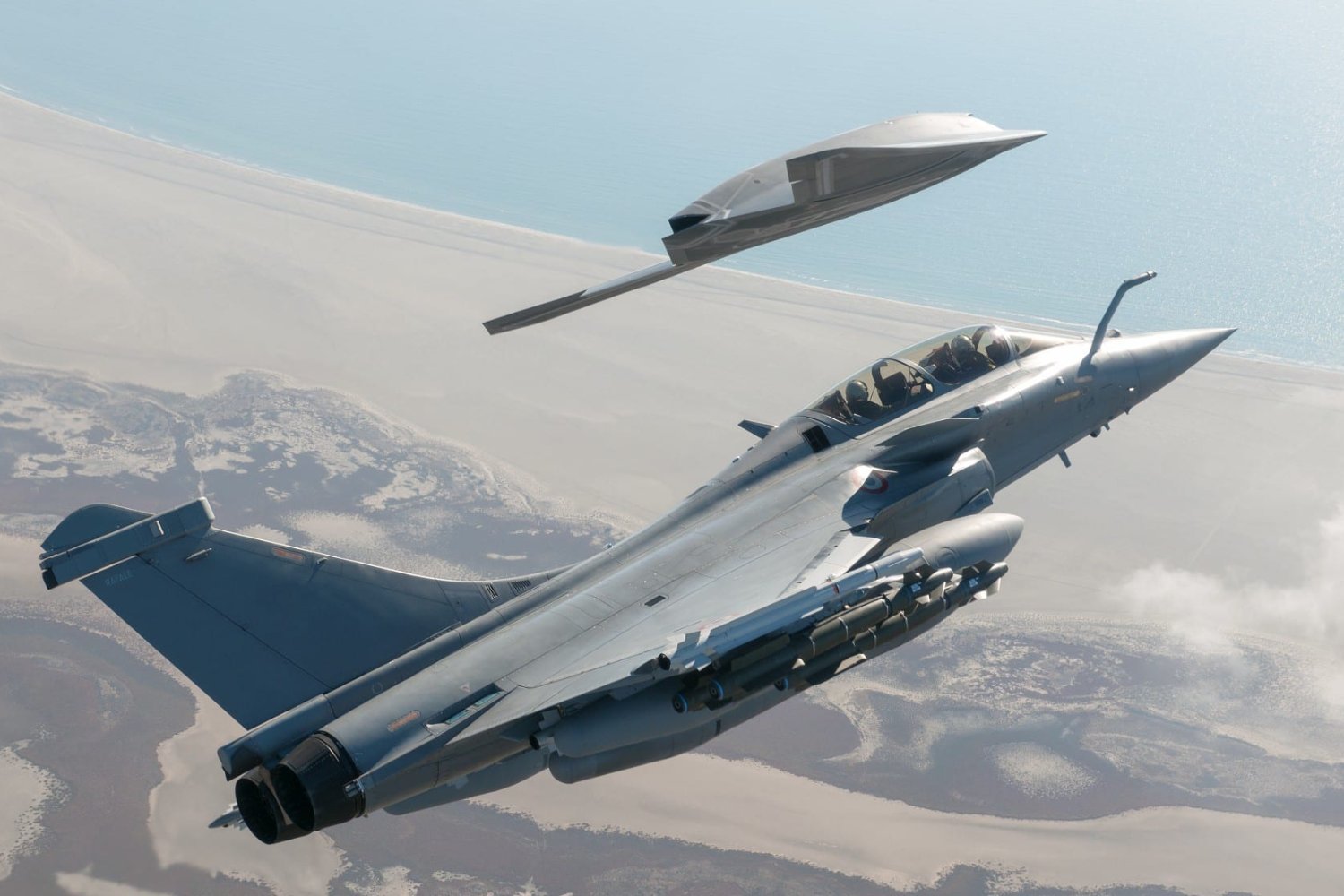
France is expected to carry the full financial burden of developing the Dassault Rafale F5 after negotiations with the United Arab Emirates over a co-financing arrangement broke down at the end of 2025, according to a report by La Tribune.
The failed talks remove what had been a potential multibillion-euro contribution from Abu Dhabi toward the next evolution of the fighter, increasing pressure on France’s defense budget as it prepares to expand spending under a revised military planning framework.
Discussions stalled over the level of access the UAE would receive to sensitive technologies tied to the program. Emirati officials sought deeper involvement in development work, including areas such as optronics, but French authorities ultimately declined to grant that level of participation.
Follow us: WhatsApp | BlueSky | Google News | Instagram | LinkedIn | Facebook
The Rafale F5 is intended to represent a major leap over current standards, combining upgrades in sensors, electronic warfare and propulsion with new mission capabilities. Among the planned enhancements are a gallium nitride-based radar, a redesigned SPECTRA electronic warfare suite and improved infrared search and track systems.
The aircraft is also expected to integrate conformal fuel tanks and carry France’s future ASN4G nuclear missile, which is being developed as a hypersonic weapon for the country’s strategic deterrent.
Powering the new variant will be Safran’s upgraded M88 T-REX engine, designed to deliver significantly higher thrust without major changes to the engine’s external dimensions. The increase is intended to support both performance gains and the additional weight associated with new systems.
French authorities have already notified several billion euros in development contracts for the program, with entry into service targeted around the mid-2030s.

Stealth combat drone
Alongside the fighter, France has outlined plans for a stealth combat drone designed to operate in tandem with the Rafale, particularly in suppression of enemy air defenses missions. However, that effort remains at an early stage and lacks a formal launch decision, with only limited funding allocated so far.
The situation comes at a time when the FCAS project, for a next-generation combat platform in partnership with Germany and Spain, is at an impasse. The Rafale successor is expected from the program around 2040.
Despite the breakdown in F5 talks, defense ties between France and the UAE remain active. Abu Dhabi is the largest export customer for the Rafale, with an order for 80 F4-standard aircraft signed in 2021 and additional purchases still under discussion.
