


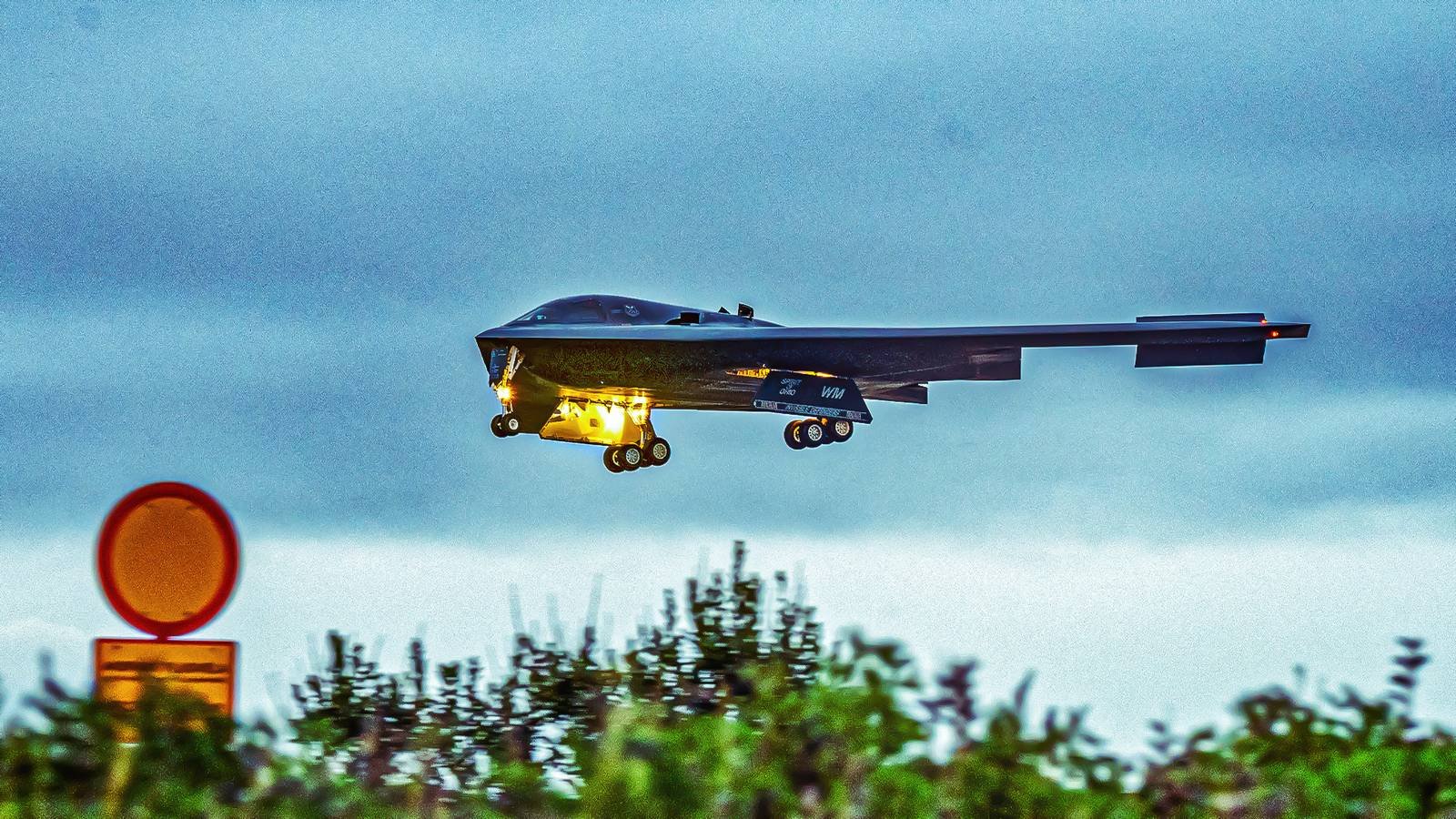
The Northrop Grumman B-2 Spirit stealth bomber is the second most expensive aircraft in the US Air Force and the world, in terms of cost per flight hour. The B-2 averages a cost of $130,000 to $150,000 per flight hour, according to Economy Insights. As stunningly expensive as it is, it still comes second to the Boeing E-4B Nightwatch ‘doomsday’ nuclear command plane, which is more than $160,000 per flight hour.
The B-2 will be succeeded in the near future by the B-21 Raider, which is slated to be far more cost-effective and lower maintenance. The US Air Force is targeting around half the cost of the B-2 for its next-generation stealth bomber with a targeted cost per flight hour of $65,000. The Raider will be the world’s first 6th generation bomber and will build upon the legacy of the Spirit, not only by being more durable and efficient, but also more combat effective.
The Hangar Queen
The B-2 requires approximately 50 to 60 maintenance hours for every hour flown, with some estimates reaching as high as 119 hours depending on the mission complexity. After almost every flight, technicians must perform ‘touch labor’ to repair minor imperfections, such as scratches or tape peeling at seams. Even a bird dropping or a small scratch can compromise the aircraft’s stealth signature.
The radar absorbent material (RAM) that the B-2 has coating its skin, which gives it many of its stealth qualities, degrades in the sun, heat, or moisture. The B-2 cannot be parked outside like an F-15 because its RAM coating is hydrophilic, meaning it naturally absorbs water. Exposure to rain or high humidity can cause the coating to bubble, peel, or lose its radar-absorbing properties.
The B-2 requires specialized, complex environmental management systems in the hangars that maintain precise temperature and humidity. Only a few bases worldwide have these specialized facilities, which limits where the bomber can be deployed and adds massive logistics costs. When deploying to bases without permanent hangars, the Air Force must transport $5 million portable shelter systems to protect the aircraft.
The Next Generation

The B-21 Raider is the Agile Combat Employment (ACE) champion the Air Force needs because it breaks the hangar queen curse of the B-2. The B-21 uses a next-generation durable stealth coating that is ‘baked-in’ during manufacturing, which is resilient enough to skip these specialized climate-controlled hangars. The B-21 is designed for modern weapons loaders and standard refueling ports, allowing it to land at virtually any base, reload, and get back in the air before any enemy can find it.
To move a B-2, you need a massive caravan of specialized tools, chemical tapes, and HVAC equipment. The Raider’s smaller wingspan allows it to fit into existing fighter Hardened Aircraft Shelters (HAS), significantly reducing its logistical footprint. A standard B-2 hangar bay is approximately 250 feet wide, 126 feet long, and 55 feet high to accommodate its 172-foot wingspan.
The B-21 is made for dispersed deployment to austere fields like a salty runway in the Pacific or a freezing strip in the Arctic without special care. Under the B-21’s digital-first design, maintainers at a remote base can use augmented reality and digital twins to troubleshoot repairs. They don’t need to wait for a specialized technician to fly in from the US to tell them how to fix a custom part. The exact data is already in the networked handheld tablets.
The Spirit’s Failure To Launch

To understand why the B-2 is so expensive, you have to look at it as a kind of ‘orphan.’ Because the Cold War ended just as production began, the total procurement order was slashed from 100 to 200 aircraft to just 21. When the B-2 was developed, hundreds of companies built specialized parts for it. When the order was cut by 85%, those companies lost their profit margins.
Because the B-2 fleet is so small, the Air Force has to pay fees to some manufacturers just to keep the tooling for B-2 parts in a warehouse. Many small companies that made B-2-specific parts went out of business or stopped making the parts decades ago. If a part breaks today, the Air Force often can’t just buy a new one; a contractor will reverse engineer it, and that bill can run in the millions to build a single part again from scratch.
There is no large skill pool for B-2 software work either. Finding engineers who can update the B-2’s code is like finding someone who can repair a 1985 Macintosh but wants them to make it compatible with 2024 satellite tech. Every time the Air Force adds a new missile to the B-2, they have to spend hundreds of millions in R&D just to teach the old computers how to integrate with a new weapon.

Can The B-21 Raider Fly Without Crew?
The B-21 Raider, could it soar solo? Explore the next-gen stealth bomber’s potential.
The Generational Gap

The B-2’s stealth was the most expensive defense project of its time. The B-2 R&D did not focus on maintenance; it focused on invisibility. As a result, its skin isn’t a single piece. It’s thousands of pieces of tape and caulk that must be applied by hand. Some of the chemicals developed for the B-2 skin take hours or days to cure. This means the aircraft sits in a hangar, taking up space and human labor, just waiting for the glue to dry before it can fly again.
The B-21 uses standard computer languages. If they need a new part, they can use 3D printing or modern manufacturing because the blueprints are digital and modular. Northrop Grumman built a digital version of the B-21 before the real one. The B-21 was designed and tested in a fully digital ecosystem before a single piece of metal was cut.
Unlike the B-2’s hardwired 1980s systems, the B-21 uses a Modular Open Systems Approach (MOSA). Integrating a new missile into a B-2 can take years of custom work, but on a B-21, it is expected to take weeks or even days. The Air Force plans to procure at least 100 B-21s, and that larger scale ensures a stable supply chain where parts are produced in bulk, lowering the cost of spares.
The B-21 utilizes next-gen RAM that is significantly more durable and chemically stable than the B-2’s fragile tape-and-caulk skin. The B-21 also leverages other mature systems from other programs, such as engines derived from the Pratt & Whitney F135 as used in the F-35, tapping into an existing global maintenance network.

This Is How Powerful The B-2 Spirit Bomber Is
The B-2 is famous for its stealth, but how much punch does it pack? Let’s find out.
The Right Size For The Job

The B-2 was made in an era when cost was considered no object as the Soviet menace was looming large over the American military. The Pentagon made the B-2 as large and powerful as possible to ensure its survival and mission effectiveness in a worst-case scenario, or nuclear doomsday. In the 21st century, size and complexity have made it a burden instead of an asset, which is where the redesigned B-21 changes things by going smaller and lighter.
Not only will the B-21 be smaller, which makes it easier to deploy to existing infrastructure around the world, but cutting the number of engines in half and using only two instead of four reduces both maintenance and fuel consumption. Additionally, using fewer engines will make it a stealthier platform as its thermal signature and noise footprint are reduced. A smaller airframe requires less thrust to stay aloft, meaning it can carry a similar effective payload of modern, smaller precision-guided munitions while burning significantly less fuel per hour, which will give it a similar or better range despite having less total fuel aboard.
After the complex and fragile stealth coatings of the B-2, its engine maintenance is the number one largest sustainment burden. Not only does it have four complex engines, but they are very deep inside its enormous composite flying wing fuselage. The hours required to work on it are enormous, and the parts are both complex to fabricate and extremely costly to acquire.
The B-21 is using derivatives of the F135 engines in the Lockheed Martin F-35 Lightning II stealth fighter series, which means that it will have a deep support base readily available. There are already over 1,300 of the fighter jets in the world, with a total global fleet estimated to be around 3,000 before production ends. On top of that, the engine is the single most powerful fighter type ever made in terms of thrust, and it is stealth optimized, which makes it an excellent fit for the B-21.

Why The B-2 Spirit Remains Critical To US Defense
Northrop Gumman’s B-2 Spirit has unmatched stealth, power, and global reach that make it an irreplaceable asset in US defense strategy.
More Stealth Per Dollar

By leveraging 30 years of stealth evolution, the B-21 delivers more capability per dollar than the B-2 in three distinct ways. First and foremost is the lower maintenance required for its RAM coating, which yields a higher ‘stealth availability’ rate. That stealth skin is also more effective thanks to new engineering, as it can defeat both high-frequency targeting and low-frequency early warning radar, the latter of which could sometimes pick up traces of a B-2.
The B-21 also offers an intelligence, surveillance, reconnaissance (ISR) platform that is essentially integrated into the same airframe as the bomber. Two missions that would normally be flown by separate aircraft are rolled into the same plane. This grants multirole utility and makes the aircraft a force multiplier for every other asset in the battle space. They can act like a node hidden from the enemy but able to see all of the threats and provide targeting data to joint forces.
The B-2’s cost-per-flight-hour and infrastructure needs mean it is only used for silver bullet missions. It is too expensive to use for routine deterrence. A weapon is only a deterrent if it is credible. If a B-2 is stuck in a hangar in Missouri waiting for glue to dry, it isn’t deterring anyone. Because the B-21 is easier to fly and maintain, the Air Force can keep more of them on the line at any given time. You get more presence hours per dollar.
