


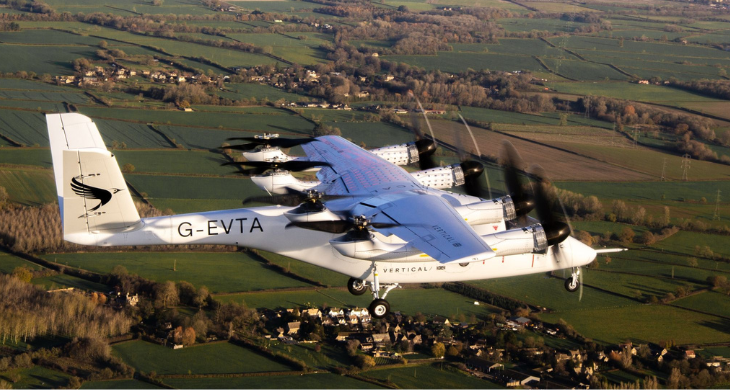

VX-4 prototype 2 continues transition flight testing near the company’s Gloucestershire base though full transition remains elusive. Image Vertical Aerospace
In it’s full year SEC filing for 2025 Vertical Aerospace posted a cash burn for the year of USD127 million against investment and other incomes leaving the eVTOL developer with cash and cash equivalent reserves of USD58m which when added to tax credits and other instruments give the company a cash runway of USD86m. In addition, CEO Stuart Simpson pointed to USD78m of unused at the market (ATM) facility as a further line of credit.
That comes against a projected spend of USD190-200m for the 12 months from this March predicted by Simpson as the company converts VX-4 prototype 3 to hybrid power and builds the first Valo prototype.
Accordingly, it’s clear that the company will have to go back to the market for additional funding if that spend is to be sustained. And that revelation rather than anything to do with headlines related to safe harbour statements in the filing, was the prompt for a significant drop in share price since the announcement on Wednesday with (at the time of writing) shares trading at a 30% discount on their pre-filing price.
Vertical has also faced if not actual headwinds then certainly weather related delays to it’s flight test programme with full transition flight confidently predicted to be completed by mid-December remaining an unfulfilled ambition at the end of March.
The company puts delays down to a consistent run of poor weather over the winter at its Kemble testing facility as well as UK CAA oversight of the programme. Some industry commentators have wondered if the programme may have also encountered the same issues its rivals have experienced with the aerodynamics of lift prop stow and unstowing if they have the company isn’t saying. Although Vertical does allow that there have been “learnings” some of which have lead to adjustments in prediction models and that is the reason for flight testing after all, Vertical also says that UK CAA involvement in the test programme has also impeded progress with Chief Engineer David Smith telling analysts “So in terms of the weather, the clouds, the wind conditions, that was the first one…the second one was as we conduct the test, and as we find that we have to make some adjustments to our predictive models to update our database, then we update the database and go through our full design organisation procedures to get that new airworthiness document approved side-by-side with the CAA before we go to the next test”. That said, the company also says that close CAA involvement in early testing will yield benefits in the longer term as far as certification and safety goes.
