


Colorado lawmakers have introduced legislation that would make it a criminal offense to manufacture firearms using 3D printers or CNC milling machines without a federal license.
Titled House Bill 26-1144, the new bill prohibits the unlicensed production of completed firearms, unfinished frames or receivers, large-capacity magazines, and rapid-fire devices. Federally licensed firearm manufacturers would remain exempt, provided they operate within the bounds of their license.
However, the bill’s reach does not stop at the workshop door. Lawmakers have taken aim at the digital layer that underpins modern gun manufacturing, making it unlawful to possess digital instructions, including CAD files and similar code, where there is evidence of intent to produce a firearm unlawfully.
Distributing those files to non-licensed individuals in Colorado would also be prohibited, by any means, regardless of whether the distributor is based in-state or abroad, and regardless of whether money changes hands.
Penalties Set as Opposition Mounts
On penalties, the bill is clear. A first offense would carry a class 1 misdemeanor charge. Repeat violations would be elevated to a class 5 felony. The bill defines its key terms, includes a severability clause, and is set to take effect July 1, 2026, with a standard safety clause attached.
“Existing law doesn’t have firearms in particular, which this bill accomplishes,” explained the bill’s sponsor, Representative Andrew Boensenecker, a Democrat who represents Fort Collins.
According to a news report, Boensenecker contended that because current law only covers critical gun parts, a broader ban is needed to prevent bad actors from printing novel firearm designs that slip through existing legal guardrails.
Sponsored by Democrats in both chambers, the bill cleared the House Judiciary Committee on a 7-4 vote along party lines. But the margin did little to quiet dissent.
Republican Representative Ava Flanell of Colorado Springs called the measure puzzling, arguing “It seems like this law already exists.” Additionally, Committee Chair Javier Mabrey took the concerns seriously enough to call for amendments and “avoid unintended consequences.”
Separately, public testimony focused on the potential breadth of the bill, with some critics questioning whether restrictions on “digital instructions” could unintentionally capture activities such as 3D printed props used by cosplayers and airsoft enthusiasts, or even extend to video games that rely on similar underlying code.
The sharpest warning came from Daniel Fenlason, Director of Operations for the Colorado Shooting Sports Association (CSSA), stressing that “This is going to be a lawsuit that our team at CSSA will explore.” He believes “It will cost the taxpayers millions of dollars and you will lose at the Supreme Court.”
House Bill 26-1144 builds on a foundation already laid by Senate Bill 23-279, signed into law in 2023, which tackled the related issue of unserialized firearms, prohibiting unlicensed individuals from manufacturing firearm frames or receivers, including through 3D printing, and restricting the possession, sale, or transfer of such weapons and key components, subject to specified exceptions.
That law also requires certain firearms to be serialized through federally licensed dealers and carries an identical penalty structure, with first violations treated as class 1 misdemeanors and repeat offenses elevated to class 5 felonies.
House Bill 26-1144 represents the state’s latest effort to keep pace with rapidly evolving manufacturing technologies and close the regulatory gaps that have allowed untraceable, unlicensed firearms to proliferate.
A Growing National Debate
Colorado is not alone in moving to regulate the 3D printed firearms space. States including New York and Washington are pursuing a more interventionist approach, proposing requirements that 3D printers and CNC machines screen design files and block the production of firearm components.
In New York, the proposal would mandate built-in safeguards on 3D printers and restrict access to design files, while Washington’s House Bill 2321 would require a firearm-detection system to approve files before printing and establish a state-managed database of restricted designs.
That approach has already drawn skepticism on technical and practical grounds. Critics argue that file-screening systems are difficult to enforce and relatively easy to circumvent through minor design changes, while also raising concerns about broader constraints on general-purpose manufacturing tools.
Others note that many so-called ghost guns continue to originate from kits and conventional supply chains, calling into question how much such measures would ultimately achieve.
This contrasts with Colorado’s approach, which restricts the use of manufacturing technologies and limits access to digital instructions, rather than requiring built-in file screening at the machine level.
3D Printing Industry is inviting speakers for its 2026 Additive Manufacturing Applications (AMA) series, covering Energy, Healthcare, Automotive and Mobility, Aerospace, Space and Defense, and Software. Each online event focuses on real production deployments, qualification, and supply chain integration. Practitioners interested in contributing can complete the call for speakers form here.
To stay up to date with the latest 3D printing news, don’t forget to subscribe to the 3D Printing Industry newsletter or follow us on LinkedIn.
Explore the full Future of 3D Printing and Executive Survey series from 3D Printing Industry, featuring perspectives from CEOs, engineers, and industry leaders on the industrialization of additive manufacturing, 3D printing industry trends 2026, qualification, supply chains, and additive manufacturing industry analysis.
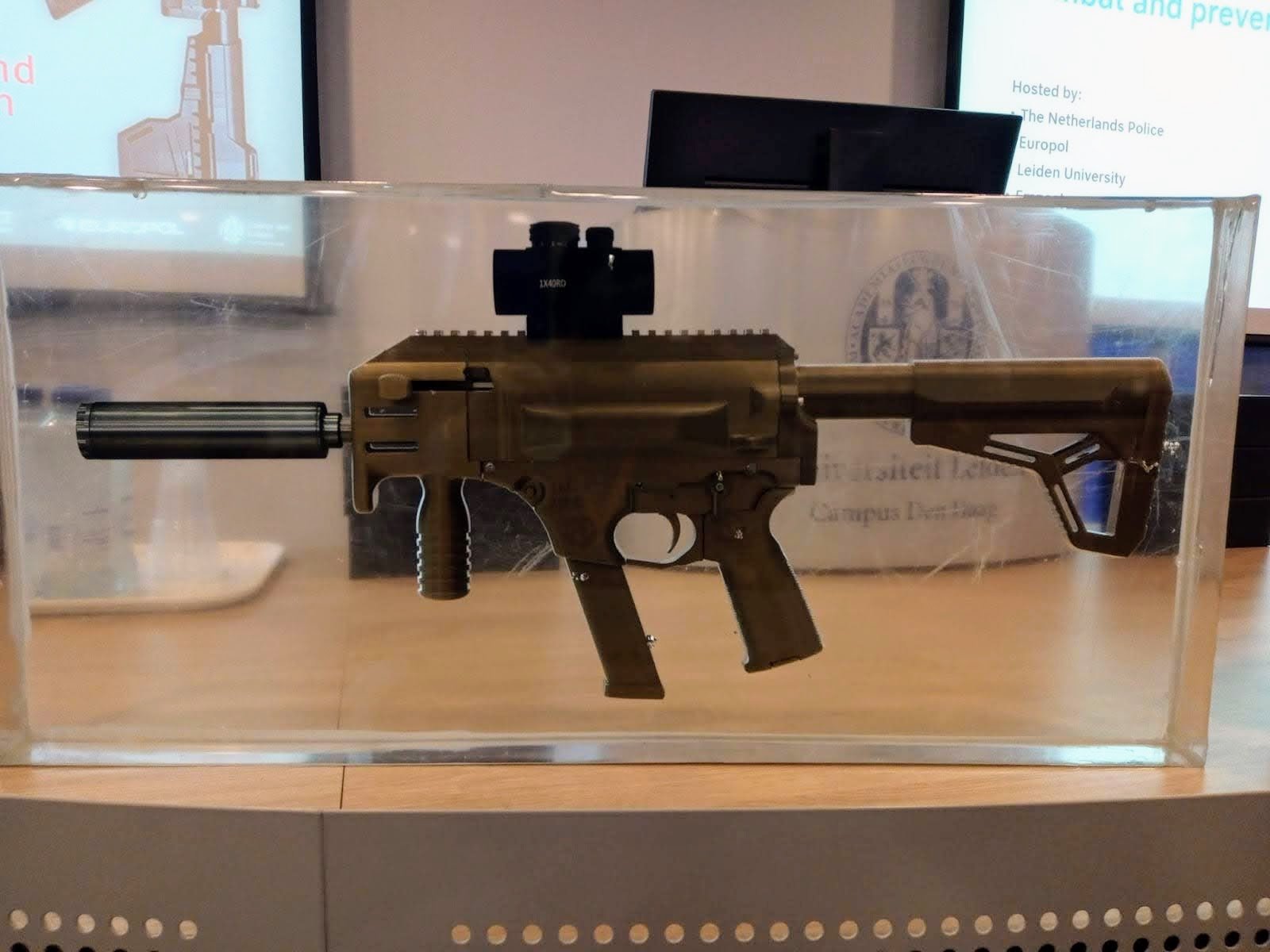
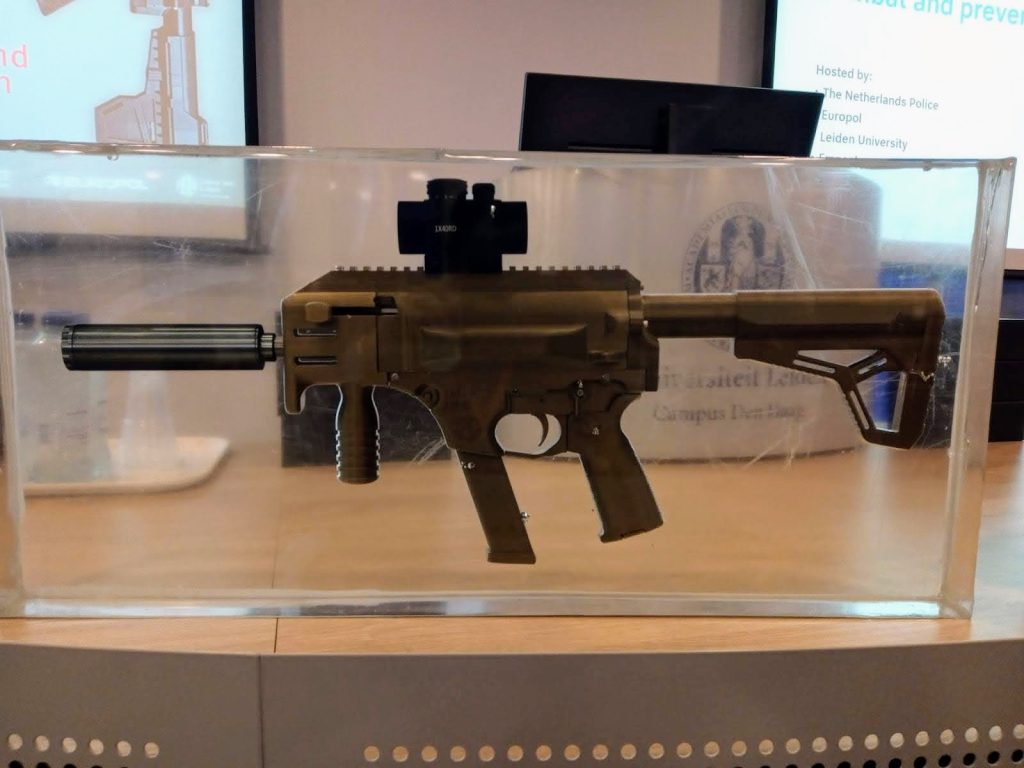
Featured image shows a FGC-9 3D printed gun. Photo via Dr. Yannick Veilleux-Lepage.
