


RTX, which in January received a $438 million contract to help the FAA replace hundreds of antiquated radar systems, is reportedly vying for an even larger chunk of the $12.5 billion Congress has allocated for the agency’s Brand New Air Traffic Control System (BNATCS) effort.
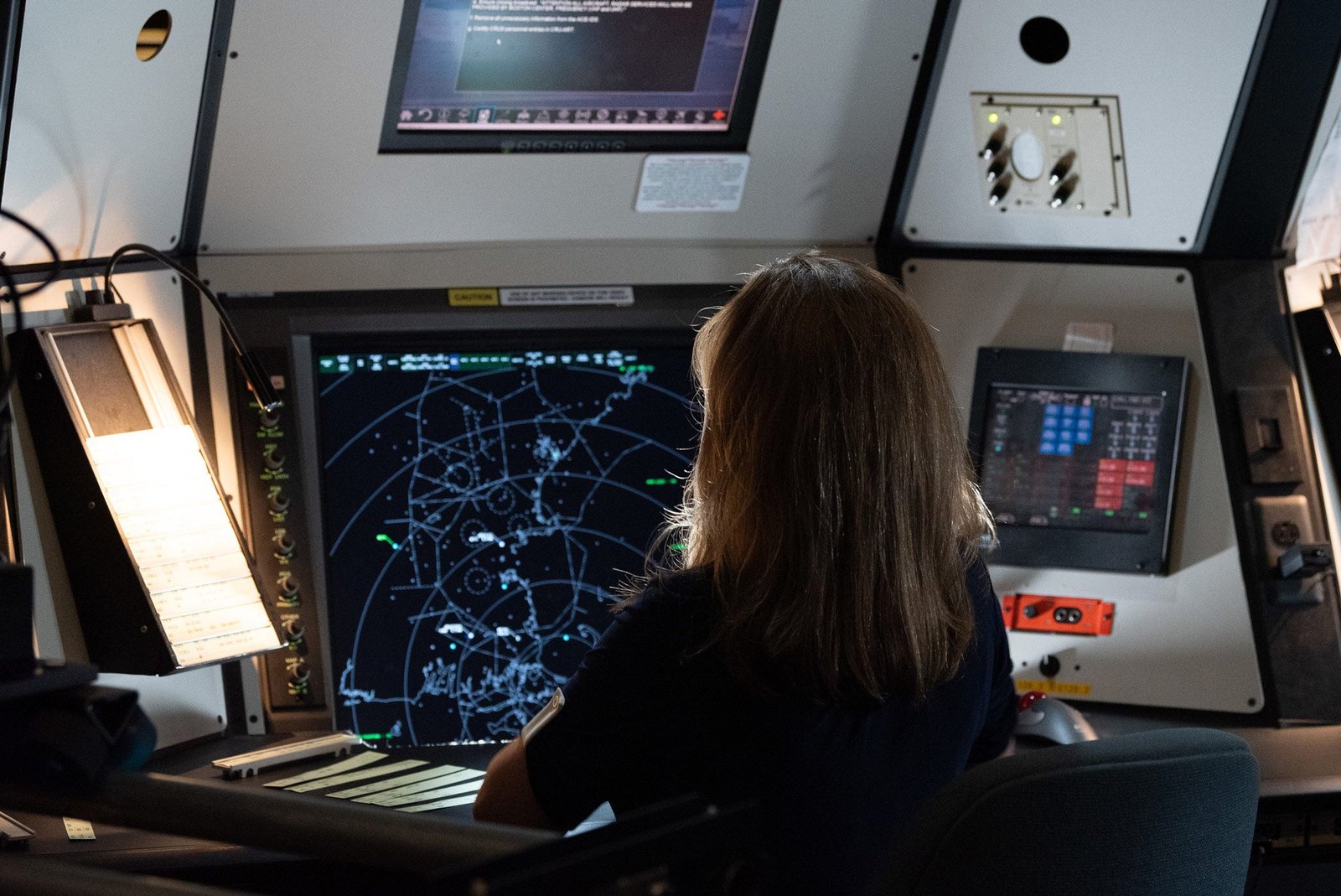
On Tuesday at RTX facilities in Washington, Collins Aerospace officials demonstrated a system designed to unify fragmented ATC data sources, which the company, per FlightGlobal, will pitch to the FAA as the BNATCS common automation platform (CAP).
The regulator has selected a prime integrator—Peraton, which will oversee the entire effort—and handed out contracts to RTX and others for various subtasks. But it still seeks a CAP to aggregate data from the disparate en route and terminal systems that are used to track and manage aircraft.
The FAA requested proposals for the CAP in November and closed responses in December. It has not provided an update since.
RTX did not respond to FLYING’s request for comment.
Why FAA Wants a CAP
The CAP would combine the FAA’s En Route Automation Modernization (ERAM) and Standard Terminal Automation Replacement System (STARS) platforms.
ERAM manages high-altitude flights at 20 air route traffic control centers (ARTCCs). STARS coordinates arrivals and departures in towers and terminal route approach control (TRACON) facilities, providing sequencing as well as issuing weather updates and conflict alerts.
Cedric Vigil, RTX-Collins’ associate director for automation and air traffic systems, on Tuesday described those platforms as “separate stovepipe systems,” per Aviation Week. The CAP, Vigil said, would turn them into more of a “layer cake,” with different tiers that could be separately managed within a single digital interface. The intended effect is reduced workload and a clearer picture of the airspace for ATCs, at a moment when air traffic volume is on the rise.
RTX reportedly believes Collins’ AutoTrac platform is fit for the job.
AutoTrac, first introduced in the 1990s, automates terminal, en route, and oceanic and surface operations by integrating flight data, timelines, and intent from radar, ADS-B, and other sources. The system continuously monitors and assesses airspace, displays flight plans and weather data, optimizes the flow of traffic at airports, and provides real-time conflict detection and alerts. It can be upgraded to manage uncrewed operations, including increasingly common drone delivery services and future electric air taxi flights.
Per RTX, AutoTrac is used by air navigation service providers worldwide, including in hubs such as Hong Kong and Mumbai, to manage heavy air traffic. Three generations of the technology are in operation.
RTX’s Outlook
RTX may have as good a shot at the CAP contract as any company.
It is the FAA’s primary STARS contractor, maintaining and upgrading the system under a $223 million contract awarded in 2021. The company estimates that its systems help manage about two-thirds of the world’s air traffic.
ERAM was developed and installed by Lockheed Martin and is maintained by Leidos, which has its own CAP solution but has not publicly positioned itself to compete for the BNATCS contract.
A successful CAP bid would make RTX one of the most important players in the ATC modernization push.
The company is already helping to replace up to 612 ground-based aviation radars—some decades old—and consolidate the 14 different FAA surveillance radar configurations currently in use. Its $438 million contract covers the supply of Collins’ Condor Mk3 and ASM-XR radars, which are already deployed nationwide.
The FAA further aims to shift ATC communications from analog to digital, build new towers and centers, and install 27,625 new radios, 462 digital voice switches, and 110 weather stations in Alaska, all by 2028.
Congress in 2025 allocated $12.5 billion toward the BNATCS effort. But Transportation Secretary Sean Duffy said in November that the money does not cover the common automation platform, among other provisions. Duffy is seeking a total of $31.5 billion and has repeatedly called on lawmakers to provide additional funds.
