


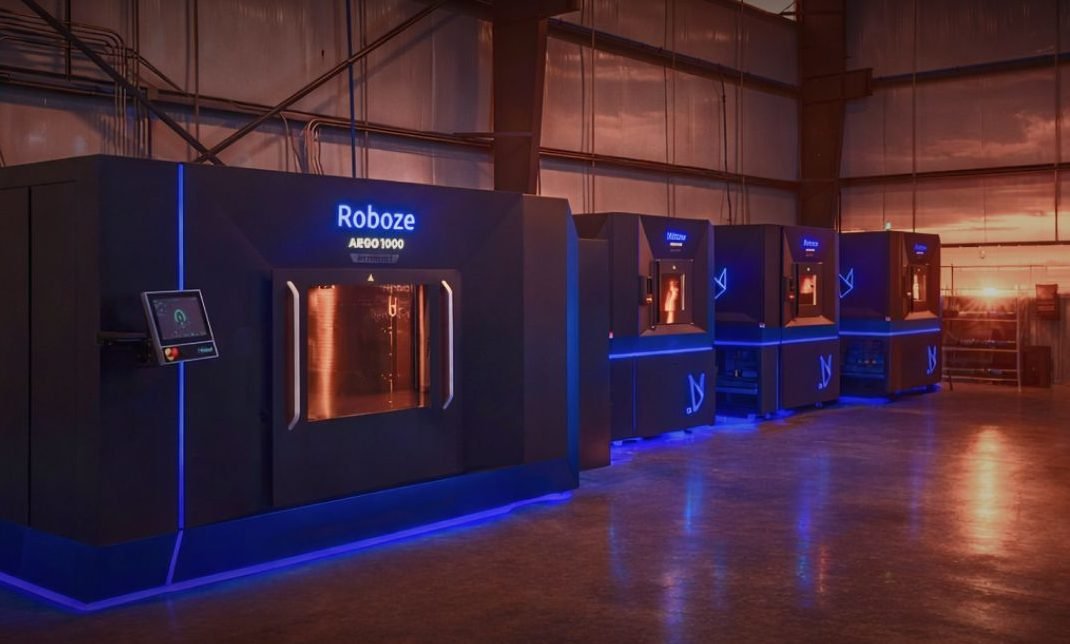
Rule 1 Ventures, a U.S. venture capital firm specializing in national security technologies, has made a new investment in Roboze, a company developing production platforms for mission-critical industries. The capital is earmarked for growing Roboze’s network of distributed manufacturing facilities, allowing defense customers and industrial operators to fabricate advanced components at or near the locations where they are required.
Rule 1 Ventures brings capital as well as expertise. The firm is led by James A. Winnefeld Jr., a retired four-star admiral and former Vice Chairman of the Joint Chiefs of Staff, and Todd Ehrlich, a former U.S. Navy SEAL and defense entrepreneur, positioning the investment firmly within the national security conversation.
“Future readiness depends not only on advanced systems but also on the ability to sustain and produce them,” said Winnefeld. “Roboze is building industrial capability that will become increasingly critical to national security.”
The funding round also included Privcorp Ventures, Heather Podesta, Founder of Invariant LLC, Gary Ang, former Temasek Operating Partner, Tholus Capital, and the Ferrari Family Office. Existing shareholders Federico Faggin and Rialto Venture Capital participated as well.
A Platform Built for the Point of Need
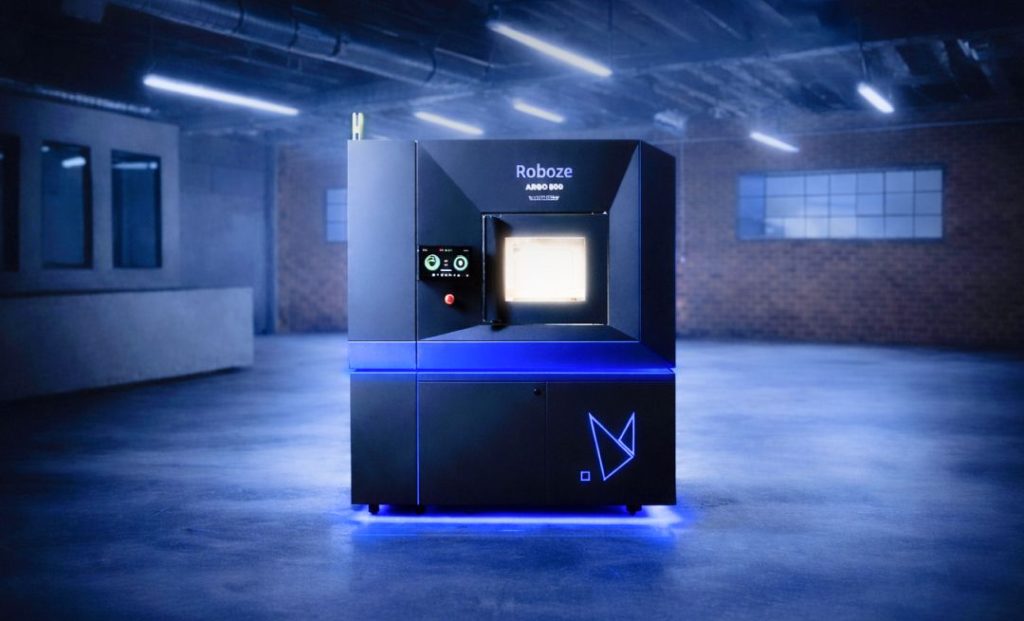
Roboze’s stack technology combines high-performance additive manufacturing hardware, proprietary materials, AI-driven process intelligence, digital manufacturing software and a distributed smart factory infrastructure under a single production platform.
The architecture is designed to allow complex parts to be fabricated locally and on demand, reducing dependence on centralized manufacturing and the fragile supply chains that come with it, a vulnerability that has become increasingly visible across defense, energy, and critical infrastructure sectors.
“Modern industrial resilience requires more than machines, it requires a complete manufacturing platform that combines hardware, materials science and intelligent software. Our mission is to build the infrastructure that allows critical industries to produce advanced components wherever they are needed,” said Alessio Lorusso, Founder and CEO of Roboze.
The new capital will fuel Roboze’s expansion across operational hubs in the United States, Europe, and the Middle East, extending its distributed manufacturing reach to defense contractors, governments, and industrial operators across all three regions.

Reindustrialization of U.S. Manufacturing
Roboze’s new investment reflects a broader recalculation of how mission-critical manufacturing gets done. For decades, cheap labor drove production offshore, leaving governments and defense operators dependent on centralized supply chains with long lead times and limited flexibility. Geopolitical risk and the growing demands of defense readiness are changing that calculus. The organizations that can produce at the point of need will carry a structural advantage over those still waiting on a global supply chain to deliver.
These efforts are increasingly visible across the United States. For instance, Freeform’s US$67 million Series B is funding the Skyfall platform, a metal 3D printing system using hundreds of lasers designed to produce thousands of kilograms of mission-critical components daily, replacing fragmented manufacturing with a fully integrated, AI-driven factory under one roof.
Elsewhere, Hadrian has launched Hadrian Additive, a new division embedding production-ready additive manufacturing directly into its Opus factory platform for U.S. defense and allied customers. The first capacity is expected online in 2026, allowing mission-critical components to move from validated designs to full-scale production within a single integrated environment.
3D Printing Industry is inviting speakers for its 2026 Additive Manufacturing Applications (AMA) series, covering Energy, Healthcare, Automotive and Mobility, Aerospace, Space and Defense, and Software. Each online event focuses on real production deployments, qualification, and supply chain integration. Practitioners interested in contributing can complete the call for speakers form here.
To stay up to date with the latest 3D printing news, don’t forget to subscribe to the 3D Printing Industry newsletter or follow us on LinkedIn.
Explore the full Future of 3D Printing and Executive Survey series from 3D Printing Industry, featuring perspectives from CEOs, engineers, and industry leaders on the industrialization of additive manufacturing, 3D printing industry trends 2026, qualification, supply chains, and additive manufacturing industry analysis.
Featured image shows Smart Factory. Photo via Roboze.
