


Some lobby groups are gearing up to fight against the subsidy cuts, which could prompt airlines to stop flying to some small communities.
The Trump administration wants to slash funding for the Essential Air Service programme next fiscal year, describing it as a financially bloated programme that subsidises flights that few people actually want to take.
Under the programme, the Department of Transportation (DOT) subsidises commercial flights to some 180 small US communities.
The White House proposed the funding cuts in President Donald Trump’s fiscal year 2027 budget request, released on 3 April.
Presidential budget requests only lay out the administration’s desired funding priorities. Congress passes actual funding bills and some lawmakers may bristle at the prospect of losing subsidised flights to communities in their districts.
Also, industry groups are already coming out strong against Trump’s proposal. For those reasons, the budget cuts are anything but certain.
“The [EAS] programme is the economic backbone of rural air service in America,” the Regional Airline Association (RAA) says in response to Trump’s proposal. “The EAS programme fulfills a critical promise made to these communities to keep them safely connected to the national air transportation system.”
“RAA will work with Congress to ensure that this programme is preserved and fully funded during the FY27 appropriations process,” it adds.
Under the EAS programme, which Congress established to ensure small communities did not lose air service after lawmakers deregulated the airline industry in 1978, the DOT subsidises flights (typically on small aircraft) to qualifying communities.
That the White House specifically called out the EAS programme in its proposed budget is notable, revealing the degree to which the administration views EAS as a poor use of taxpayer dollars.
Trump’s budget would see the EAS programme receive $315.7 million in FY2027 (which starts on 1 October). That would be $364.5 million less than the $680.2 million it will receive this fiscal year, budget documents show.
“Recent cost growth in the EAS programme is unsustainable,” Trump’s budget says, adding that programme spending more than doubled between 2021 and 2025.
“The EAS programme funnels taxpayer dollars to airlines to subsidise half-empty fights from airports that are within easy commuting distance from each other, while also failing to effectively provide assistance to most rural air travelers,” it adds.
Trump’s proposal “reforms the EAS programme by proposing to adjust eligibility to help address rural communities’ air transportation needs in a more-sustainable manner”.
Trump wants to tighten eligibility requirements to exclude airports within 75 miles (120km) of other commercial airports, and those at which subsidies per passenger exceed $350.
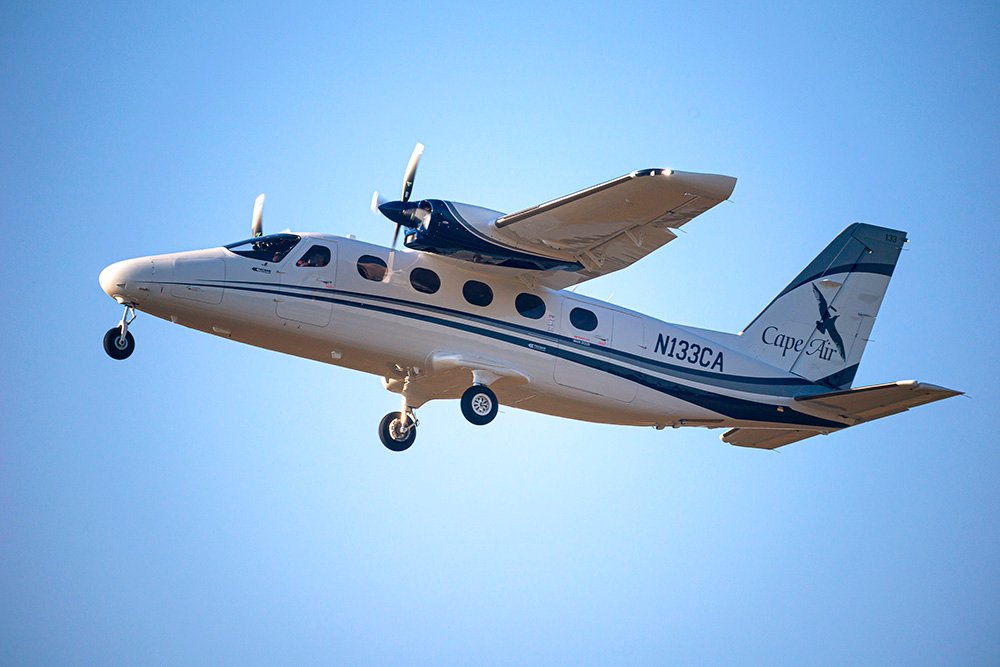
Airlines participating in the EAS programme include industry giant SkyWest Airlines and smaller players like Cape Air.
Those carriers did not respond to requests for comment.
Lobby group Airports Council International says: “Programmes like Essential Air Service enhance connectivity, particularly for small and rural communities, and play an important role in maintaining access to the national air transportation network”.
The DOT pays for the EAS programme two ways: from a pool of discretionary funds and from fees the FAA charges to aircraft overflying US airspace.
Trump’s proposal would reduce EAS funding by sharply curtailing its discretionary funding, to $142 million in FY2027, down from $513.7 million this fiscal year.
Subscribe to gain access to all news
Already have a subscription? Log in.
Choose your subscription
Considering a corporate subscription? Contact us to find out more.
