


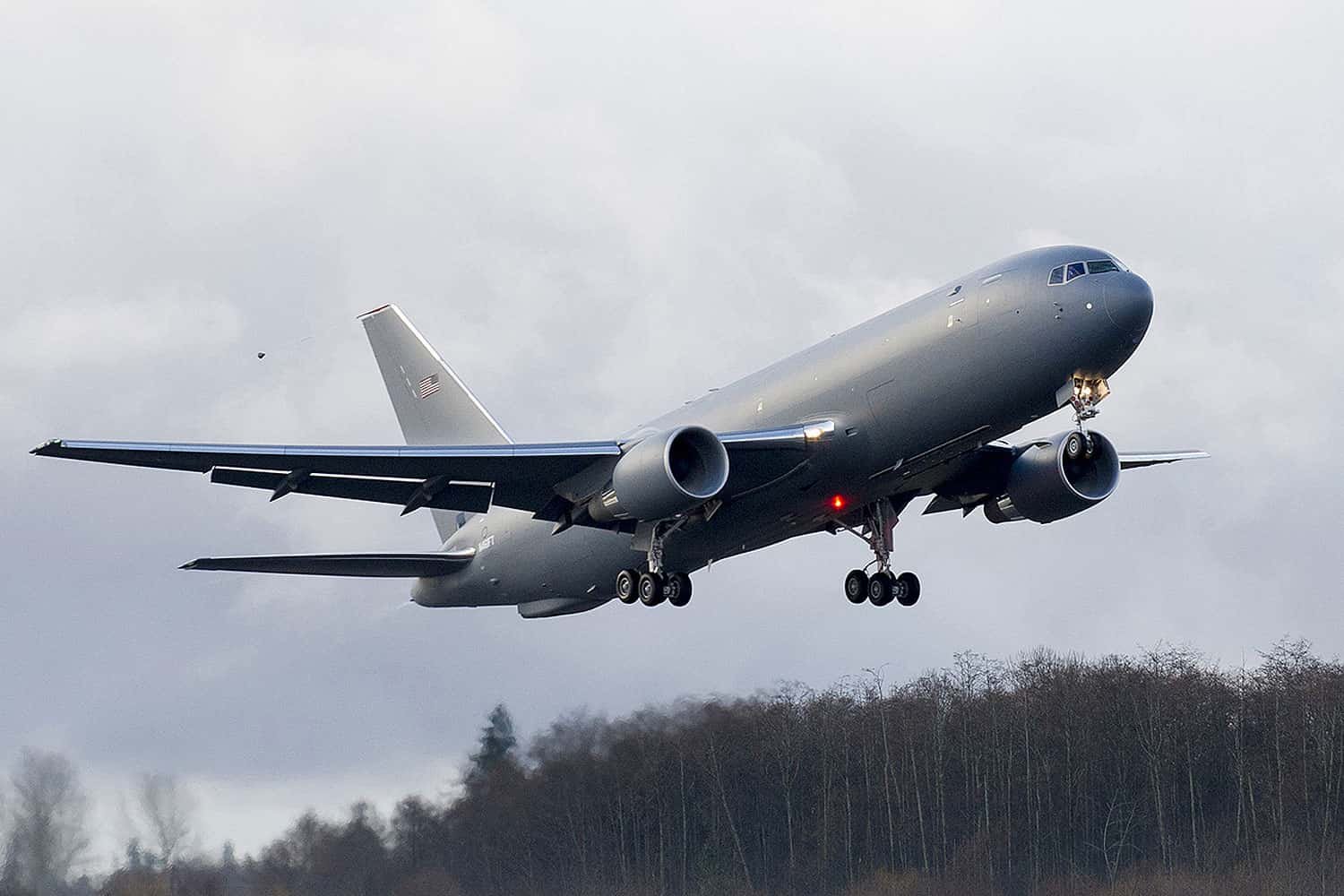
The U.S. Air Force will not award Boeing a new contract for 75 KC-46A Pegasus aerial refueling aircraft until persistent technical deficiencies in the tanker are corrected, even though the service currently lacks an alternative program.
According to Air & Space Forces Magazine, Deputy Chief of Staff for Plans and Programs Gen. John D. Lamontagne told lawmakers that the procurement will remain on hold until the aircraft’s problems are resolved, a process expected to take several years.
The additional batch of 75 tankers had been announced in July 2025 as a follow-on order to maintain production of the KC-46A while the Air Force develops a long-term replacement for the aging KC-135 Stratotanker fleet, some of which have been in service for more than six decades.
Follow us: WhatsApp | BlueSky | Google News | Instagram | LinkedIn | Facebook
Under the original contract, the number of KC-46A aircraft delivered to the Air Force is expected to reach between 183 and 188 by next year.
The Pegasus program has faced a series of technical issues since entering service, including deficiencies with the refueling boom system, cracks in parts of the fuselage and low mission-capable rates. The aircraft’s remote vision system, used by operators to control the refueling boom, has also faced criticism due to poor visibility and operational limitations.
A redesigned version of the vision system is now scheduled to enter service in 2027, two years later than originally planned.
Despite the problems, the KC-46A remains the only tanker currently in production for the Air Force as it searches for a broader replacement strategy for the KC-135 fleet. The service expects the Pegasus to remain in production through at least the late 2020s and potentially into the 2030s.
For Boeing, the tanker program has already generated more than $8 billion in losses under a fixed-price development contract. The company is now focused on correcting the aircraft’s deficiencies while continuing deliveries to the Air Force.
Boeing delivered 14 KC-46A aircraft in 2025 and plans to increase deliveries to 19 units in 2026.
