


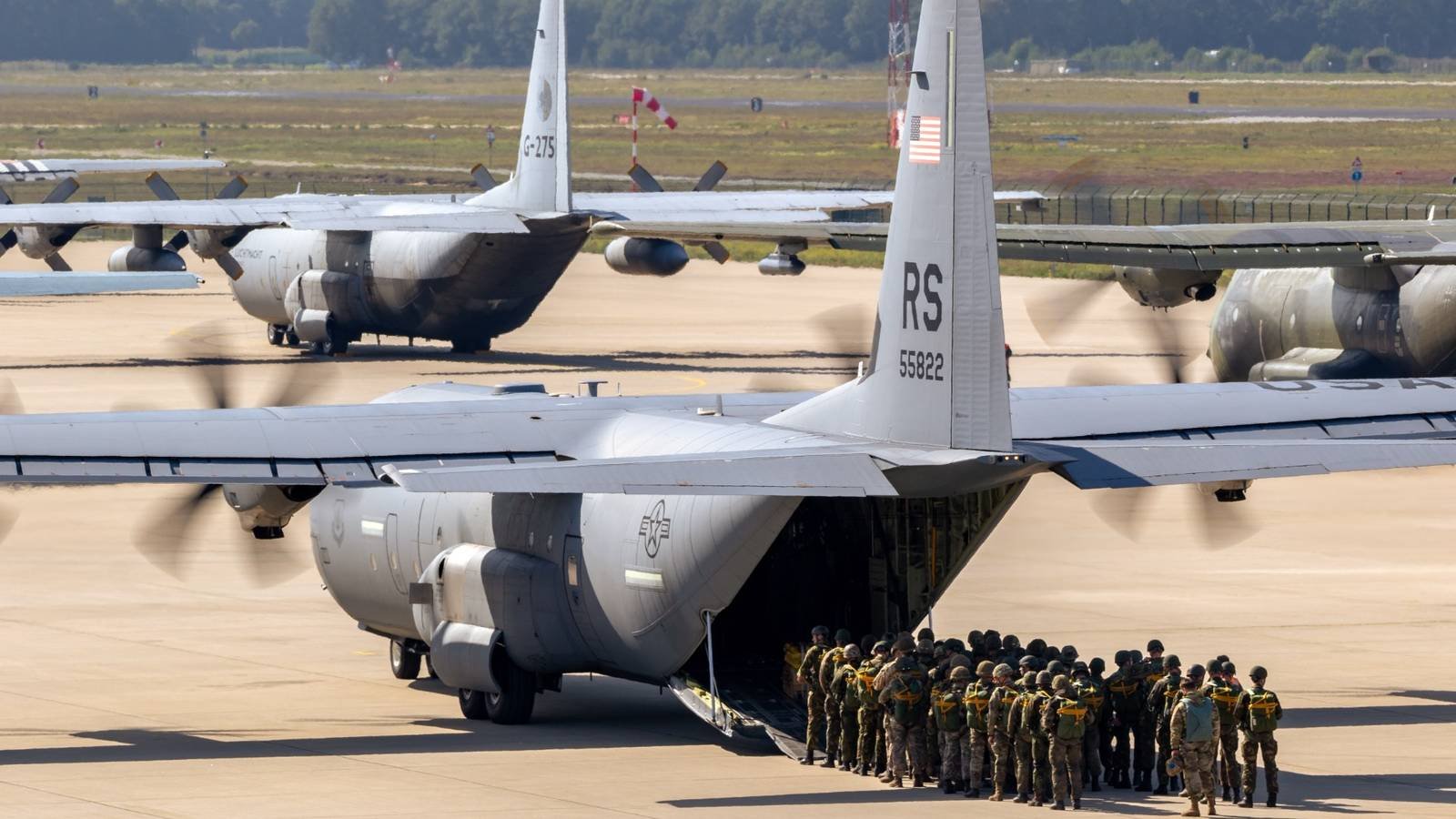
The United States Air Force has lost two M C-130J Commando II aircraft during a high-risk rescue mission in Iran, with each airframe valued at over $100 million. The incident occurred amid a complex operation to recover a downed American pilot, underscoring the dangers of special operations in contested airspace. According to US officials, the aircraft were deliberately destroyed to prevent them from falling into enemy hands. The mission highlights both the capabilities and vulnerabilities of elite USAF assets in hostile environments.
The incident offers a rare look into the realities of modern combat search and rescue (CSAR), where even the most advanced aircraft can be lost in hostile environments. Reports from The Wall Street Journal and The Aviationist reveal new operational details, including the scale of the mission and the intensity of enemy resistance. The event underscores both the sophistication and the vulnerability of US special operations forces operating in denied airspace.
Why The USAF Destroyed Its Own MC-130Js In Iran
At least two MC-130J Commando II aircraft and an AH-6 Little Bird helicopter, as visible from the wreckage, were deliberately destroyed on the ground during the high-risk rescue mission, as reported by the Aviationist. Designed for covert infiltration and exfiltration, these aircraft are optimized for low-level operations deep inside hostile territory. However, during the mission in Iran, the aircraft reportedly became stranded or otherwise compromised, leaving them exposed in a highly contested environment.
Rather than risk capture by Iranian forces, US personnel made the decision to destroy the aircraft in place. This aligns with established military doctrine, particularly for platforms carrying sensitive and classified systems. The MC-130J is equipped with advanced avionics, electronic warfare suites, and defensive countermeasures designed to defeat modern threats, including infrared-guided missiles. If recovered intact, such technology could provide adversaries with valuable intelligence and undermine future operations.
Although the financial cost of more than $100 million per aircraft, as reported by the WSJ, is substantial, the strategic logic remains clear. In modern warfare, protecting sensitive capabilities and operational methods often outweighs the loss of even the most advanced airframes. Once grounded in hostile territory with no viable recovery option, these aircraft effectively became liabilities, making their destruction the only practical course of action.
Inside The High-Risk CSAR Mission That Drove The Decision

The destruction of the MC-130Js occurred during one of the most complex combat search and rescue (CSAR) missions in recent years. The operation was launched after an F-15E Strike Eagle was shot down over Iran on April 3, 2026, triggering an urgent effort to recover its crew. While one airman was rescued relatively quickly, the second, a weapons systems officer (WSO), remained isolated behind enemy lines for nearly 48 hours, dramatically increasing the stakes of the mission.
According to The Aviationist, the rescue effort involved a large, multi-domain force, integrating airpower, intelligence, cyber capabilities, and space-based assets. Iranian forces actively searched for the downed airman during this period, reportedly offering financial incentives for his capture. This created a rapidly evolving and dangerous situation, requiring precise coordination and constant adaptation from US strategists.
Unmanned systems played a crucial role in protecting the isolated airman. MQ-9 Reaper drones provided persistent surveillance and reportedly engaged hostile forces that approached the survivor’s position. Meanwhile, special operations forces were inserted into hostile terrain under the cover of darkness, relying on aircraft such as the MC-130J to support the mission.
Operating deep inside denied airspace, however, exposed all participating assets to significant risk. Even highly capable aircraft like the MC-130J are vulnerable when faced with layered air defenses, uncertain landing conditions, and limited extraction options. When the situation on the ground deteriorated and the aircraft could no longer be safely recovered, their destruction became unavoidable.
Despite the loss of two high-value aircraft, the mission ultimately achieved its objective. Both F-15E crew members were successfully rescued, and no US personnel involved in the operation were reported killed. The outcome underscores a long-standing military priority: recovering personnel takes precedence, even at the cost of advanced, expensive equipment.

US Air Force A-10 Thunderbolt II Crashes Amid Search For Downed F-15 Eagle
The pilot was successfully rescued.
From Failure To Evolution: How Operation Eagle Claw Shaped Modern Rescue Missions

The 2026 rescue operation inside Iran inevitably draws comparisons to the ill-fated Operation Eagle Claw, one of the most significant failures in US special operations history. Launched in April 1980, Eagle Claw aimed to rescue American hostages held in Tehran but quickly unraveled due to a combination of mechanical issues, harsh desert conditions, and poor coordination between military branches. The mission ended in disaster when a helicopter collided with a Lockheed C-130 Hercules during refueling, killing eight servicemen and forcing the operation to be aborted.
At its core, Eagle Claw exposed critical weaknesses in how the US military planned and executed joint operations. Units from different branches had limited experience working together, communication was fragmented, and the mission lacked a unified command structure. Additionally, unreliable equipment and insufficient contingency planning compounded the risks of operating deep inside hostile territory. The failure had immediate human and political consequences and also triggered a sweeping reassessment of US special operations capabilities.
In contrast, the 2026 MC-130J-supported rescue mission highlights how far the US military has evolved since then. Today’s operations benefit from unified command structures, such as those developed under the United States Special Operations Command, and from vastly improved coordination across the air, space, cyber, and intelligence domains. Advanced platforms like the MC-130J and MQ-9 Reaper, combined with real-time surveillance and precision strike capabilities, enable a level of situational awareness unimaginable in 1980.
Although the recent mission still resulted in the loss of high-value aircraft, its successful recovery of both aircrew members highlights a fundamental shift in capability. Where Eagle Claw failed due to fragmentation and technical limitations, the 2026 operation succeeded through integration, adaptability, and decades of hard-learned lessons. In many ways, the destruction of the MC-130Js, despite its high cost, symbolizes not failure but the maturity of a force willing to sacrifice equipment to ensure mission success and personnel recovery.
