


![Steve Allen has logged 1,500 hours in this 195, which he bought 18 years ago. [Credit: Glenn Watson]](https://tbh.express/wp-content/uploads/2026/03/Used-Aircraft-Guide-Cessna-195-Businessliner.jpeg "Used Aircraft Guide: Cessna 195 Businessliner")
How does one go shopping for a Piper PA-32 Cherokee Six and wind up flying home in a 1947 Cessna 195 Businessliner?
Ask Chris Thomsen, who was on the lookout in 2013 for an airplane with more muscle than the Piper Arrow he was flying. As his family and baggage requirements grew, the Arrow gradually revealed the limitations of its useful load. The bigger, more-powerful six-place Piper would be a sensible solution.
Sensible, yes, but perhaps a bit too conservative.
“What I really wanted was a T-6,” Thomsen said. “I have always loved the way they look and especially the way they sound when they take off.”
But North American Aviation’s charismatic World War II trainer, with just two seats and an appreciable appetite for fuel, was not the answer for family transport.
Appeal of Antiques
Although his warbird dreams faded quickly, Thomsen’s friend, EAA board member Alan Shackleton, gently suggested during EAA AirVenture Oshkosh 2013 that he visit the Vintage parking area at Wittman Field (KOSH). He might find something “fun” there, he recalled Shackleton saying.
Shackleton was right. After surveying the antique aircraft awhile, Thomsen came upon a line of Cessna 195s and was smitten. Soon he was chatting with the type’s enthusiastic owners about their experiences purchasing, flying, and maintaining their airplanes. They were quick to tell him that despite its age, the 195 is very much at home in the modern GA environment.
Between the beautiful airplanes and their welcoming, helpful owners, most of whom were members of the International Cessna 195 Club (cessna195.org), Thomsen was intrigued enough to attend the club’s annual fly-in, which took place in Tupelo, Mississippi, in September 2013. That trip sealed the deal.
“Eventually you realize there are no other airplanes that you are interested in,” said Thomsen, who serves as vice president and treasurer of the 195 club. “Two and a half months later, I found one in Goodland, Kansas.”
Plenty of Support
Goodland is an ideal place to find a 195 because Goodland Municipal Airport (KGLD) is home to Butterfly Aviation, a full-service FBO that has long specialized in maintaining and repairing 195s as well as servicing the crop-spraying aircraft that work the region’s vast farms. Butterfly also provides flight instruction, which is critical for new 195 pilots, especially those who, like Thomsen, have no tailwheel or vintage-aircraft experience.
“I guess I did everything wrong,” he said, admitting he knew very little about the type before deciding to buy N4331N, which has a beautiful, unusual cream-and-bronze paint scheme and is powered by a 300 hp, 7-cylinder Jacobs radial engine.
![The Cessna 195 shows off its sleek profile and a graceful, rounded vertical stabilizer and rudder shape shared with the Cessna 170. [Credit: Glenn Watson]](https://www.flyingmag.com/wp-content/uploads/sites/2/2026/03/FLY0326_3.0_Used-Aircraft-1-1024x655.jpeg)
The initial adventure turned out well, though, with Thomsen learning to fly the aircraft and perform owner maintenance. Many aircraft owners would say he made the right moves by having experts in the type handle his pre-purchase inspection (PPI) and instruction. He also received valuable advice concerning insurance and other details from other owners he met at Oshkosh.
Thomsen said he flew his new-to-him aircraft, named Bonnie, about 150 hours in his first year of ownership and about the same amount the second year—the kind of frequency that helps a pilot truly bond with an airplane and maintain sharp flying technique. He marvels at how practical the airplane turned out to be as a traveling machine. And he appreciates the attention it attracts wherever it lands.
“Everywhere you go, you are a rock star,” he said.
Target Market
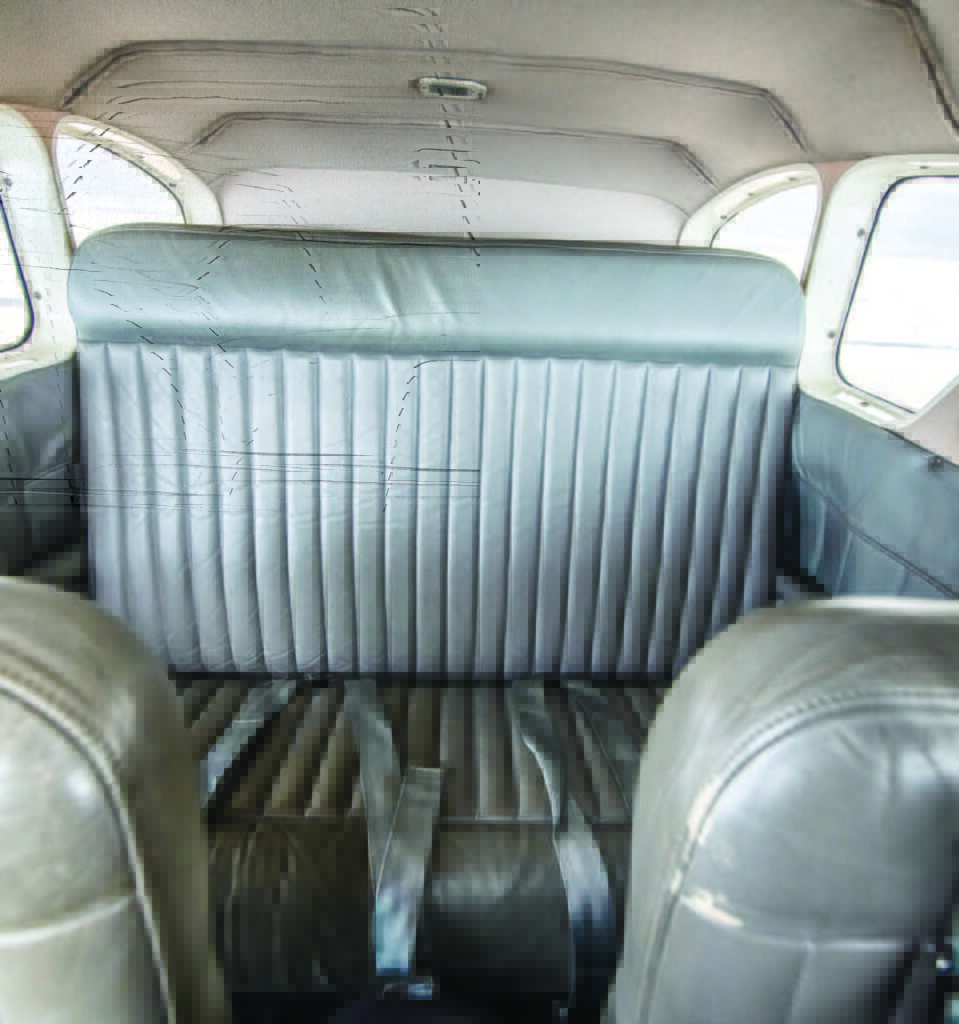
Cessna marketed the 195 and its lower-spec sibling, the 190, to businesspeople who could use the aircraft to travel easily to meetings in locations not well served by airlines in the period following World War II. The company also sought to attract pilots who wanted a reasonably fast airplane with a plush, spacious luxury car-style cabin capable of carrying a family in comfort.
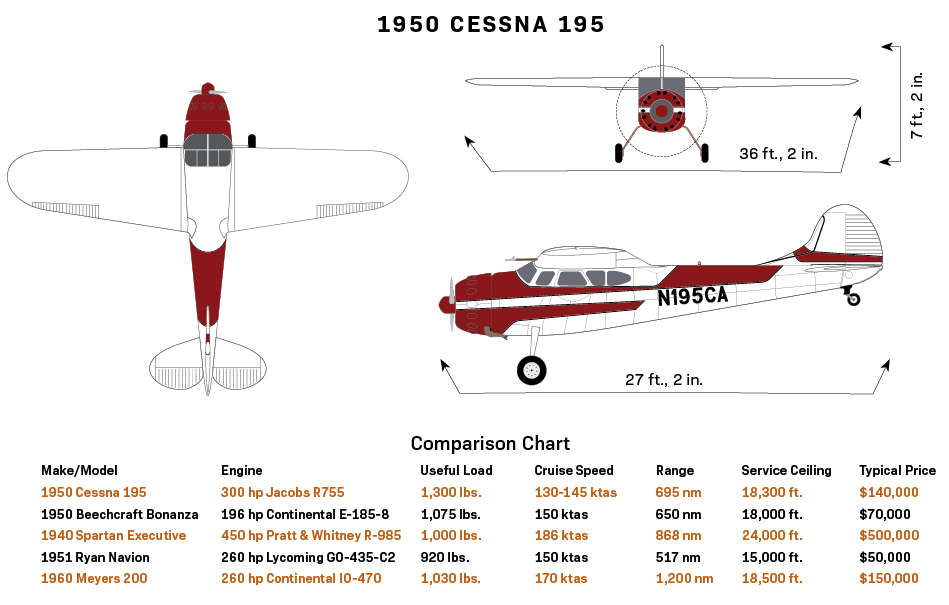
With a maximum gross weight of 3,350 pounds and a useful load of 1,000 pounds, the 195 can easily carry four or five people while cruising at 145 ktas and burning 13-16 gph. Other supplemental type certificates (STCs) for the model include a variety of modern avionics, Cleveland brakes, a locking tailwheel, Jasco alternator, and an updated cabin heater.
There is a military version of the 195 known as the LC-126. The U.S. Air Force ordered 15 of them in 1949, according to the National Museum of the U.S. Air Force in Dayton, Ohio. The service was looking for a more rugged airplane to use on Arctic rescue missions. Each LC-126 came with floats and skis that could be interchanged with the wheels to support land and water operations.

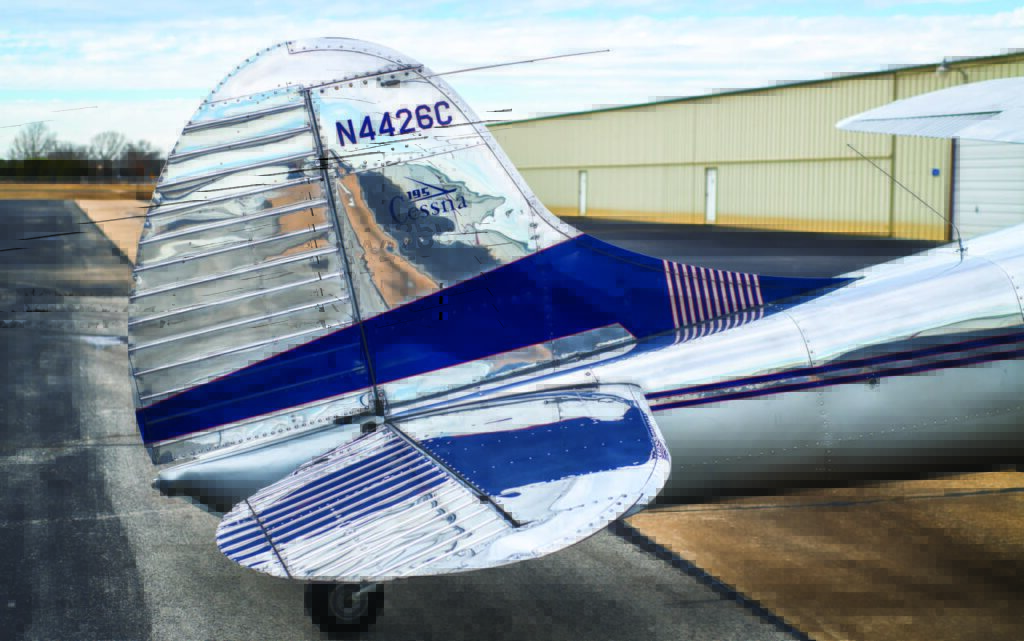

The 190 and 195 were launched together and shared the same airframe, but a 240 hp Continental W670 radial engine powers the 190, while the 195 used a 300 hp Jacobs R755 radial. Cessna also equipped 195s with a 245 hp version of the R755.
An STC allowed installation of a 330 hp version of the Jacobs called the L-6 in the 195, and a company called Page Aircraft Engines installed turbocharged Jacobs engines in a few 195s, giving an impressive 350 hp for takeoff. Perhaps the 195 of many pilots’ dreams is one modified to use a 450 hp Pratt & Whitney R-985 Wasp Junior.
Engine Pros and Cons
About five years into production, Cessna began working through an oversupply of 245 hp war-surplus Jacobs engines. The company modified many of them to develop 275 hp, and some experts consider this version of the “shaky Jake” to be the best combination of performance and reliability for the 195.
All of the engines available on the 195 and 190 have advantages and disadvantages. Pilots love the stronger feel of the 300 hp Jacobs compared with its 245 hp sibling, but it is known to develop case cracks. The 330 hp L-6 has obvious appeal, but relatively low production means sourcing parts for the engine, originally built for the Avro
Anson during WWII, can be a challenge. The 240 hp Continental engine in the 190, which shares many parts with the familiar 220 hp version found in Boeing PT-17s and other aircraft, was produced in lower numbers, so parts specific to that model can be difficult to find.
In general, though, considering their age, the 190 and 195 are well supported by specialty shops and owner clubs.
Radial Operation
By the book, operation of the radial engines in 190s and 195s might seem fairly similar to that of any late-model, high-performance piston single. But there are fundamental differences.
In his classic video, So You Want a Cessna 195?, the late Larry Bartlett, a longtime 195 owner, flight instructor, and examiner, emphasizes the need to pull the propeller through a few revolutions by hand to clear oil that tends to collect in the lower engine cylinders. Failing to do so could result in a hydraulic lock that can bend the engine’s link rods.
![The panel's instruments and controls are a functional mix of old and new. [Credit: Glenn Watson]](https://www.flyingmag.com/wp-content/uploads/sites/2/2026/03/FLY0326_3.0_Used-Aircraft-7-1024x727.jpeg)
While the 195 operates like newer models in most ways, this procedure feels like a throwback to the golden age, especially in this era, when pilots fear the dangers of hot magnetos and often scold each other for simply touching the propeller. “That thing could kick over,” they warn. Bartlett mentions the need to confirm that mags are off and to treat the engine “like a loaded gun” just in case a mag is hot.
I think this exercise is one of the ways the 195 and other radial-engine aircraft weed out the faint of heart. The same goes for old Cubs, Champs, and other antique taildraggers that lack electrical systems and require hand-propping. We probably have all heard the propeller-handling jokes, referencing something like “the [author Ernest] Hemingway method” followed by a “farewell to arms” punchline.
If you laugh, a radial engine might suit you. If the jokes make you cringe, stick with flat engines and electric starters.
“Starting this thing is very conventional. The round engine has a couple of different things I will point out as we go along,” Bartlett said in the video, which is decades old but still a great resource for pilots. This is where learned techniques that might not appear in the POH come into play. His callout of “throttle cracked, mixture rich, carb heat cold, mags off, fuel on,” sounds the same as for most aircraft I have flown. But Bartlett starts with the Hamilton Standard propeller in the high-pitch, low-rpm position to keep oil from flowing to the prop instead of the engine.
Give the primer knob a few strokes, with the number depending on the weather and which engine your aircraft has. Never never pump the throttle when starting this radial.
“Do not ever pump the throttle on a radial engine to get it started,” Bartlett warned. “That will almost guarantee an engine fire.”
Ground Handling
Clear the area, push the starter button, and count four or five blades before switching to “B Start.” Switch to “Both Run” once the engine fires. Ease the primer back in or use it to keep the engine running, if necessary. On takeoff, Bartlett uses partial carburetor heat because “this thing is a real ice maker.”
Ground handling in the 195 requires concentration. Taxiing a taildragger is an event that can seem more difficult than any phase of flight. With careful coordination of throttle, tailwheel and brakes—and practice—traveling smoothly and gracefully from the hangar to the runway and back again becomes easier and more rewarding.
Making S-turns during taxi is important because the short windshield and large, high cowling combine to obscure visibility, particularly to the right. The aircraft’s design, including the position of the pilot’s seat, makes for a sight picture of the runway that can be deceptive until pilots become accustomed to it. As Thomsen said, “if you think you are straight, you are probably going off the right side of the runway.”
Modern in Many Ways
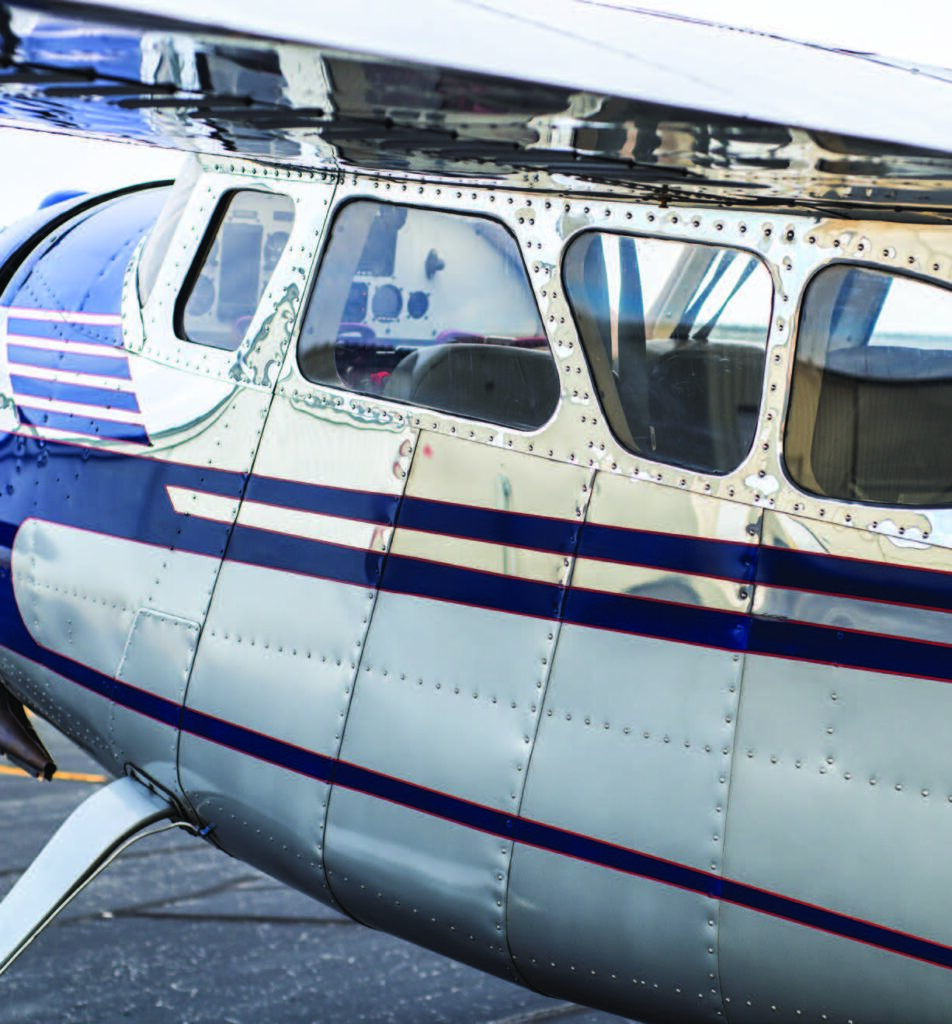
The 195 shares several features that pilots of newer aircraft will find familiar. It has an all-metal structure like the later Cessna 172 Skyhawk and 182 Skylane. These Cessnas also share a NACA 2412 airfoil, which was known to work especially well on high-wing aircraft. Their 1930s ancestor, the C-37, also used the 2412. Some later Cessna models use modified versions of the airfoil.
People like to point out the differences between the 195 and the Beechcraft Bonanza, which both debuted in 1947. They say that while the 195 looked like a carryover from the 1930s, the Bonanza, with its V-tail, sleek lines, and retractable landing gear seemed futuristic.
One can argue that the two aircraft are actually quite similar in construction, mission, and even flight characteristics. One similarity is the 195’s panel, which features a row of sleek art-deco switches that resemble the Bonanza’s infamous “piano keys,” which can make it hard for pilots to tell which system they are engaging. In the end, though, there was no denying that the Bonanza clearly was the airframe with a future.
Cessna built about 1,200 195s and 190s between 1947 and 1954, while the Bonanza remained in production almost to the present day. Textron, Beechcraft’s parent company, announced in November, 2025 that it would stop building Bonanzas after completing its current orders. The company has turned out more than 18,000 of the type.
The Market
Owners tend to hang onto their 195s for a long time, and it is a fairly rare aircraft, so they tend to only trickle onto the used market. Typical asking prices range from $120,000 to $160,000, though airplanes that need more work often are priced well below $100,000. Shoppers should be prepared to deal with the additional needs of aircraft that are in their 70s and 80s.
For those committed to owning a 195, joining the club, getting to know the community, and doing as much homework as possible is the best approach for several reasons. You can gather information from experienced owners and pilots while developing an accurate idea of what to expect from the shopping and acquisition process.
Most of all, community members find out first when an aircraft is for sale, often before it is formally on the market. These airplanes—often the best examples—tend to change hands in quiet, one-on-one transactions. Letting other members know that you are looking is the best way to find the right aircraft.
Flight Characteristics
The 195’s airfoil and high-wing configuration help make it a smooth, stable traveler. It is still a taildragger, though, and because it is larger and heavier than the Cubs and Champs some of us are used to, getting truly comfortable with it takes time. Thomsen from the 195 club said he flew his for 400 hours before it “fit like a glove.” This aircraft is one that you fly all the way to the hangar.
Goodyear tried to make landing the 195 easier by designing its famous (in some circles) optional crosswind landing gear, which allows the main wheels to pivot up to 15 degrees under a side load. The mechanism makes it possible for the aircraft to maintain a crab posture after a crooked touchdown instead of swerving off the runway. Pilots still debate whether the setup helps or hinders.
Want One?
Anyone interested in a 195 but in need of that final push should read Michael D. Larson’s 2014 book, Tales of the Cessna 195. The author writes about acquiring a 195 for $3,400 in 1973 for use as a jump plane at his skydiving center. His fleet included a Beech 18 and a Lockheed Lodestar.
Larson sold the plane after flying it for years—a move he grew to regret. Decades later, he found the right 195, which also happened to be getting refurbished at Butterfly Aviation. His accounts of the drawn-out negotiations, anticipation, and anxiety that accompanied the purchase, and the end result, are enough to convince almost anyone to “just do it.”
![Steve Allen, owner of the Cessna 195 pictured in this FLYING article. [Credit: Glenn Watson]](https://www.flyingmag.com/wp-content/uploads/sites/2/2026/03/FLY0326_3.0_Used-Aircraft-Love.jpeg)
Love at First Sight
Steve Allen, owner of the Cessna 195 pictured in this article, was a sport pilot when he spotted the plane in a friend’s hangar at the Gillespie County Airport (T82) in Fredericksburg, Texas.
Fortunately for him, his friend was an aircraft broker and a CFI—and the airplane was for sale.
“I took one look and said, ‘I want it,’” Allen recalled. “We’ll have to get you a private pilot’s license and teach you to fly a tailwheel,” his friend told him.
The deal was done. That was 18 years and about 1,500 flight hours ago.
Allen got his private certificate and eventually earned his instrument rating in the 195, with its original antique panel. After that he upgraded to modern instruments. With either setup, the aircraft is a capable, practical cross-country traveler—and a beautiful one.
“Wherever we go, people come over and want to get a closer look at that airplane,” he said.
Editor’s note: The Aviation Consumer (aviationconsumer.com) features in-depth technical reviews on everything from headsets to avionics to new and used aircraft. We have incorporated its popular Used Aircraft Guide (UAG) into FLYING Magazine to bring greater resources to our readers.
This column first appeared in the March Issue 968 of the FLYING print edition.
