


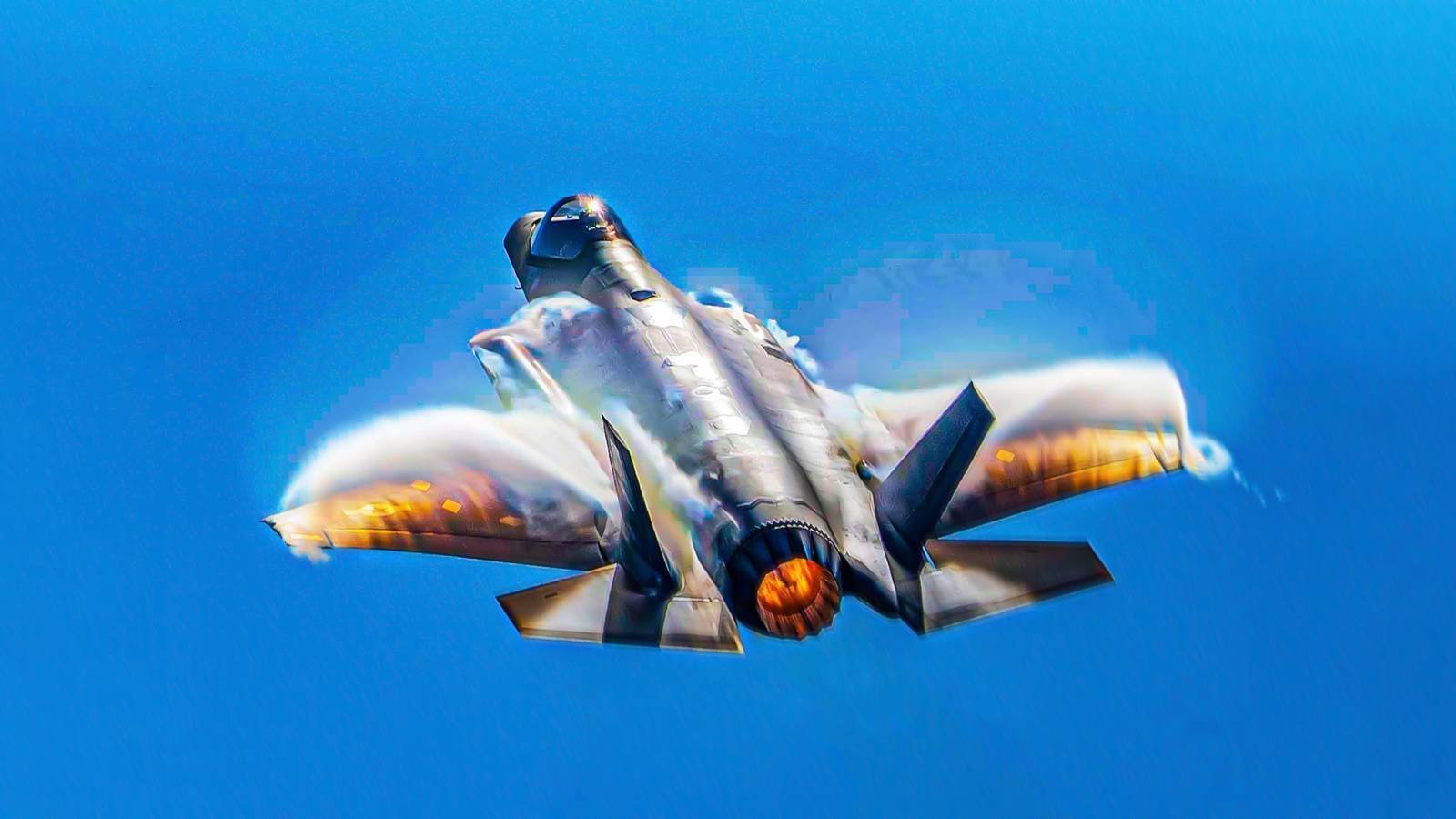
Europe’s Lockheed Martin F-35 expansion is becoming one of NATO’s biggest peacetime construction pushes, and the aircraft itself is often the smallest line item. New hangars, hardened aircraft shelters, security perimeters, weapons infrastructure, flight simulators, and rebuilt runways must all be in place before a single Lightning II can operate from a European base, and several of the continent’s air forces are rebuilding decades-old airfields from close to scratch to make that happen. Billions of euros, pounds, and dollars are now flowing into bases across five NATO countries, each on its own construction and delivery timeline. Some of that spending is driven by simple fleet replacement, swapping Lockheed Martin F-16s or Eurofighters for a stealthier jet, while some of it is driven by something far heavier: NATO’s nuclear-sharing mission, which requires a small handful of European bases to be rebuilt to standards few other airfields on the continent have ever had to meet.
This list ranks the five biggest F-35 infrastructure programs in Europe by combined scale and strategic weight, running from the smallest of the five to the single most expensive base-rebuild project on the continent. Two other NATO airfields deserve a mention alongside this list, even though their own bills don’t yet rival the five below: the Czech Republic ’s Čáslav air base, where, according to Radio Prague International, a roughly €213 million ($230 million) runway and taxiway rebuild recently won government approval ahead of an eventual F-35A order, and Italy’s Trapani-Birgi, currently home to Eurofighter Typhoons of 37° Stormo, where according to Defense News, Rome is spending €112.6 million ($131 million) to build Europe’s first F-35 pilot training center outside the United States, a Eurofighter-to-Lightning handover Simple Flying has examined through the lens of the two jets’ radars.
RAF Marham, UK: Building Room For A Second Front-Line Squadron
Great Britain’s Lightning Force gets bigger, and goes nuclear
RAF Marham in Norfolk has been the United Kingdom’s F-35 home since 2018, when 617 Squadron, the “Dambusters”, received Britain’s first F-35Bs at the end of a roughly £500 million construction effort known as Project Anvil, which rebuilt about 90 percent of the airfield’s operating surfaces and stood up new maintenance, training, and mission-planning facilities. Now Marham is expanding again to make room for its second front-line squadron, the Royal Navy’s 809 Naval Air Squadron, and eventually the RAF’s first-ever F-35A jets.
The UK Ministry of Defence confirmed in 2025 through its Defence Insfrastructure Organisation that a new construction package valued at £90 million ($114 million) excluding VAT, or up to £108 million ($137 million) including VAT, will build the airfield infrastructure 809 Squadron needs, under a contract running from February 2026 to March 2029. Separately, the UK announced in 2025 that it will buy 12 nuclear-capable F-35A jets to rejoin NATO’s nuclear-sharing mission aircraft that Simple Flying has reported will also be based at Marham.
Marham ranks fifth not because its mission is small, but because its current construction bill is modest next to what continental Europe is spending to bring the F-35 into service for the first time. Great Britain is expanding an established base with a mature supply chain and workforce already in place: the other four on the list are building largely from scratch, often on airfields that hadn’t seen major investment since the Cold War.
Florennes Air Base, Belgium: A New Home For Half Of The Belgian F-35 Fleet
Nearly 538,000 square feet of hardened concrete replacing a 1950s airfield

Florennes Air Base in Belgium’s Namur province began receiving F-35As in 2025, becoming the first of the country’s two F-35 bases to become operational, and its infrastructure is being rebuilt to support them. The airfield’s existing buildings dated to the 1950s and 1960s and, according to Belgium’s Ministry of Defence, were judged too small and too outdated to support fifth-generation fighter operations. Belgium briefly debated closing Florennes altogether to consolidate its fighter fleet at a single base, but ultimately kept both airfields open for strategic and regional-balance reasons, splitting its F-35 fleet evenly between Wallonia and Flanders.
A Belgian-Dutch-American consortium led by Jan De Nul, working with design partners Arcadis and Burns % McDonnell, is delivering a new complex of nearly 538,000 square feet (50,000 square meters) under a 10-year design-build-maintenance contract covering 16 aircraft shelters, a six-jet maintenance hangar, four flight simulators, and a dedicated Quick Reaction Alert zone, as documented by Arcadis. Construction began in the summer of 2022, as documented by VRT.be.
Florennes ranks fourth because, while its buildout is substantial, it represents one half of a two-base program whose total cost is split evenly with its sister base at Kleine-Brogel, discussed next, and because Florennes carries the conventional fighter jets role rather than the alliance’s nuclear mission.
Kleine-Brogel Air Base, Belgium: Where NATO’s Nuclear Mission Changes Aircraft
The other half of a €600 million bet, and a B61 storage site

Kleine-Brogel, in Belgium’s Limburg province, is the near-identical twin of the Florennes project, and the two together account for the roughly €600 million ($650 million) Belgium is investing to base its 34 F-35As, a fleet Belgium plans to expand to 45 jets with an additional order in 2026, according to Army Recognition. Kleine-Brogel’s own share, like Florennes’, runs to about €300 million ($325 million), and its own nearly 538,000-square-foot (50,000 square meters) complex broke ground in May 2024 for a planned 2027 handover, roughly two years behind Florennes because Belgium chose to sequence the two builds rather than run them simultaneously.
What sets Kleine-Brogel apart is its role in NATO’s nuclear-sharing mission: the base is one of the alliance’s storage sites for US B61 nuclear bombs, meaning its new F-35A infrastructure has to meet the same hardened security standards required at every other nuclear-certified base in Europe, a group Simple Flying has identified as including Belgium, Germany, Italy, and the Netherlands. Kleine-Brogel ranks third rather than fourth because its nuclear mission raises the stakes and the security requirements of its rebuild well above Florennes’ conventional fighter role, even though the dollar figures for the two bases are nearly identical.
Łask Air Base, Poland: NATO’s Eastern Flank Gets A $700 Million Makeover
Building a fifth-generation base from the ground up, 236 miles from Belarus

As documented by defence-industry.eu, the 32nd Tactical Air Base at Łask, in central Poland, welcomed the country’s first three F-35As in May 2026. It was the culmination of a construction program that started from a near-standstill in 2022, according to breakingdefense.com. Poland’s roughly $4.6 billion order for 32 F-35As, marketed domestically as the “Husarz” after the country’s historic winged hussar cavalry, made it the seventh European country to join the Lightning II program, following Italy, the Netherlands, Norway, Denmark, Belgium, and the UK.
As reported by caliber.az, getting Łask ready cost roughly $700 million, or 2.5 billion Polish zlotys, according to Poland’s Deputy Defence Minister Pawel Bejda, covering more than a dozen projects: an operation center, a maintenance and repair complex, energy, water, sewage and fuel systems, and new security zones, plus a rebuilt, hardened runway with modern drainage and de-icing systems. The base received US accreditation for F-35 operations in March 2026, as documented by polska-zbrojna.pl. Łask sits 236 miles (380 kilometers) from Belarus and about 329 miles (530 kilometers) from Kaliningrad, a deliberate strategic-depth posture meant to keep Poland’s most valuable jets out of range of short-notice strikes.
Łask ranks second because its price tag and its strategic urgency both outrank the Belgian program, sitting on NATO’s most exposed Eastern flank at a moment when the alliance is racing to backfill years of underinvestment in frontline Polish airpower. Warsaw isn’t stopping at one squadron, either: the same officials who inducted the first Husarz jets in June 2026 signaled plans for two additional squadrons beyond the current 32-jet order, which would mean a second wave of construction spending at Łask and its sister base, Świdwin, in the years ahead.
Büchel Air Base, Germany: NATO’s Nuclear Deterrent Gets A New Aircraft, And A New Bill
From €700 million to roughly €2 billion, with the clock still running

Büchel Air Base, tucked into Germany’s Eifel region, is the linchpin of NATO’s nuclear-sharing arrangement in Europe: it is the only site in the country that stores US B61 nuclear bombs, currently under the custody of the 702nd Munitions Support Squadron, and the only German base certified to arm nuclear-capable aircraft. Replacing the Luftwaffe’s aging Panavia Tornado fleet there with the F-35A, without interrupting that mission, is driving the single most expensive base rebuild on this list. The work is being carried out under a so-called high-speed project procedure normally reserved for the Bundeswehr’s most urgent construction needs, compressing a build timeline that would ordinarily take far longer.
German officials originally budgeted around €700 million for the work when construction began in 2022, but, as The Aviationist reported, the estimate has since climbed to roughly €2 billion ($2.1 billion), with rising material costs, the technical complexity of high-security nuclear-certified construction, and staffing shortages all cited as drivers. The project includes new double-fenced perimeters, hardened aircraft shelters, upgraded runways and taxiways, and a modernized version of the underground WS3 Weapon Storage and Security System. Germany ‘s own F-35 order, financed through a roughly €10 billion Bundestag-approved package covering 35 jets, is expected to begin arriving at Büchel from 2027, part of a broader F-35-versus-Eurofighter balancing act Simple Flying has covered in detail.
Büchel tops this list because it combines the largest infrastructure bill of any NATO base preparing for the F-35 with the highest strategic stakes of the five: the uninterrupted continuity of the alliance’s nuclear deterrent in Europe, at a base whose every construction delay carries consequences well beyond Germany’s own air force. With NATO discussing further nuclear posture changes across the continent, Büchel ’s rebuild is likely to remain the single costliest and most closely watched F-35 basing project in Europe for years to come.
