


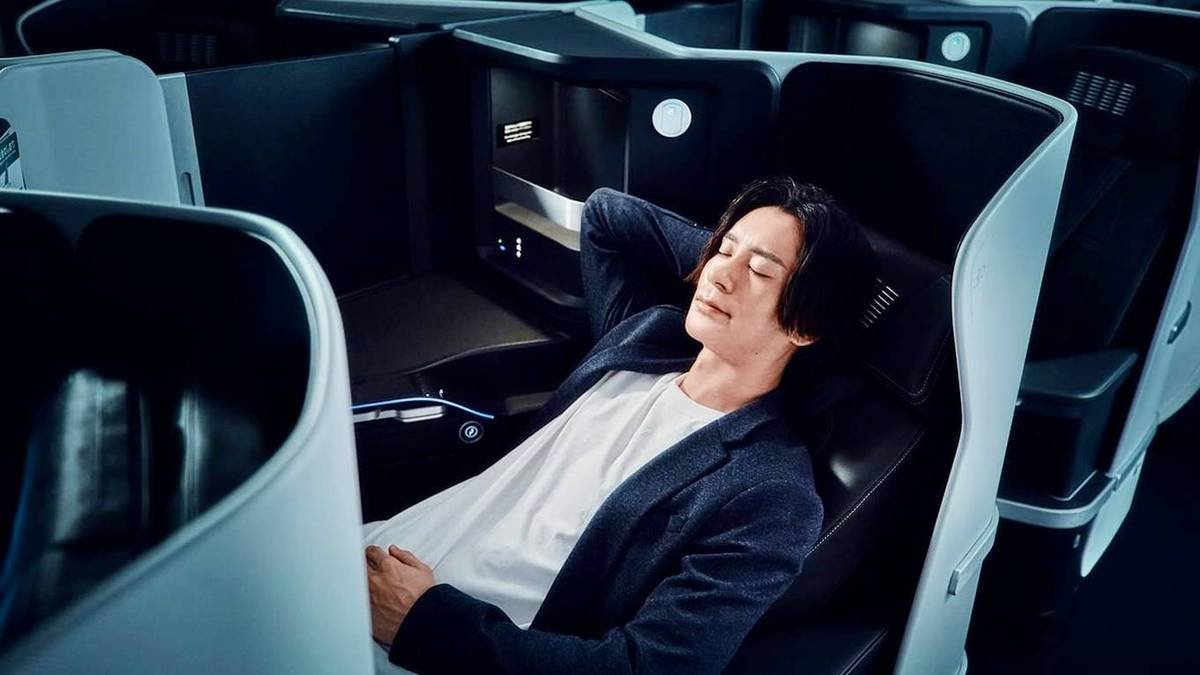
You’ve heard of basic economy, but the next major innovation in airline commercial strategy is basic business class fares. While the airlines promote this as a positive for consumers, it’s generally been poorly received because basic business fares have included minimal perks and cost the same as full-fare tickets in the past. Still, these fares are the future in certain markets as airlines further incorporate price segmentation as a core part of their commercial strategies, which has paid dividends thus far.
Because they’re becoming increasingly popular, the concept is still foreign to many customers. Business class passengers can now have widely different experiences depending on which fare class they book, even if they all end up in the same cabin on the same plane. What’s more, you also have some budget airlines selling business class tickets, and the experience varies widely between carriers. With this in mind, these are five things that you may not know about basic business class in 2026.
5
Some Airlines Have Already Cut Back Perks
It’s not basic business, but it’s getting close
Fundamentally, basic business class fares give you the seat, but not much else. In most cases, you can’t change your flight, lounge access isn’t included, seat selection comes with a fee, and mileage earnings are reduced. While basic business is still a relatively new concept in the industry, many airlines already offer at least two fare classes for business class, with the differences stemming from mileage earnings and flexibility (as in, one ticket may allow cancellations for a credit, while the other may allow a full refund).
Most airlines that don’t sell basic business fares include lounge access with business class on long-distance flights, but what is becoming more common is charging for seat selection. This is particularly common in Europe, as British Airways, Air France, KLM, Finnair, SAS, ITA Airways, and Icelandair all charge for this benefit depending on which fare you book. This is also done by some airlines outside of Europe, most notably Qatar Airways.
While some benefits of business class have been whittled away, basic business is essentially a formal ticket type with virtually no benefits. However, when airlines cut back benefits on their standard tickets, this begins to blur the line between the regular fare and basic tickets. Therefore, it’s actually less likely that carriers that have implemented basic business fares will introduce new restrictions like seat selection charges in higher fare classes, since this would hurt the value proposition of buying up.
4
The First Airline To Introduce This Probably Wasn’t Who You’d Expect
US airlines pioneered basic economy, but not basic business

Basic economy was first introduced in the US by Delta Air Lines in 2012, and it was mainly a competitive move against Spirit Airlines, at the time a growing threat to the US legacy carriers. These were initially similar in price to Spirit Airlines’ tickets, implemented to prevent Delta from losing market share to Spirit and other budget airlines. Other US carriers quickly adopted them, and it’s now a standard offering across their entire networks, while also typically costing more than fares on low-cost carriers today.
However, the first airline to introduce basic business was  Emirates in 2019, with its ‘special‘ fares. These are available on select routes throughout the carrier’s network, and they don’t include seat selection, lounge access, chauffeur services, or upgrades to first class. This may seem surprising due to Emirates’ perceived status as being a product leader in the industry, but these fares serve to make business class more accessible, especially as premium leisure becomes more prevalent.
Premium leisure travelers behave much like traditional leisure travelers, except that they’re willing to pay up for premium economy, business, and first class. However, they’re still relatively price-sensitive and don’t necessarily require full ticket flexibility, while perks like lounge access also aren’t mandatory. Business class has traditionally been targeted at business travelers, but with premium leisure becoming increasingly important, airlines are adapting to market conditions.
3
Business Class Can Be Found On Some Budget Airlines
These can actually represent a very good value

While basic business class isn’t being pushed as a means to combat budget airlines in the same way that basic economy initially was, there are some low-cost carriers that offer long-haul business class. Condor and JetBlue both offer long-haul lie-flats, but these carriers have also generally been moving upmarket compared to other LCCs. The same is true for flydubai, which installs lie-flat seats on some of its 737s, but has also been moving from an LCC business model to becoming a hybrid or full-service carrier.
Carriers like Norse Atlantic Airways and Air Premia do offer a premium product, but their offerings are more similar to premium economy, as they consist of large recliner seats with more legroom than what you’ll find in most premium economy cabins. Meanwhile, the budget airline with arguably the most unique business class cabin is ZIPAIR, as the airline installs lie-flat reverse herringbone seats that offer direct aisle access on its Boeing 787s, a type of seat model commonly used by legacy airlines. However, that’s where the similarities with full-service carriers end.
The seat itself does not have screens, and ZIPAIR is the only airline to install reverse herringbone seats without seatback displays. Meanwhile, the soft product is as bare-bones as in economy, with essentially everything costing extra. ZIPAIR doesn’t even market the product as business class, instead just referring to it as ‘full-flat’, because the seat is the only difference from economy.
2
One Airline Is Looking To Separate Basic Business From The Main Offering
Protecting the brand name

Delta Air Lines introduced its ‘Basic Business’ fares in July 2026, and it essentially follows the industry trend. You earn miles at a reduced rate, the fares are more restrictive, and starting in 2027, you won’t be able to access Delta One lounges. But if you’re wondering why I’m referring to this new ticket type as ‘Basic Business’, it’s because Delta itself is not branding it as Delta One, reserving this title for the upper two fares, despite the fact that the onboard cabin is branded as Delta One.
 Delta Air Lines, more so than maybe any other airline in the world. is extremely brand conscious. While there is debate on just how different the carrier’s products and experience are from rivals, the brand is regarded by customers in the US as being elevated compared to rivals. In a similar way, Delta is meticulous with how its products and subbrands are presented. SkyMiles and Sky Club have become recognized names in their own right, while Delta One is well-known among the general public for being Delta’s flagship product.
US Airline | First Class Branding | Business Class Branding | Premium Economy Branding | Domestic First Branding | Extra Legroom Branding | Economy Branding |
|---|---|---|---|---|---|---|
American Airlines | Flagship First | Flagship Business | Premium Economy | First | Main Cabin Extra | Main Cabin |
Delta Air Lines | N/A | Delta One | Delta Premium Select | Delta First | Delta Comfort | Delta Main |
United Airlines | N/A | United Polaris/ United Business | United Premium Plus | United First | Economy Plus | Economy |
Delta almost certainly omitted the Delta One branding for its basic business class fares out of fear that it would dilute the Delta One name, and it’s a valid concern. Delta earns the money that it does because the Delta brand is desirable, its products and subbrands are desirable, and moving downmarket could very easily diminish the shine of the Delta One name. Of course, the flip side is that Delta’s product offering now looks more complicated, since a ‘Basic Business’ ticket still gets you a Delta One seat.
1
More Airlines Are Introducing Another Bed Option
Sleep horizontally without booking business

The core principle of basic business class is that the ticket gets you the lie-flat seat, and that’s it. At some airlines, however, you don’t even need to book business class to sleep horizontally. Air New Zealand is famous for its ‘SkyCouch‘, which was first introduced in 2011. Passengers can book a set of three or four economy seats, which feature pop-up legrests, and this creates a fully flat surface.
All Nippon Airways offers a very similar concept on its Airbus A380s, called the ‘Couchii‘, and United Airlines will be retrofitting its Boeing 777s and 787s with the similar ‘Relax Row‘, while Lufthansa sells the ‘Sleeper Row‘. At these airlines, you can sleep much like in business class for a much more reasonable price. The challenge, of course, is the lack of privacy, and the fact that a set of three economy seats just isn’t that long, which means that your legs may jut out into the aisle.
Airline Product | Year Introduced |
|---|---|
Air New Zealand SkyCouch | 2011 |
ANA Couchii | 2019 |
Lufthansa Sleeper Row | 2021 |
United Relax Row | 2027 |
Air New Zealand, the carrier that first introduced SkyCouch over 15 years ago, has now gone a step further with its future Boeing 787 deliveries. These aircraft will feature a module in the economy cabin fitted with bunk beds, called the ‘SkyNest‘. Passengers can reserve these in four-hour blocks, and it costs an extra $495. This means that passengers can now sleep in a real bed for a fraction of the price of business class.
