


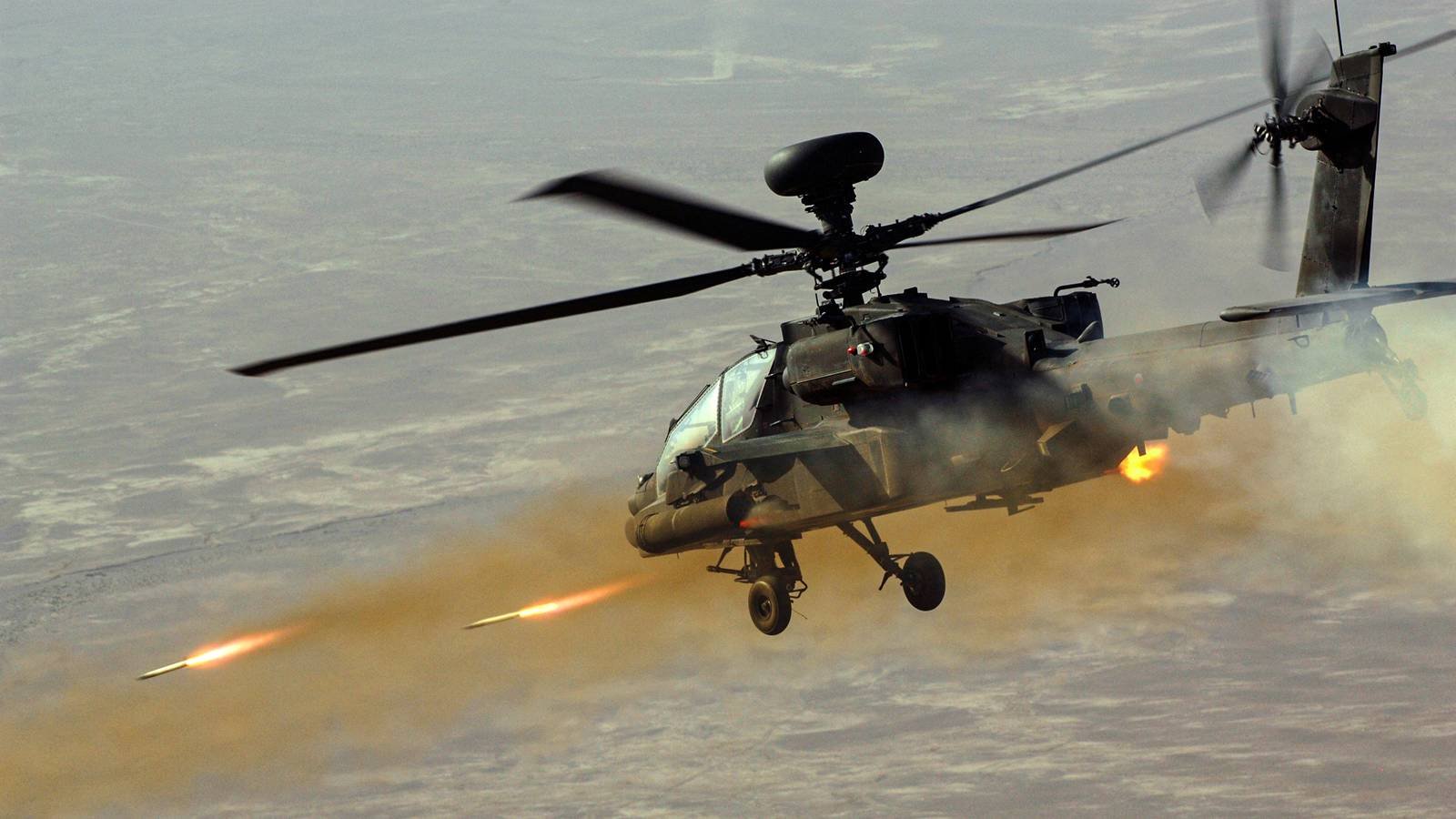
In 1978, the Department of Defense conducted a series of unique air warfare trials that pitted fixed and rotary-wing aircraft against each other in dogfights. Dubbed the Joint Countering Attack Helicopter Program, J-CATCH yielded a stunning result. The US Air Force 20th Special Operations Squadron achieved a 5:1 kill ratio against jets like the McDonnell Douglas F-4 Phantom II, Fairchild Republic A-10 Warthog, and even the Boeing F-15 Eagle.
The Special Warfare pilots achieved this win rate after being coached by the Central Intelligence Agency on tactics believed to be in development for use on the Soviet Mil Mi-24 Hind helicopter. The 20th flew Sikorsky CH-3E Sea Kings and Bell UH-1N Hueys configured as gunships to substitute for the presumed capabilities of the Hind, according to Pave Low.
The key to the success of the helo pilots was to pop up at close range and rapidly fire heat-seeking missiles at the rear quarter of the passing fighters. During mission debriefs, many of the jet pilots were unaware that they had even been engaged until they found out that they had been shot down in the exercise. The conclusion was that it was never recommended for a fighter jet to drop to low altitude and try to fight it out with a gunship.
Mandatory Within-Visual-Range Combat
Gunships dominate at the merge

From standoff distances of about 40 miles (60 km), the fighter jets dominate thanks to the advantage afforded to them by beyond visual range missiles. However, if the fighter jet pursued the attack helicopter to ‘merge,’ as close-range dogfighting distance is known, that changed dramatically. In this battle space, the helos dominated the ‘fast movers’ and racked up high kill counts.
The J-CATCH exercise forced this engagement by setting the stage as a combat search and rescue mission. In the scenario, there was a team of ‘Blue Air’ helicopters escorted by the fighters. The ‘Red Air’ helos were tasked with hunting and killing the fighter jets as they escorted the friendly rescue team to the target area. Flying escort patrols, the fighter pilots failed to even see most of the attacks by the Red Air helos when they were shot down.
The ambush hit-and-run tactics used by the 20th SOC pilots relied primarily on guns, per the instructions of the CIA agents based on intelligence data of the Soviet tactics. Because the Hind was a larger gunship than anything flown in the Western Bloc of Air Forces at the time, the Hueys and Sea Kings used their combined firepower to replicate it as closely as possible.
Nap-of-the-Earth Flight Profile
Terrain masking keeps helos out of sight

Arguably the most powerful advantage that the attack helicopters had against the fighters was that they were extremely difficult to see. The jet pilots could barely pick out the small helos against the visual clutter of the terrain, especially if the helo pilots maneuvered behind obstacles to conceal themselves temporarily.
The skillful use of terrain masking is the primary reason so many shoot-downs happened before the jets even knew they were being targeted. This is a well-documented dogfighting tactic dating back to the earliest days of air warfare, but it is usually reversed in fixed-wing platforms.
In a fighter-on-fighter engagement, the plane at a higher altitude has an energy advantage and usually wins. Because the helicopter does not abide by the same physics as the fixed-wing jets, that advantage no longer exists, and visibility became a more influential element of the engagement. Helo pilots could see the fighters approaching from far away, while the jets were often unable to find the helicopters until it was too late, if at all.
Superior Turn Radius and Hover Agility
Low and slow wins the day

It is true that in a ‘turning fight’ against another fighter jet, the plane with superior low-speed agility will often emerge victorious. This was especially highlighted in the J-CATCH trials because the fighter jets would zoom past the helos while they exercised extreme agility as a rotating platform at low altitude or simply hovered and locked on their target.
A fighter jet traveling at a standard low-altitude combat speed of 400 knots (740 km/h) requires a massive amount of sky to turn. Even pulling a tight, aggressive 5G turn, a jet’s turning radius is roughly 2,500 feet (750 meters), or over half a mile. On the other hand, an attack helicopter can hover at 0 knots airspeed and pivot 360 degrees on its axis in mere seconds. The jet literally cannot turn tightly enough to stay out of the helicopter’s weapon crosshairs.
Because a jet moves faster than a helicopter at all times, a close-in engagement with a gunship leaves them at a significant disadvantage. When a fighter jet dives to attack, it has a tiny window of a few seconds to line up a shot. If the jet misses, it must fly past. The moment the jet flashes past, the helicopter simply pivots on the spot, points its nose at the retreating jet’s tailpipes, and fires.
Nick Lappos, Technical Fellow Emeritus at Sikorsky and former US Army AH-1 Cobra attack helicopter pilot, was quoted by the Aviation Geek Club remarking on the J-CATCH trials.
“The helicopter if properly flown will always maneuver to cut off the angle from the airplane, forcing impossibly steep closure maneuvers for the fighter. Typical helicopter turn rates are 30 to 40 degrees per second, three times that of the fighter, even at high G.”
Simply because of the physical limitations of the two types of aircraft, fighter jets have no hope of matching a helicopter’s agility in an air-to-air engagement. While an F-4 or an F-15 will stall out and crash if it slows down suddenly, the helicopter simply doesn’t have that problem.
Asymmetry in Infrared Signatures
Small engines and airframes make hard targets

Looking at the battle between sensors and detection, which are crucial for successful weapons employment, the helicopter gunships once again had the upper hand. Since the helos are so small by comparison to the planes typically targeted by radar and other sensors on board fighter jets, it was very difficult to get a target lock. In fact, it was very difficult to detect them at all.
The helicopter engine is a fraction of the size of that found on a fighter jet like the Phantom or Eagle. That also means it produces a fraction of the heat output and is therefore more difficult to find with infrared sensors. This is compounded when the sensor attempts to detect them against the Earth’s background.
Meanwhile, the fighters emit a powerful heat signature that can be detected from long distances by missiles on helicopters like AIM-9 Sidewinders. Additionally, they are backdropped by the open sky, which generates no thermal interference and makes a target lock much easier. That gave the helos a decisive advantage in using IR weapons systems.
Weapon Capabilities and Snap-Shots
Auto-cannons plus fire-and-forget missiles equal victory

The disparity in IR weapons employment was just the tip of the iceberg during the J-CATCH program. A snapshot occurs when a target crosses a weapon’s aiming reticle for only a fraction of a second. Jet fighters require stable, forward-pointing flight to lock onto a target. Helicopters do not, thanks to their ability to hover and their chin-mounted weapon targeting sensors and guns, which can independently rotate.
The targeting advantage for the gunships was a combination of door gunners and weapons pods with extremely rapid tracking that is detached from the orientation of the fuselage. The helos were extremely lethal when equipped with high-quality air-to-air missiles and large-caliber automatic cannons. The tactical advantage of the gunships at low altitude and low speed maximized the systems’ capabilities for the helo crews to readily exploit rapid snapshot opportunities.
Jet pilots routinely flew over helicopters without ever seeing them. Because the jet pilot was usually moving too fast to track the camouflaged helo, the helicopter crew almost always fires first. At close range, the large caliber guns could easily shred a fighter. Under these conditions, it was also virtually impossible for the jets to successfully deploy countermeasures and outmaneuver the missiles without being damaged.
Fighter Pilot Overconfidence
Ego in the cockpit creates killer complacency

Overconfidence among fighter pilots also led to a significant psychological advantage for the gunship crews. The ‘fighter jockeys’ entered into the J-CATCH trials with confidence that they would easily dispatch the helos using their higher-performance aircraft and superior weapon systems. That ‘fighter mafia’ mindset made them easier targets than they ever expected.
Fighter crews expected the helos to be sitting ducks and expected to emerge victorious after diving headlong into the merge. With faith in the superior speed of their airplanes, the tactics they relied on were to swoop as soon as they spotted the gunships, go for the kill, and zoom away. As a result, the fighter pilots essentially charged down into the barrels of the gunships and applied precious few tactics at all.
Lappos’ comments on the tactics reinforce the clear results of proper airframe employment on both sides of the J-CATCH trials, as the Aviation Geek Club recounted.
“It must be said that the fighter is only vulnerable if it drops down from its normal altitude to engage the helicopter. If the fighter stays high and prosecutes its normal mission, it is nearly invulnerable to the helicopter’s weapons. I have personally flown many such engagements in trials, and the facts are obvious to fighter and helicopter pilots who know.”
In the third and final phase of the trials, the rules of engagement were updated to require the helos to announce over the radio when they had a clean shot with the warning: “Guns, guns, guns.” This was an attempt to give the jets a chance, as many doubted the validity of the gun camera kills presented in debriefs after the initial dogfighting phase. The result of the updated ROE was that even more jets were shot down by helos as their last-ditch efforts to maneuver only made them more vulnerable.
Catch what other trackers miss
Emergency squawks, holds, NOTAMs — live signals, no signup.
Open tracker
Catch what other trackers miss
Emergency squawks, holds, NOTAMs — live signals, no signup.
Open tracker
