


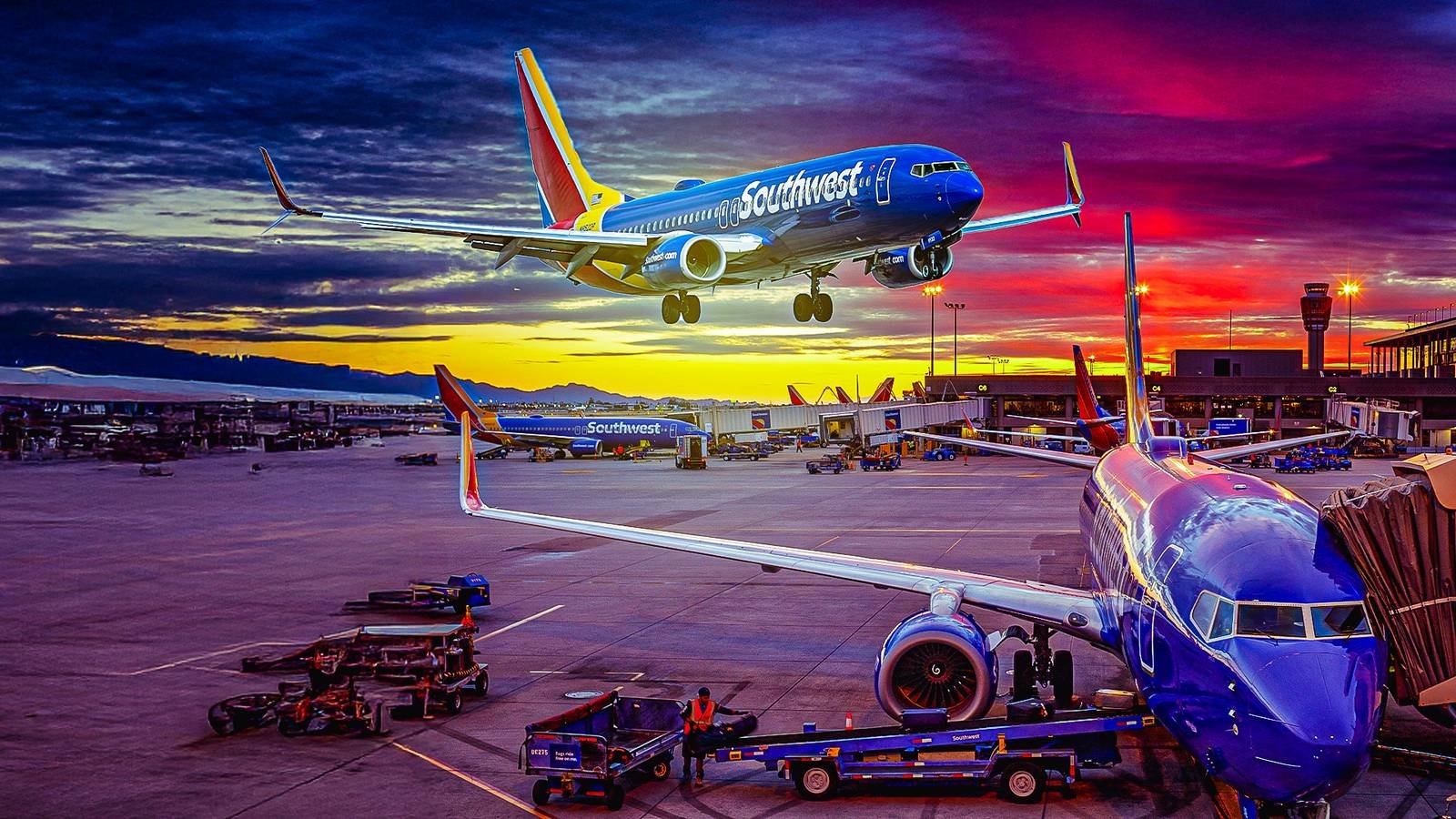
Dallas-based low-cost airline Southwest Airlines , which has recently been the subject of shareholder activism by hedge fund Elliott Management, has demonstrated that it could be making yet another major strategic shift. Indeed, the airline, which once emphasized a customer and employee-oriented business model that offered free perks like free checked bags and no expiration on flight credits, has begun to shift towards being a standard no-frills-oriented carrier.
As part of this continued effort, which is directed by a board that now includes six Elliott-appointed directors, Southwest Airlines is pushing to revamp the way it manages its assets. The airline is currently considering selling a large portion of its Boeing 737 Next Generation fleet to aircraft lessors, a move that would generate cash flow for the airline in the short term. However, this could come at the cost of decreasing the carrier’s long-term flexibility.
What Kind Of Business Model Did Southwest Historically Run?

Prior to Elliott Management launching an activist campaign against Southwest Airlines, the carrier had operated an extremely unique business model. This was focused on maintaining a strong relationship with customers and employees while distinguishing itself from other competitors in unique ways. Passengers raved about the Southwest Airlines experience, citing the freedom of its open seating policy, the ability to bring two free checked bags onboard, and customer service that was anecdotally warmer.
Some customers literally cited the airline’s free checked bag policies as the principal reason for flying with the airline, but Elliott Management’s activist investment thesis highlighted the airline’s lagging operating margins. Indeed, the carrier was being outperformed by almost every one of its peers in both operational and financial categories. As a result, Elliott argued that mismanagement by the airline’s leadership team was behind its poor performance and inability to deliver on its promises to shareholders.
Elliott argued that the airline’s ‘free perks’ model was out of date, and that it put the airline at a financial and strategic disadvantage in comparison to its competitors, which were seeing higher margins by squeezing more and more value out of each customer. Under Elliott’s direction, Southwest eliminated its checked bag policy, made moves to remove its open seating policy in favor of adding a new premium extra-legroom cabin, and introduced flight credits that would expire. The airline today looks fundamentally different to how it did just years ago.
What Is The Latest Move That Southwest Is Making?

Southwest Airlines is looking to monetize its fleet in order to raise cash as management aims to execute a broader turnaround for the entire carrier. According to reports from FlightGlobal, CEO Bob Jordan told investors that the carrier is looking to pull two different levers in its pursuit of improved cash flow. The airline is going to directly sell some of its older Boeing 737-800 jets while also engaging in sale-leasebacks of both Boeing 737-800s and newer-generation Boeing 737 MAX jets.
In a sale-leaseback maneuver, a carrier will sell aircraft to a lessor and immediately release the aircraft back, converting a fixed capital asset into a large amount of cash and an operating expense. This allows management to maintain strong short-term capacity while establishing relationships with lessors for future peak-season capacity solutions. Sale-leaseback maneuvers are common within the private equity industry, but they are less common for large, established airlines.
Due to Boeing delivery delays and supply chain issues that have delayed Airbus aircraft deliveries, Southwest’s management team has noted that the market for second-hand aircraft is unusually strong. The airline is currently only planning for around 1-2% capacity growth on an annual basis, and performing these kinds of sale-leasebacks can help the airline better optimize its fleet for the seasonality of demand.
What Are The Benefits Of This Unique Maneuver?

Southwest Airlines can monetize its fleet and provide short-term cash flow without reducing capacity through this sale-leaseback maneuver, a strategy that allows it to invest in an operational overhaul. The direct sales of older-generation models will increase cash flow while removing high-maintenance assets from their books. The airline is certainly in need of this kind of short-term cash flow as it begins to invest in a large-scale operational overhaul.
Sale-leasebacks convert aircraft that were previously owned by the company into cash, while preserving the airline’s operational capacity. This significantly improves the airline’s cash reserves, allowing it to invest in initiatives such as cabin refreshes, technological advancements, and schedule adjustments. The tightness of supply in narrowbody markets also means that Southwest is sure to get to the top market rates for its jets.
Aircraft Type | Number In The Southwest Airlines Fleet (Per ch-aviation) |
|---|---|
Boeing 737-700 | 309 |
Boeing 737-800 | 197 |
Boeing 737 MAX 8 | 304 |
These moves fall in line with those made by low-cost carriers across the industry, which have continued to turn to lessors for solutions to their capacity issues. Carriers want the ability to ramp up capacity during peak seasons when leisure travel is booming, and they want to avoid having to operate unprofitable jets during periods in which demand has softened significantly.
What Are The Downsides Of This Move?

There are definitely some trade-offs that Southwest has to consider with this move. For starters, selling aircraft and leasing them back raises cash, but it also creates recurring leasing expenses that could mount over time. It will increase the company’s long-term costs per available seat mile while diluting the airline’s long-term returns on invested capital. The airline is also forgoing the upside of owning its own aircraft and becoming more exposed to terms set directly by aircraft lessors.
If positive demand surprises continue as they have over the past few quarters, Southwest will be in a weaker position to capture this upside value. The airline is looking to sell excess jets off its books, but it is running the risk of incurring costly lease fees in order to expand capacity and better serve demand.
Some analysts have pointed out that this move is a tactic to use financial engineering to solve problems related to operational inefficiency, which could result in a weaker balance sheet in the long term. Furthermore, there is also an execution risk with this maneuver, as additional delivery delays from Boeing could worsen the capacity gaps in the airline’s fleet that this maneuver would create.

Why Southwest Airlines Is Moving Away From Point-To-Point Flying
With this change to ‘high-density stations,’ Dallas-based Southwest will aim to offer more flights to more destinations.
What Is Elliott Management’s Involvement In This Move?

Following a high-profile 2024 campaign, which resulted in Elliott receiving six seats on Southwest’s board, the activist hedge fund has been seen as the silent force behind a number of the airline’s most important decisions over the past few years. The fund was able to get Southwest to agree to more than $300 million in cost reductions and target a 15% return on invested capital.
As a result, it is not surprising that the fund has authorized the airline to sell excess aircraft and pursue sale-leasebacks. These kinds of maneuvers, which are very common in the private equity industry, have become a common choice for low-cost airlines that are owned by private equity firms.
Therefore, Southwest’s decision to further monetize its fleet falls mostly in line with the other moves made by Elliott to improve the value that Southwest has generated for shareholders. This move increases the airline’s short-term cash flow, allowing it to invest in operational and network upgrades that Elliott has been eager to pursue.
Is There Precedent For This Move?

Southwest Airlines is not the only carrier to have investigated the potential of sale-leaseback maneuvers in recent months. Indeed, Frontier Airlines is another carrier to have notably engaged in sale-leasebacks, and the carrier’s strategy, which was announced in August 2025, will turn incoming Airbus jets into cold, hard cash. The airline will be selling each new Airbus A320neo/A321neo to lessors through lease agreements.
According to ch-aviation, this maneuver swaps upfront capital expenditures for a predictable monthly payment to a lessor, while generating a large amount of cash in the short run. Much like Southwest, Frontier Airlines is looking to use this sale-leaseback to invest in fleet expansion initiatives, which will aim to help the airline’s bottom line. As with Southwest, Frontier also faces higher future operating expenses as a result of this move.
The Bottom Line

At the end of the day, the decision to pursue sales of older aircraft and sale-leasebacks is not entirely surprising, given Elliott’s push for Southwest to better allocate its capital. However, the carrier does face some benefits and drawbacks, as detailed in the table below.
Major Benefits | Major Drawbacks |
|---|---|
|
|
Activist investors like Elliott will commonly push companies to reallocate their capital to better generate shareholder value. This situation is clearly no exception. Nonetheless, this is a one-way decision, and the airline could grow to regret it if it becomes unable to rapidly meet growing passenger demand while rivals are able to. Furthermore, the carrier might become even more exposed to lessors and Boeing’s delivery timelines.
