


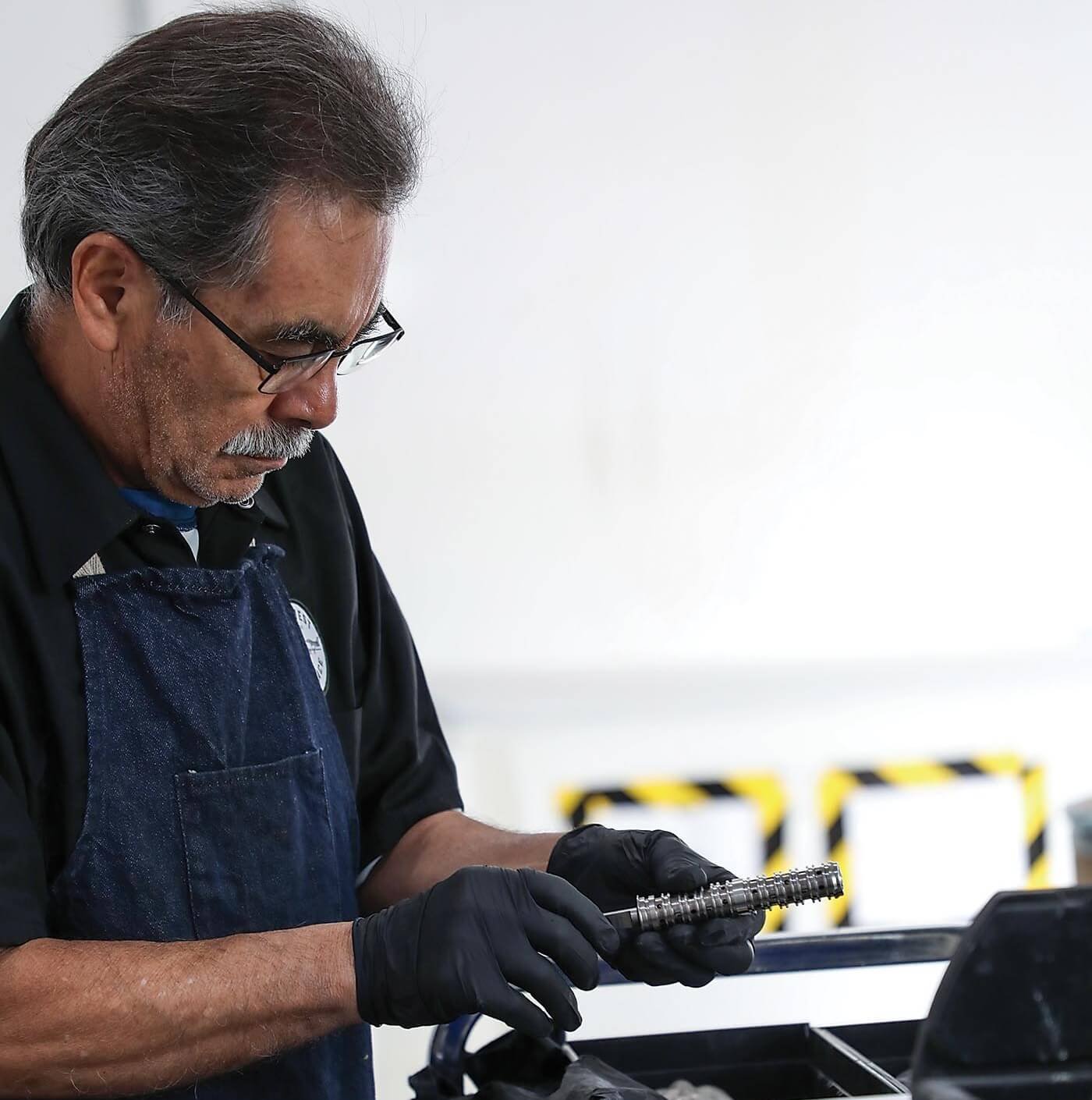
Built as a family-owned business and shaped by calculated risk and strategic expansion, Midwest Aerospace has grown into a multi-facility maintenance, repair, and overhaul (MRO) organization with a singular focus on keeping aircraft flying.
Now, with the launch of a new blade repair operation and a strategic partnership with Rotorcraft Repair and Manufacturing, the company is taking its most significant step yet toward becoming a true one-stop shop for Bell helicopter operators.
That evolution began in 1990, when Louis Giannini and his father Joseph Giannini founded Midwest Aerospace as a family-run brokerage business focused primarily on foreign military sales.
Operating initially out of the Giannini family home, the company built its reputation by doing what many brokers could not: sourcing hard-to-find parts, paying vendors quickly, and delivering reliable solutions in an industry where availability often determines mission success. That brokerage DNA remains central to Midwest’s approach today, even as the company has evolved far beyond parts sales.
The turning point came in 2016, when Midwest acquired Cappsco International, a T53 engine repair station that was on the brink of closure. At the time, the move raised eyebrows. Midwest was best known as a broker, not a repair station operator, and Cappsco was not OEM-approved.
But under the leadership of Louis’s son, Joseph L. Giannini — now vice president and co-owner — and with the addition of highly respected T53 expert Marc Avila as general manager and partner, the business was stabilized and returned to profitability within months.
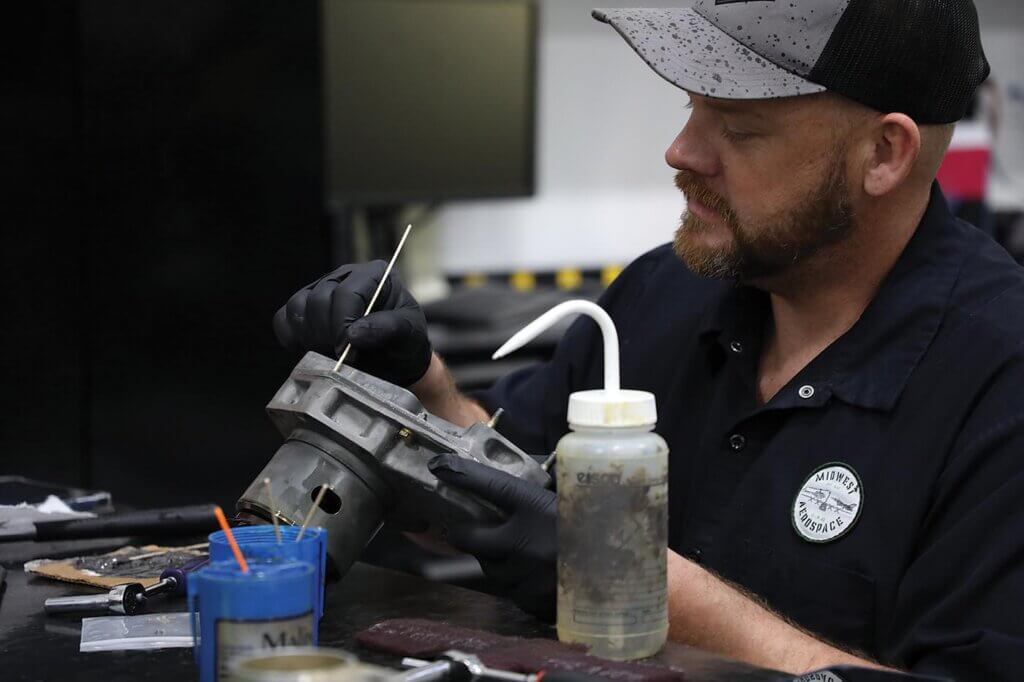
Today, Midwest owns two of the five notable T53 repair stations worldwide, positioning it as a critical support provider for Bell UH-1 and AH-1 military platforms, as well as the civil Bell 204, 205, and 212 fleet.
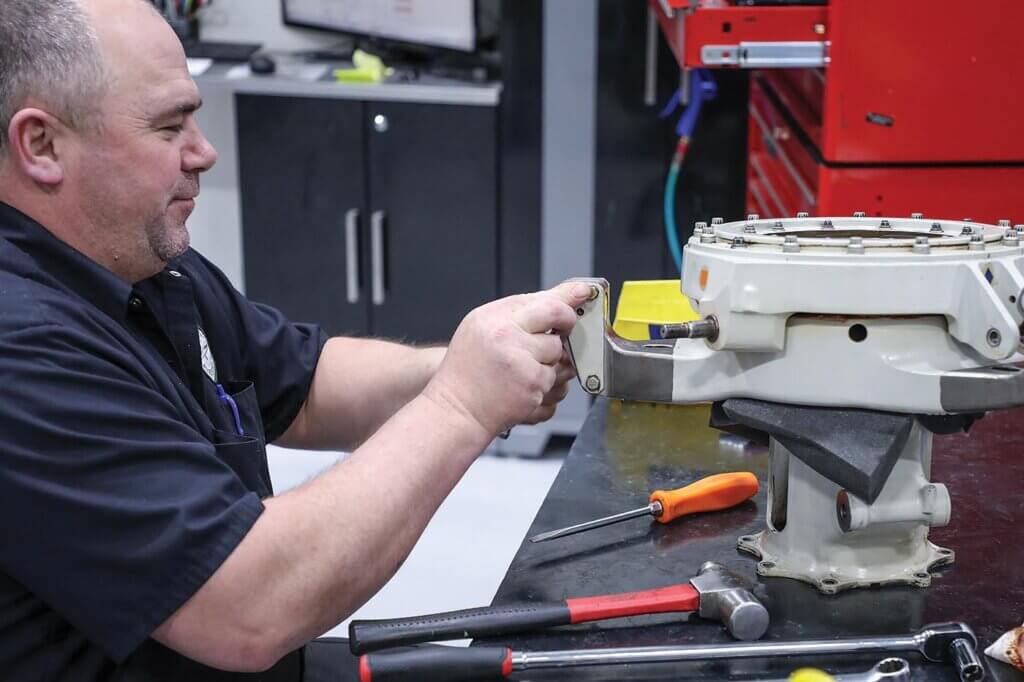
Midwest continued expanding its MRO footprint in 2018 with the launch of Valley Aerospace in Arizona, which later became Midwest Aerospace Arizona. That facility specializes in the overhaul of Bell rotating components, including main rotor hubs, swashplates, masts, gearboxes, transmissions, and hydraulic components, further strengthening the company’s vertical integration.
In early 2025, Midwest Aerospace added Air Technology Engines in Florida to its portfolio, further strengthening its T53 engine overhaul capabilities and consolidating its position in a niche but essential segment of the rotorcraft market.
Together, these facilities — supported by a central sales and inventory hub in Indiana with more than 80,000 square feet (7,430 square meters) of stocked parts — form the backbone of Midwest Aerospace’s one-stop repair strategy.
The company’s ability to own inventory, operate repair stations, and make fast purchasing decisions allows it to offer competitive pricing without cutting corners.
For many operators, particularly smaller domestic fleets and legacy Bell operators, this flexibility makes the difference between an aircraft flying or sitting idle. That philosophy now guides Midwest Aerospace’s expansion into rotor blade repair, one of the most critical and capacity-constrained areas of helicopter maintenance.
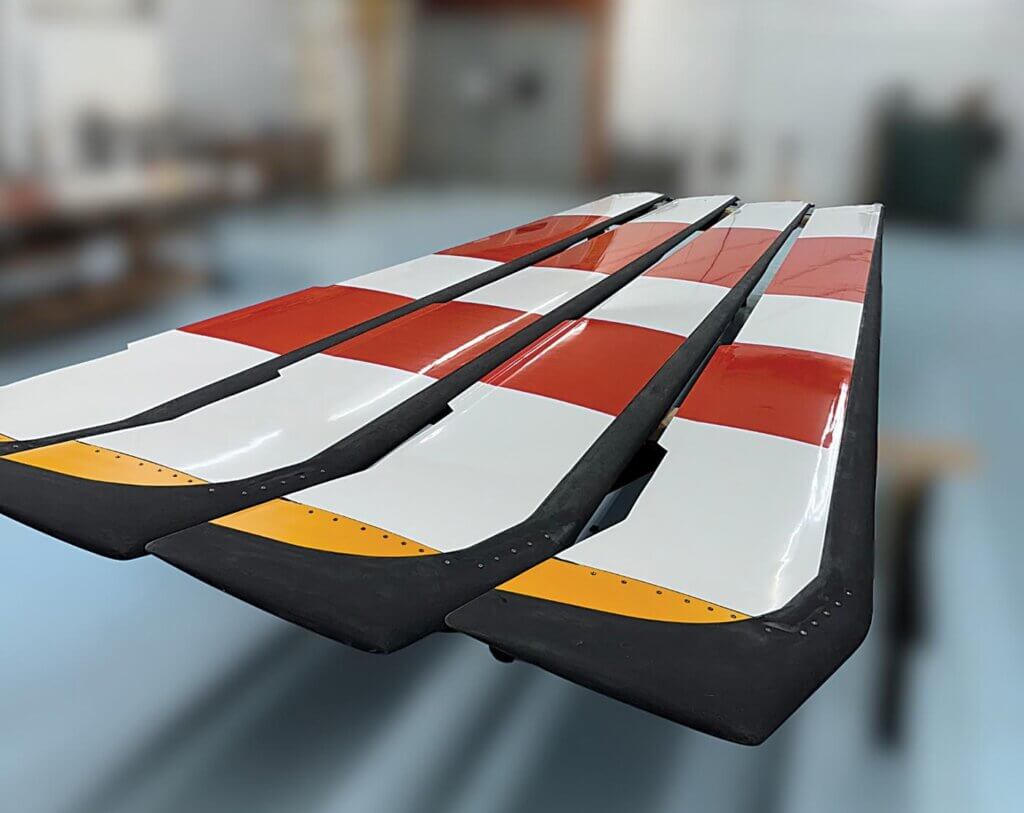
In partnership with Rotorcraft Repair and Manufacturing, Midwest Aerospace is launching Midwest Blade Tech, a new blade repair and overhaul operation currently under construction at the company’s Indiana headquarters.
Scheduled to open in spring 2026, the facility will support a variety of main and tail rotor blades, with a focus on Bell and Sikorsky platforms, while also serving as an overflow and strategic partner for Rotorcraft Repair.
At the heart of the partnership is Dragon Skin Xtreme (DSX), Rotorcraft Repair’s proprietary erosion-resistant coating. Fully FAA-approved and backed by more than 6,000 flight hours worldwide, DSX addresses one of the most persistent challenges facing operators: leading-edge erosion.
Widely used on firefighting aircraft and increasingly adopted across global fleets, the coating extends blade life to its full-service limit, significantly reducing downtime and repeated shop visits.
“The number one issue operators have with rotor blades is erosion,” Giannini said. “I put it on every blade that we supply around the world because it works — it speaks for itself.”
Midwest and Rotorcraft Repair will be the only distributors of DSX, giving Midwest Blade Tech a unique market advantage from day one. Beyond the coating itself, the new facility will incorporate advanced automation and robotics into key stages of the blade repair process — a forward-looking investment aimed at improving consistency, efficiency, and turnaround times while supporting skilled technicians rather than replacing them.
The blade shop also marks Midwest’s entry point into expanded Black Hawk support, a market Giannini sees as increasingly important alongside legacy Bell platforms.
Early feedback on DSX-coated Black Hawk blades has been overwhelmingly positive, particularly in high-wear mission profiles where traditional nickel erosion strips fall short.
While Midwest’s MRO capabilities continue to grow, the company’s brokerage roots remain a critical differentiator. With decades of experience sourcing legacy parts, aggressive inventory acquisition strategies, and an uncommon willingness to publish transparent pricing online, Midwest has built a loyal customer base that values speed, honesty, and availability.
That same parts expertise supports its repair stations, enabling Midwest to offer alternatives when OEM supply chains struggle to meet demand.
As Midwest Aerospace looks ahead, its strategy remains focused on expanding where it adds real value, investing in capabilities that reduce friction for operators, and remaining hands-on in every part of the business.
With Midwest Blade Tech nearing completion and the Rotorcraft Repair partnership now official, the company is closer than ever to delivering on its promise of comprehensive, end-to-end support for Bell helicopter operators worldwide.
This sponsored article was created by Insight magazine, the sponsored content division of MHM Publishing.
