


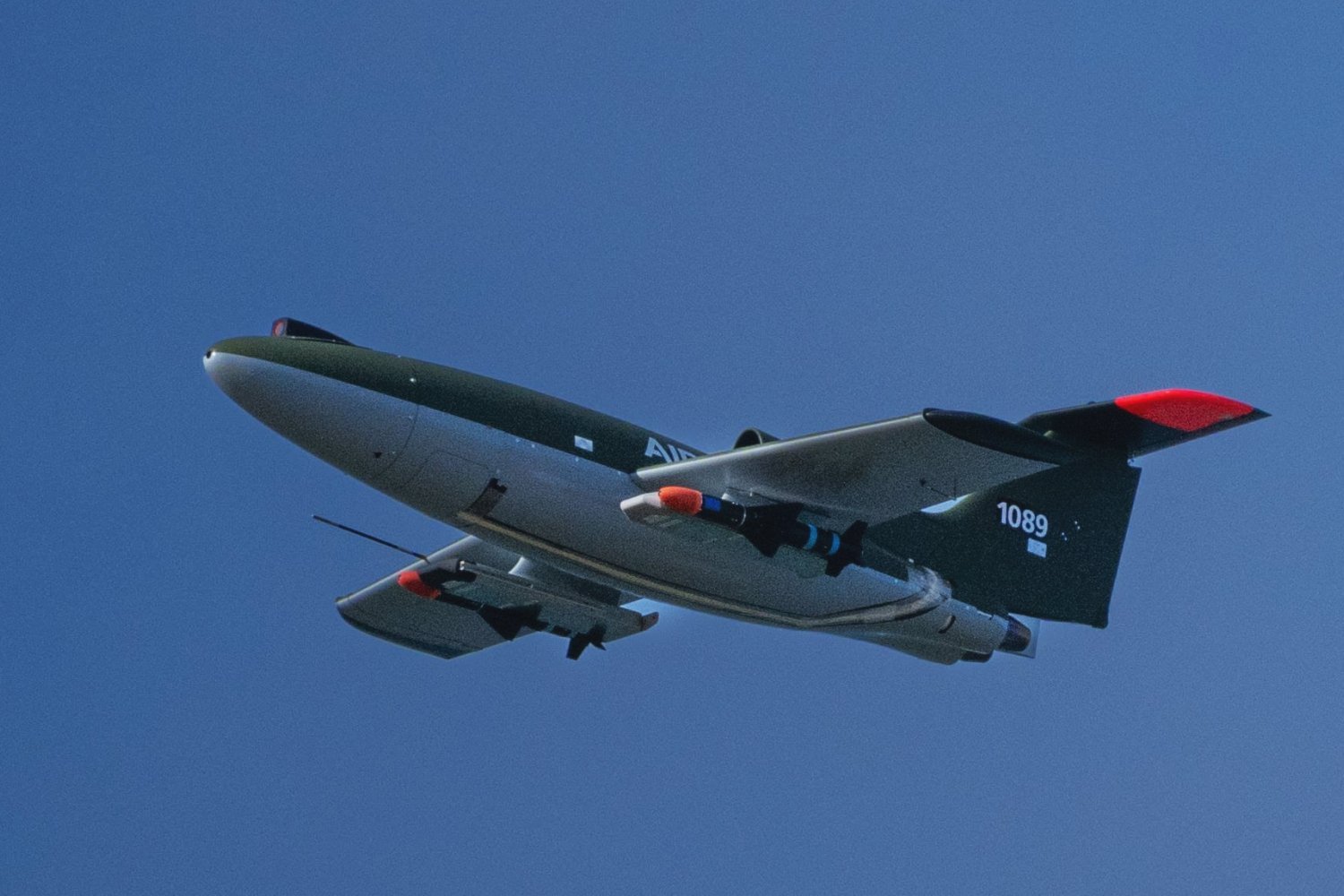
Airbus has completed the first demonstration flight of its “Bird of Prey” interceptor drone, showing the system autonomously detecting and engaging a kamikaze drone during a test in northern Germany.
The trial simulated a real-world mission in which the uncrewed aircraft searched for, identified and classified a medium-sized one-way attack drone before launching a Mark I air-to-air missile developed by startup Frankenburg Technologies.
The test marks an early milestone for the program, which has been under development for nine months. Airbus is developing the system as a response to the growing use of low-cost attack drones in modern conflicts, where traditional air defense solutions can be too expensive or slow to deploy at scale.
Follow us: WhatsApp | BlueSky | Google News | Instagram | LinkedIn | Facebook
The Bird of Prey is based on a modified Airbus Do-DT25 drone and, in its prototype form, has a wingspan of 2.5 meters, a length of 3.1 meters and a maximum takeoff weight of 160 kg. The test aircraft was equipped with four missiles, while a future operational version is expected to carry up to eight.
Frankenburg’s Mark I missile is designed as a lightweight, short-range interceptor. Each unit weighs less than 2 kg, measures about 65 cm in length and has an engagement range of up to 1.5 km. The missile uses a fragmentation warhead and is intended for fire-and-forget operation, allowing the drone to engage multiple targets during a single sortie.
Airbus said the system is designed to operate within NATO-compatible air defense networks through its Integrated Battle Management System (IBMS), enabling coordination with other sensors and interceptors in a layered defense environment.

The concept targets a specific gap in air defense: countering large numbers of relatively cheap drones with an equally scalable and lower-cost solution. By combining a reusable drone platform with small interceptors, Airbus aims to reduce the cost per engagement compared to conventional missile systems.
Airbus and Frankenburg plan further test flights in 2026, including demonstrations with live warheads, as they move toward operational validation and potential customer interest.
