


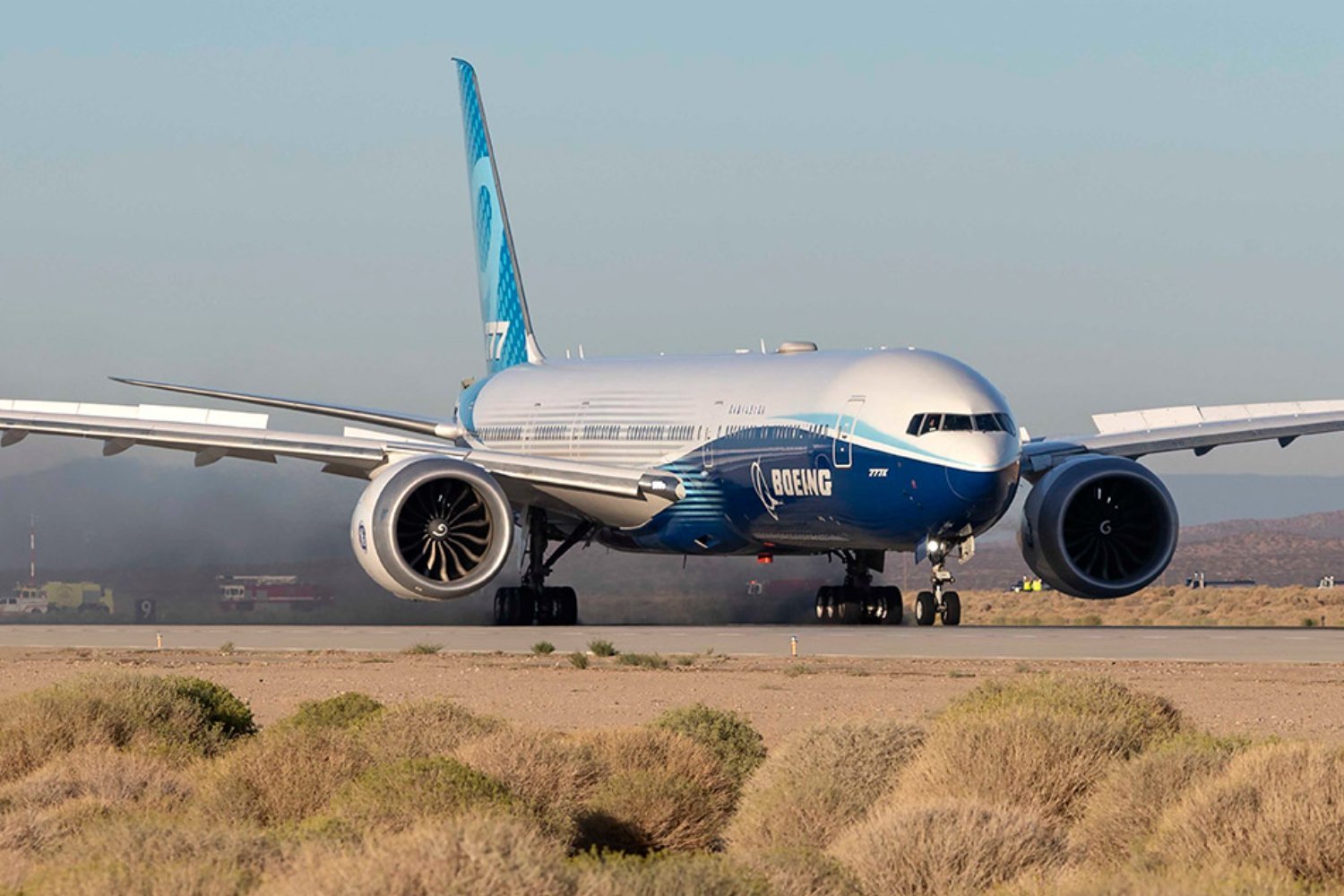
Boeing has conducted maximum brake energy testing on its 777-9 test aircraft at Edwards Air Force Base in California, a site long used by the U.S. Air Force for advanced military aircraft testing since the end of World War II.
The test simulates a rejected takeoff under worst-case conditions. The aircraft was loaded to its maximum takeoff weight and accelerated to about 190 knots before pilots aborted the takeoff and applied full braking without using thrust reversers.
Under certification rules, the brakes must absorb all the energy required to stop the aircraft. For the trial, components were intentionally worn to their operational limits to represent the most demanding scenario.
Follow us: WhatsApp | BlueSky | Google News | Instagram | LinkedIn | Facebook
During the test, brake temperatures exceeded 2,500 degrees Fahrenheit (around 1,370°C). The heat generated caused fuse plugs in the wheels to melt, releasing air from the tires as designed to prevent overpressure.
Emergency crews were positioned near the runway but waited several minutes before approaching the aircraft, in line with standard procedures that assume a potential fire risk after a high-energy stop. The brakes and landing gear were later cooled with water.

The 777X program comprises three variants: the 777-9, the largest passenger model with capacity for around 430 seats in a typical two-class layout; the 777-8F, a dedicated freighter capable of carrying more than 110 tonnes of payload; and the smaller 777-8, designed for extended range.
As of February, Boeing had 624 outstanding orders for the family, including 521 for the 777-9, 68 for the 777-8F and 35 for the 777-8. Lufthansa is expected to be the launch customer, with the first delivery likely in early 2027. Boeing aims to secure FAA certification for the 777-9 by the end of 2026.
