


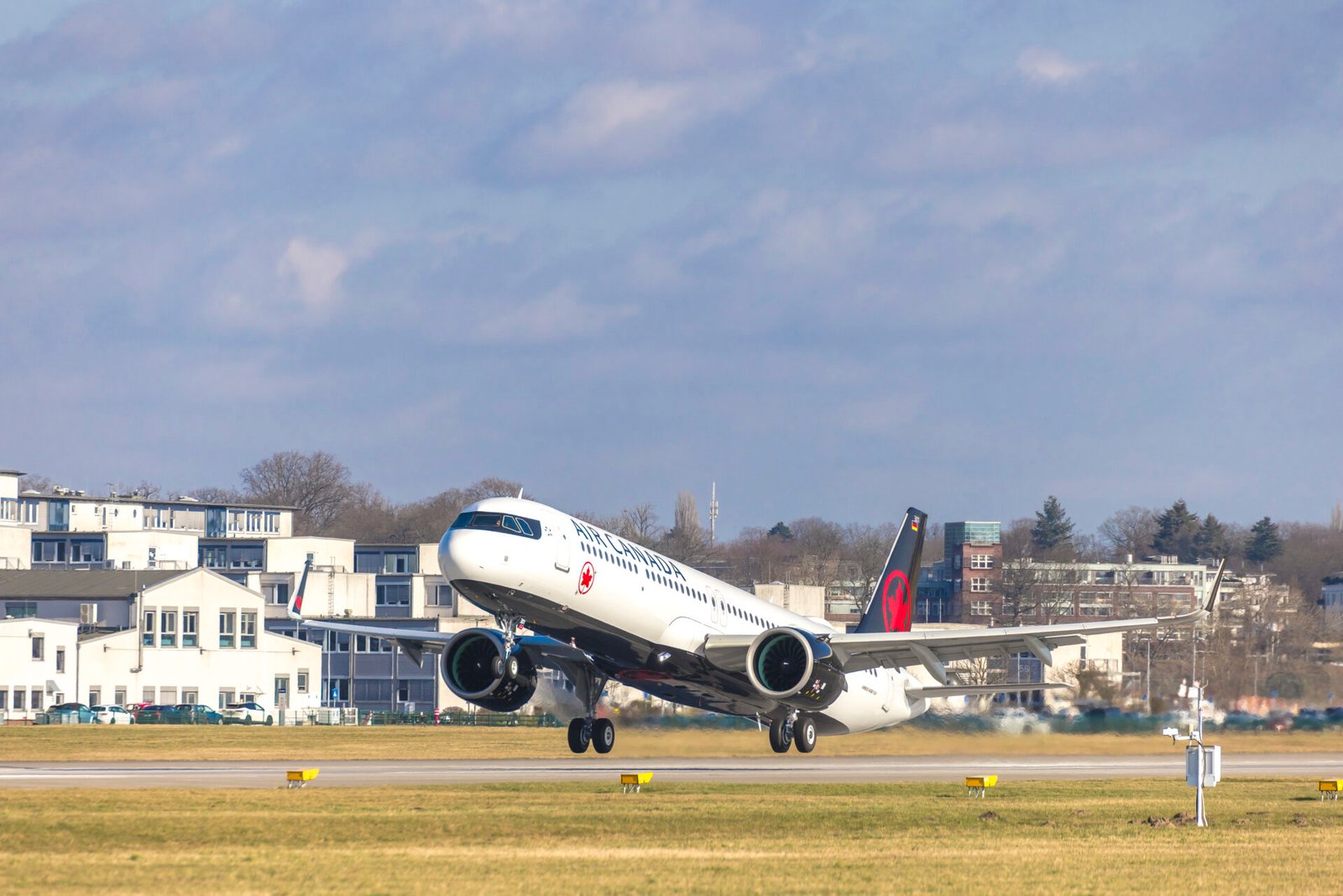
Air Canada took delivery of its first Airbus A321XLR on April 24, 2026, during a ceremony at the manufacturer’s Hamburg facility, thereby becoming the first Canadian operator of the extended-range narrowbody.
The aircraft, registered C-GXLR, is the first of 30 A321XLRs that Air Canada is set to receive over the coming years. Of those, 15 will be leased and 15 acquired directly from Airbus. The first unit is on lease from SMBC Aviation Capital, which will supply the full leased portion of the order.
Following Transport Canada certification, Air Canada plans to phase the aircraft into transatlantic services from Montreal and Toronto as well as transcontinental routes across North America. The carrier previously confirmed Montreal to Palma de Mallorca as its first A321XLR route, with service scheduled to begin in June 2026. Other European destinations announced for the type include Berlin, Nantes, Toulouse and Edinburgh, as part of the carrier’s broader Summer 2026 transatlantic expansion.
A narrowbody with widebody features
Powered by Pratt & Whitney GTF engines, Air Canada’s A321XLR is configured in a two-cabin layout for 182 passengers. The forward cabin features 14 Air Canada Signature Class lie-flat seats in a 1-1 arrangement, providing direct aisle access for every premium passenger. The remaining 168 seats form the Economy cabin.
It has become the first narrowbody in Air Canada’s fleet to offer lie-flat seating, a feature traditionally reserved for widebody operations. The aircraft also debuts the carrier’s new Glowing Hearted cabin standard, which combines the Airbus Airspace interior with Air Canada’s own product refresh. Features include Bluetooth-enabled in-flight entertainment with larger screens, personal device power at every seat, complimentary Wi-Fi for Aeroplan members, ambient lighting, and XL overhead bins offering 60% more storage than previous-generation Airbus narrowbodies.
The carrier presented the cabin design earlier in April 2026 at the Aircraft Interiors Expo in Hamburg, pairing the A321XLR with the incoming Boeing 787-10 as the centerpieces of its onboard product refresh.
Transatlantic and transcontinental deployment
The A321XLR is intended to bridge the capacity gap between Air Canada’s short-haul narrowbodies and its widebody long-haul fleet. With a maximum range of 4,700 nautical miles (8,700 kilometers), the aircraft enables non-stop transatlantic operations from Montreal and Toronto to secondary European cities that would not typically sustain widebody economics.
“The Airbus A321XLR introduces a dynamic new component to Air Canada’s growth strategy,” said Mark Galardo, Executive Vice President and Chief Commercial Officer at Air Canada. Galardo noted that the type would also become a key aircraft on North American transcontinental markets, while improving the airline’s offering on existing routes.
According to Airbus, the A321XLR delivers 30% lower fuel burn per seat compared with previous-generation competitor aircraft, alongside reduced NOx emissions and noise footprint. The aircraft is certified to operate with up to 50% sustainable aviation fuel, with Airbus targeting full 100% SAF compatibility across its commercial portfolio by 2030.
At the end of March 2026, Airbus declared that orders for the A321XLR had passed 500 aircraft.
Broader fleet renewal
The delivery is the latest step in Air Canada’s multi-year fleet modernization program. In addition to the 30 A321XLRs, the airline’s outstanding Airbus order book includes eight A350-1000s ordered in December 2025 for delivery from 2030 to replace aging A330-300s and Boeing 777LRs, and 23 Airbus A220s remaining on a firm order of 65.
On the Boeing side, Air Canada currently has 14 Boeing 787-10 Dreamliners on order, with the first deliveries expected later in 2026, and it received five leased 737 MAX jets earlier in the year. The airline has also been transferring upgraded 737 MAX 8 aircraft to its Rouge subsidiary as part of the ongoing fleet reshuffle.
