


The New Zealand government unveiled its defence budget for FY2026/27 on 28 May. It promised investment of NZ$5.491 billion (US$3.23 billion) in the New Zealand Defence Force (NZDF) for the coming year, compared to NZ$5.064 billion last year. This represents an 8.43% year-on-year increase, despite what the government calls “a challenging fiscal position”.
If other areas of spending related to defence and intelligence are added, then total expenditure reaches NZ$5.883 billion (US$3.46 billion). Minister of Finance Nicola Willis told Parliament, “New Zealand faces the most adverse and contested geostrategic environment in the past 80 years. While we cannot control the actions of other countries, we can ensure we have the capability to defend and advance New Zealand’s interests.”
Most of this money, around NZ$4.2 billion, goes on day-to-day operations, but there is a significant allocation of NZ$1.062 billion for capital expenditure. This is a nearly 20% hike in equipment spending, and a lot of this will go directly to the Royal New Zealand Navy (RNZN) for projects outlined in the Defence Capability Plan (DCP) issued on 7 April last year.
Speaking at Devonport Naval Base in Auckland on 23 May, ahead of the budget announcement, Defence Minister Chris Penk said, “New Zealand’s prosperity and security depend on the sea. For many years, New Zealand’s geographic distance has been seen as a shield from instability elsewhere in the world. However, recent events have served as a reminder of how quickly disruptions to international shipping routes can affect economies and supply chains across the globe. The oceans are not a barrier to danger, but a vital national interest that must be actively secured.”
As well as the current chaos caused by Iran closing the Strait of Hormuz, the presence of a Chinese naval task group in the Tasman Sea in February 2025 spurred the government into greater action.
Maritime Fleet Renewal
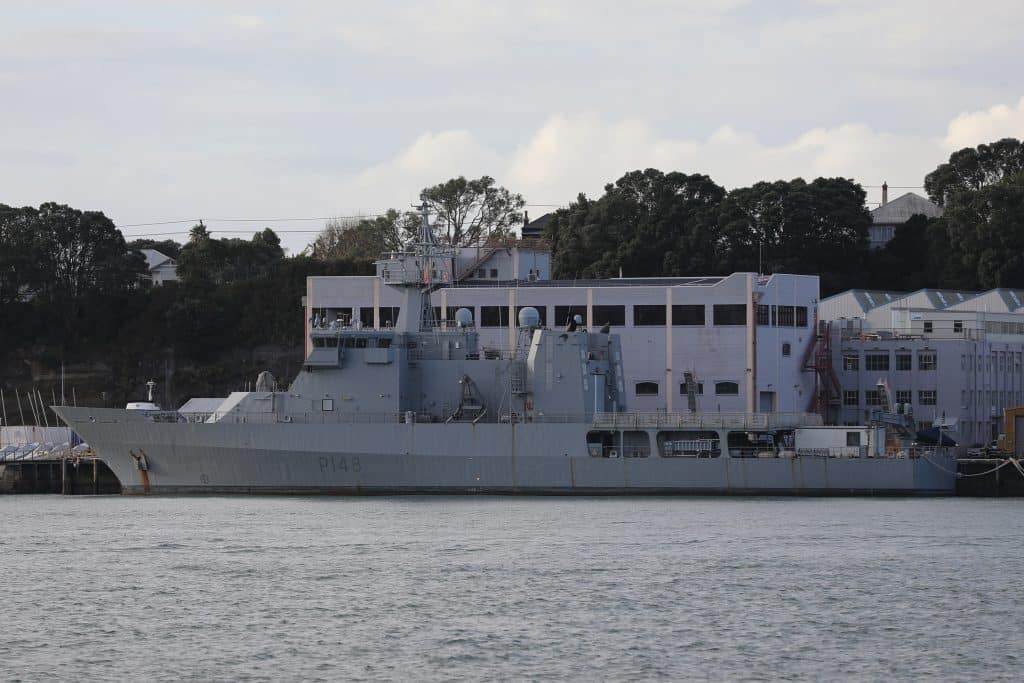
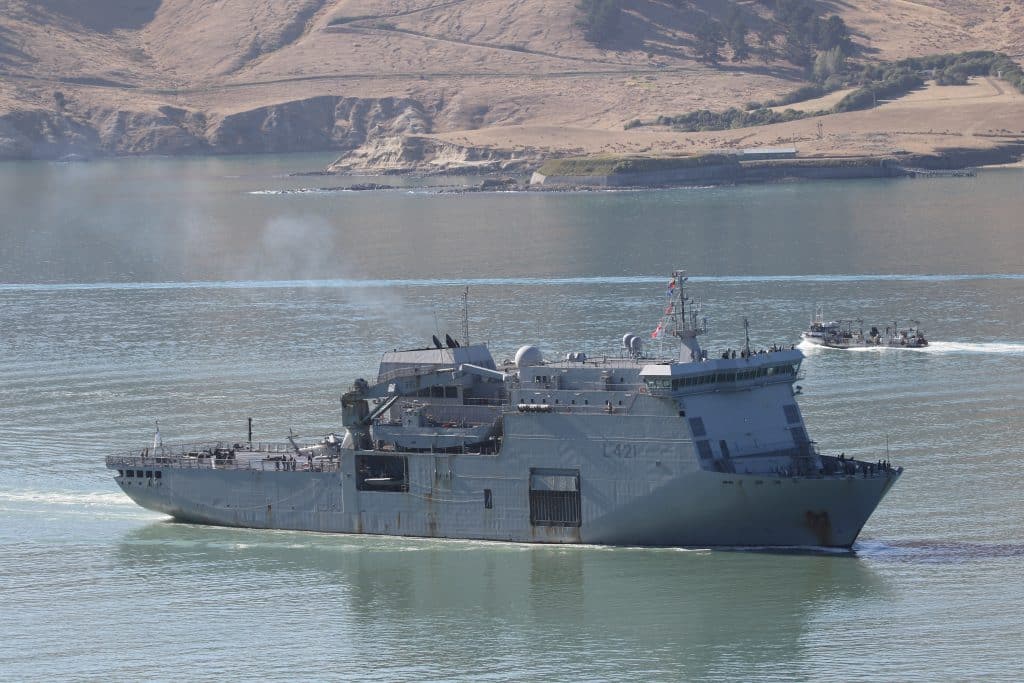
The RNZN possesses just eight vessels, with nearly all due for replacement by the mid-2030s. This includes the two frigates, two offshore patrol vessels and the multirole transport ship HMNZS Canterbury. After 2029, the RNZN will put the requirement for a Southern Ocean OPV back on the agenda too.
Penk elaborated: “The Maritime Fleet Renewal programme will receive funding for the ongoing work of delivering a modern and combat capable navy…” Some NZ$51 million will go to operational funding over the coming four years as the RNZN prepares to reconstitute its naval fleet.
The budget referred to the Maritime Fleet Renewal programme as follows: “This initiative provides funding for additional staff and specialist services to prepare investment cases for major naval platforms, and to transform the Royal New Zealand Navy across its workforce, training and operations. Transformation of the navy will prepare Defence for the introduction of the future fleet, support introducing more uncrewed systems and simulation technologies, and maximise the value of future investments.” Operating costs of NZ$5.551 million are allocated for 2026, demonstrating that no capital procurements are yet occurring.
A key point in the DCP is a commitment to more closely align the NZDF with Australia. It stated, “This will include the introduction of more common, complementary and increasingly interoperable capability, further entrenching our ability to act together in support of shared interests.” It further noted, “New Zealand will seek to procure the same assets and equipment as Australia where it makes sense to do so. This will help with interoperability.”
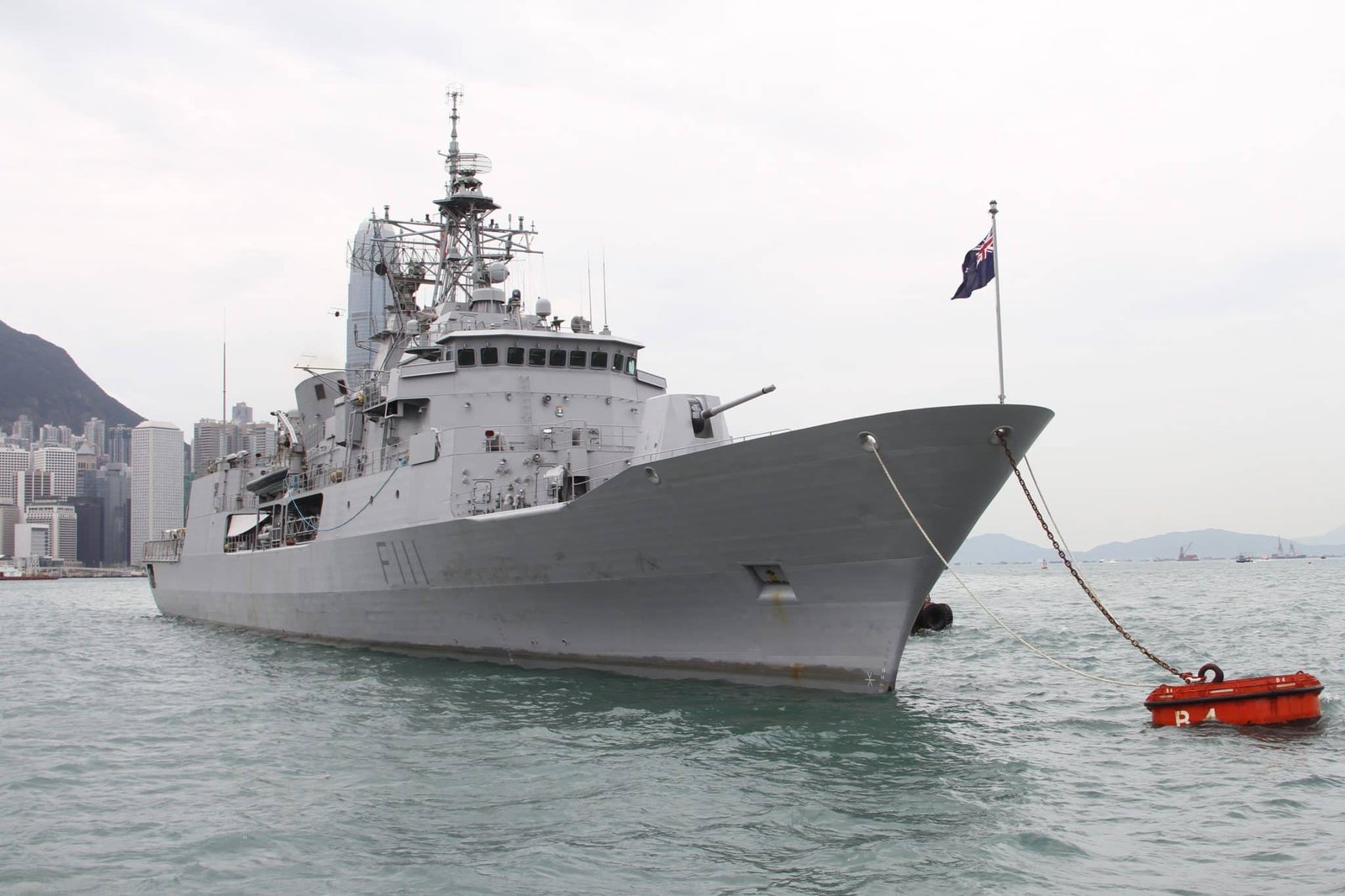
Such a sentiment puts the 6,200-tonne Japanese Upgraded Mogami in pole position to replace the RNZN’s pair of Anzac-class frigates. However, Penk revealed on 7 May there are two contenders. The other is the British 5,700-tonne Type 31 frigate based on Babcock’s Arrowhead 140 hull design. Penk said, “Defence has begun discussions with the Royal Australian Navy and the United Kingdom’s Royal Navy to inform the next stage for potential frigate replacement and ongoing service arrangements.”
New Zealand is still collecting information, with a decision not due for some time yet. Penk explained, “…We are looking at mature combat-capable vessel programmes which are at a stage that allows adequate analysis against New Zealand requirements. A final decision has not yet been made, and advice is expected to be provided to Cabinet before the end of 2027.” If NZ did buy two Upgraded Mogami frigates, this would create a combined Australian-Japanese-Kiwi class of 37 Mogami-class frigates.
Unmanned systems
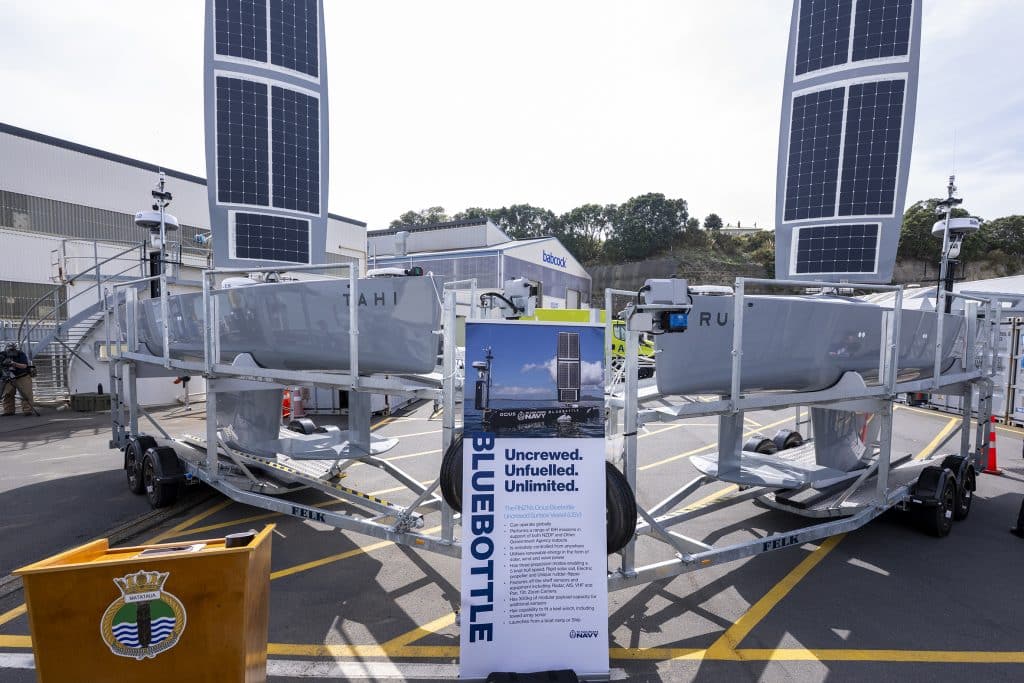
Penk gave further information about planned unmanned systems in his press conference on 23 May. He said, “One will be used in the southwest Pacific to provide long-duration intelligence, surveillance and reconnaissance, while the other is polar-capable and can conduct missions from Royal New Zealand Navy vessels in the Southern Ocean.”
Delving into these two unmanned systems, the long-range, long-duration ISR assets will be unmanned surface vessels (USV) and enabling systems to help monitor the southwest Pacific. Given that Penk gave his press conference in front of an Ocius Technologies Bluebottle USV, it is possible the RNZN will invest in additional Bluebottles on top of the two it procured last year. The budget did not disclose how much has been budgeted for these unmanned systems because of “commercial sensitivities”.
The DCP had earlier stated: “These systems may be deployed from crewed ships to enhance their effective sensor range, and/or independently for multiple months to enhance the NZDF’s maritime domain awareness and in support of other government agencies constabulary missions such as countering transnational criminal activity and resource protection.” According to the DCP, NZ$50-100 million is set aside for this capability in the next four years. Later, in the 2029-39 period, the RNZN will consider subsurface autonomous systems too.
The other system discussed by Penk is unmanned aerial vehicles (UAV) to operate from RNZN vessels; they are to enhance maritime domain awareness and supplement polar patrol capabilities. In fact, budget documents specifically named HMNZS Aotearoa – the navy’s tanker/replenishment vessel – as the main platform responsible for hosting UAVs in the Southern Ocean and Ross Sea near Antarctica. Financial figures for this UAV capability were also blanked out, but the DCP listed a figure of NZ$100-300 million for such assets from 2025-28. More UAVs will be needed in the following decade too.
A request for information for such polar-capable UAVs closed on 12 April 2026. These vertical-take-off-and-landing aircraft are to have a maximum take-off weight of 500kg, and they must be able to operate over beyond-line-of-sight distances. This suggests a rotary-winged or hybrid UAV is ideal for RNZN requirements.
Big-ticket items
Another NZ$143 million will go on capital expenditure and NZ$72 million on operating costs for maritime sustainment and restoration in the coming year. The beneficiaries here are the two Anzac-class frigates and the sealift and amphibious support ship HMNZS Canterbury. These ageing vessels require critical maintenance and replacement of systems to keep them operational till their end of life in the 2030s. A total of NZ$142.607 million is anticipated over the next four years.
Another initiative is Phase 2A of the frigate life extension programme. It will both extend the warships’ lives and ensure they remain interoperable with partners while decisions are made about their replacement. No monetary figures were released because of commercial sensitivities, but the DCP indicated this effort could cost NZ$300-600 million.
Phase 1 of this frigate sustainment programme was approved in April 2023, and it comprised eight projects replacing critical machinery, structural work and control systems. This work was all due to be completed by 2026. However, it is unclear what systems Phase 2A incorporates. The frigates will soldier on into the early 2030s, but the navy does not want them out of service for prolonged periods. Therefore, maintenance and modifications must be implemented incrementally so they remain available for operations.
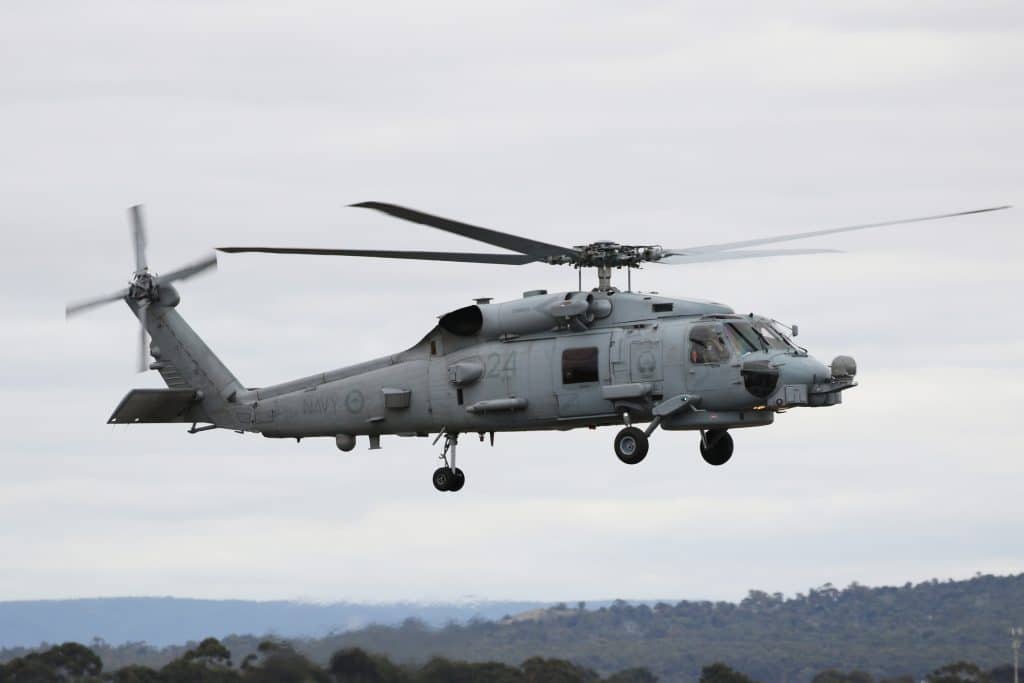
The NZDF’s two largest procurement projects in recent times are a pair of new Airbus A321XLR strategic transport aircraft to replace two long-serving Boeing 757-2K2s, and five new Sikorsky MH-60R naval helicopters to replace eight Kaman SH-2G(I) Super Seaprites (only five of which are in flyable condition).
Budgetary allocations for these projects were not broken down, but Wellington announced its selection of the MH-60R as its preferred option on 21 August 2025. It said they would be flying “in a few years,” and the Romeo deal and associated package such as weapons is expected to cost upwards of NZ$2 billion (US$1.17 billion). There is no indication that the government has cleared the MH-60R’s final business case yet, but it is scheduled to occur in 2026.
The NZDF stated, “Overall, the project is expected to be undertaken in three tranches. The first is the helicopter replacements, the second will concentrate on infrastructure and training systems at Base Auckland Whenuapai, and the third will look at investing in vertical take-off-and-landing uncrewed systems to complement the helicopters.”
In the budget there is no mention of the enhanced strike capabilities listed in the DCP, probably because this is scheduled later for the 2029-39 timeframe. These missiles are “to provide a deterrent effect to adversaries and an ability to respond to hostile vessels at a greater range”. Options listed are arming the air force’s four P-8A Poseidon aircraft and the RNZN’s frigates. The DCP said other options, including land-based strike, are being explored too. Based on what Australia is procuring, contenders might be the AGM-158C LRASM for the P-8As, Naval Strike Missiles for the frigates, and the Precision Strike Missile/HIMARS combination.
Penk stated that this 2026 budget brought new investment on defence up to a total of NZ$5.8 billion since the Defence Capability Plan was issued. When released, the DCP promised NZ$12 billion (US$6.65 billion) in defence spending over the coming four years, of which NZ$9 billion is new spending. This is supposed to see defence as a proportion of GDP rise from 1% to slightly more than 2% within eight years. Based on this year’s announcement, defence spending will make up 1.23% of GDP in FY2026/27.
