


What Was Contained In The Changes?
Simple Flying’s Pranjal Pande reported on the changes when they were first announced back in September 2023. Delta announced that from the start of 2024, Delta SkyMiles Platinum and Platinum Business cardholders wouldn’t have access to Sky Club lounges, and economy passengers using any card also wouldn’t have access.
The next change came at the start of 2025. Delta SkyMiles Reserve and Reserve Business cardholders would be limited to ten annual visits to Sky Clubs, and would have to spend an enormous $75,000 on these credit cards to get unlimited access. On the same date, Amex Platinum and Platinum Business cardholders were given ten Sky Club visits each year, from the initially proposed six.
Delta also changed the incredibly complicated way passengers earned points through their loyalty system. Previously, they could earn Medallion Qualification Segments (MQS), Medallion Qualification Miles (MQM), and Medallion Qualification Dollars (MQD). Starting in 2024, the changes planned to make passengers only earn through MQD. Passengers could earn one MQD per dollar spent on bookings with Delta and partner airlines, or on car rentals, hotel bookings, and Delta vacation bookings. They could also earn one MQD per $10 or $20 spent with certain Delta cards. Delta also significantly upped the requirements to qualify for each medallion tier. The airline also offered ways for existing members to swap their MQMs for the new MQDs.
The Response To The Changes

Delta’s changes received a terrible response from customers and the industry, because the changes were targeted at Delta’s most loyal customers and credit card users, many of whom had spent years building up miles.
The move, along with broader pushes towards credit card spending to secure statuses, is making some flyers move away from loyalty schemes. The Points Guy writes, “Gone are the days of simply flying a lot or paying a higher fare to lock in status. Today, earning elite status is all about credit card spend and other kinds of purchases, such as hotel rooms and items bought through online shopping portals. That’s convinced me that the perks of status just aren’t worth the effort and cost.”
While Delta did go on to reverse many of the changes, as explained in the following section, Delta and its executive staff were quick to underplay the extent of their customers’ concerns. Delta’s CEO, Ed Bastian, did admit, “No question we probably went too far… “Our team wanted to kind of rip the Band-Aid off and didn’t want to have to keep going through this every year with changes and nickel and diming and whatnot, and I think we moved too fast,” while speaking to the Rotary Club of Atlanta, as reported by CNBC. However, he was keen to justify the decision and downplay the level of annoyance among customers. “It’s gotten to the point, honestly, where we have so much demand for our premium product and services that are far in excess of our ability to serve it effectively in terms of our assets,” he said. Likewise, Bastian told CNBC, “If everyone’s special, no one feels special.”
Why Delta Air Lines Made Its Sky Club Lounges Harder To Get Into
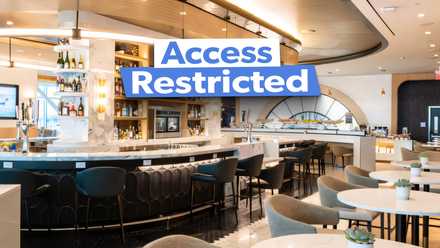
Many passengers, and ultimately the airline, felt its Sky Clubs were getting overcrowded.
The Rollback

Under pressure from its customers and rival airlines, Delta was forced into a humiliating rollback from its planned changes. A significant change was an increase in flexibility for Delta Sky Club access. Delta credit card holders saw an increase of between four and five visits allowed. Further visits could also be purchased for the relatively low rate of $50 per person. Another change was more generous options to convert and rollover MQM balances. Bonuses were made available for passengers with exceptionally high balances to reduce the hit of converting to MQD.
The table below shows the extent of the changes made to the medallion status requirements. It makes use of data collected by Sam Chui:
Medallion Status | Initially Planned MQD Requirement | Modified MQD Requirement |
|---|---|---|
Diamond | $35,000 | $28,000 |
Platinum | $18,000 | $15,000 |
Gold | $12,000 | $10,000 |
Silver | $6,000 | $5,000 |
From these changes made, it seems that Delta in fact doubled down on the philosophy behind the SkyMiles revamp. For example, they did not pull a complete U-turn on the shift from miles to dollars. However, the carrier substantially reduced the severity of the changes that it was instituting.
Is SkyMiles Still Worth It In 2026?

The SkyMiles changes were only partially reversed. As a result, it can be hard to understand if SkyMiles is the right loyalty program to invest your time and money in. Despite removing the most unpopular changes, passengers remain frustrated with a number of factors. Dynamic pricing makes it hard to predict the size of the reward needed to access certain products. There has also been a rise in the miles required on some routes in response to inflation. These factors have made SkyMiles confusing and less generous than many of its competitors. Passengers tend to prefer fixed award charts, such as those offered by  Alaska Airlines. Yet, passengers who are able to optimize their use of SkyMiles based on routes, promotions, and timings can get superb value.
Therefore, whether SkyMiles is still worth it depends entirely on the sort of passenger that you are. It is ideal for occasional travelers who fly a few times a year and can be flexible. The most loyal customers can also still access superb benefits through their Medallion status. Such passengers can achieve much higher earning rates.
Those who lose out are inflexible leisure travelers. These individuals don’t earn a good amount of points. They are also at the mercy of dynamic pricing, which is notorious for its lack of predictability. They may be forced into paying well over the odds in both SkyMiles and real dollars.
Is Delta SkyMiles Still Worth It In 2026?
We take a closer look at the SkyTeam member’s frequent flyer program.
The SkyMiles Needed To Fly In Delta One

However you have been affected by the changes made to SkyMiles in recent years, you could still access the ultimate perk, a flight on Delta One. Simple Flying’s Alexander Mitchell investigated the number of SkyMiles needed to fly in this premium class earlier this year. While noting that dynamic pricing means there is no exact figure, he ran mock bookings to test the cost for both domestic and international flights.
A return from New York John F. Kennedy International Airport (JFK) to Los Angeles International Airport (LAX) would have cost Alex around 310,000 miles. He noted that it would be hard to get much below 300,000, even for the lowest demand flights, while a flight at peak times was well over 300,000 miles.
Unsurprisingly, an international flight from Delta One, JFK to Athens International Airport (ATH), was even more costly, partially because of how popular Athens is to get some springtime sun. The return flight would have cost Alex almost 600,000 miles, with an additional $55.61 in taxes, fees, and charges. Again, flights at peak times were even more expensive, costing well in excess of 600,000 miles. This ridiculously steep price in miles to pay for Delta One travel implies that the carrier would rather keep the class reserved for the highest-paying business customers.
Other Airlines Have Been Looking To Make Changes

Delta’s revamp of its SkyMiles scheme was undeniably a disaster. Yet, other carriers have recently sought ways to cut back on the benefits they offer customers through loyalty programs. That is because every perk and freebie given to loyal customers takes dollars off a company’s profits. Kyle Olsen, travel products editor for CNN Underscored, said: “Airlines have raised [flight] redemption costs and made rewards less valuable. Higher spending requirements make status harder to achieve. Dynamic pricing means award flights cost more points than before.”
A particular culprit has been the oneworld airline alliance, which has been accused of turning its loyalty programs into recognition awards for the highest spending customers. In 2025,  British Airways, Iberia, and Qantas announced coming changes to their loyalty schemes. British Airways and Iberia planned to make it harder to achieve certain statuses, while Qantas planned to make a higher spend needed to use loyalty points.
Delta CEO Ed Bastian cited crowded lounges as a key reason for the change. These spaces have been created with the tip of elite and high-spending passengers in mind. Yet, generous loyalty programs in the earlier 2020s were opening them up to ever-increasing numbers of passengers. That turned scarce calm spaces within airports in areas for the same chaos that passengers could experience anywhere else.
Catch what other trackers miss
Emergency squawks, holds, NOTAMs — live signals, no signup.
Open tracker
Catch what other trackers miss
Emergency squawks, holds, NOTAMs — live signals, no signup.
Open tracker
