


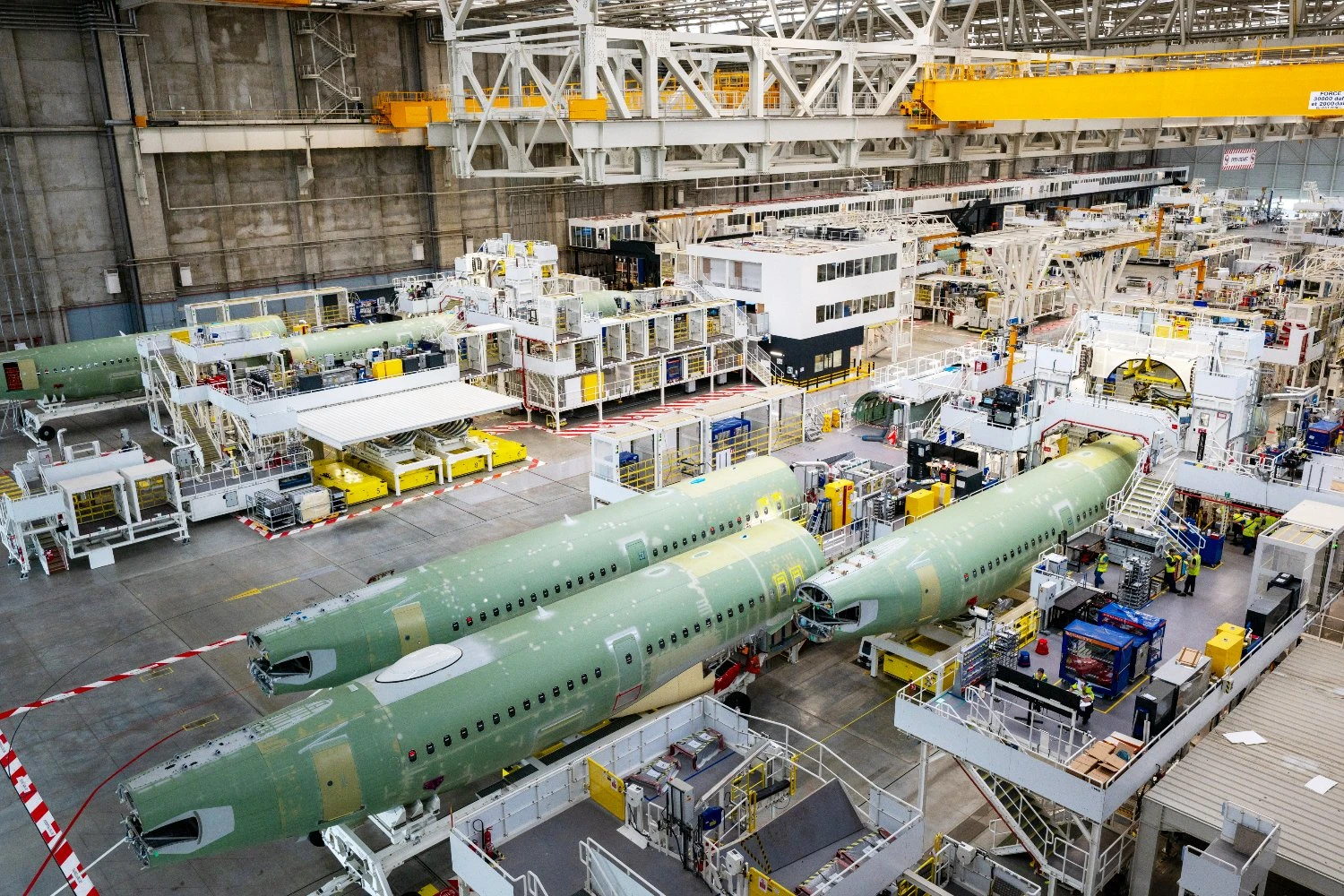
Airbus inaugurated a new final assembly line for the A320neo family in Toulouse on June 15, expanding production capacity for its best-selling narrowbody aircraft and completing a plan to operate 10 assembly lines worldwide.
The new facility is located inside the Jean-Luc Lagardère plant, the same complex originally built for production of the A380 superjumbo. Airbus had already opened one A320neo family assembly line there in 2023 and has now added a second line dedicated to the aircraft family.
The Toulouse expansion illustrates how demand has shifted over the past decade. While the A380 program ended in 2021, sales of the A320neo family, particularly the larger A321neo, have surged and now account for most of Airbus’ commercial aircraft backlog.
According to Airbus, the company now operates four A320 family final assembly lines in Hamburg, two in Toulouse, two in Mobile, Alabama, and two in Tianjin, China.
“Bringing this new A320 Family production line to life right here in Toulouse is a proud moment for all of us,” Airbus CEO Guillaume Faury said during the inauguration ceremony.
The manufacturer said the new line incorporates digital monitoring systems, automated logistics and robotic technologies intended to improve production efficiency. Airbus expects nearly 1,500 employees to work across the two assembly lines at the Toulouse site once both reach full capacity.
Up to 75 A320neo aircraft by month
Airbus plans to increase A320 family production to between 70 and 75 aircraft per month by the end of 2027. At the end of May, the manufacturer had an order backlog of 7,499 aircraft from the A320 family, including 5,615 A321neos.
The company previously assembled A320 family aircraft primarily in Hamburg before gradually expanding production to China and the United States. The addition of the second Toulouse line gives Airbus greater flexibility as it works to increase output.
Follow Air Data News: WhatsApp | Google News | Instagram | LinkedIn | Twitter | Facebook
Speaking at the event, Faury also criticized Europe’s business environment, arguing that high labor, energy and regulatory costs are weighing on the competitiveness of European industry.
“Whenever I come back from the U.S. or China, I get very irritated with Europe, because we are too slow and not conscious of enormous challenges to our industries,” he said.
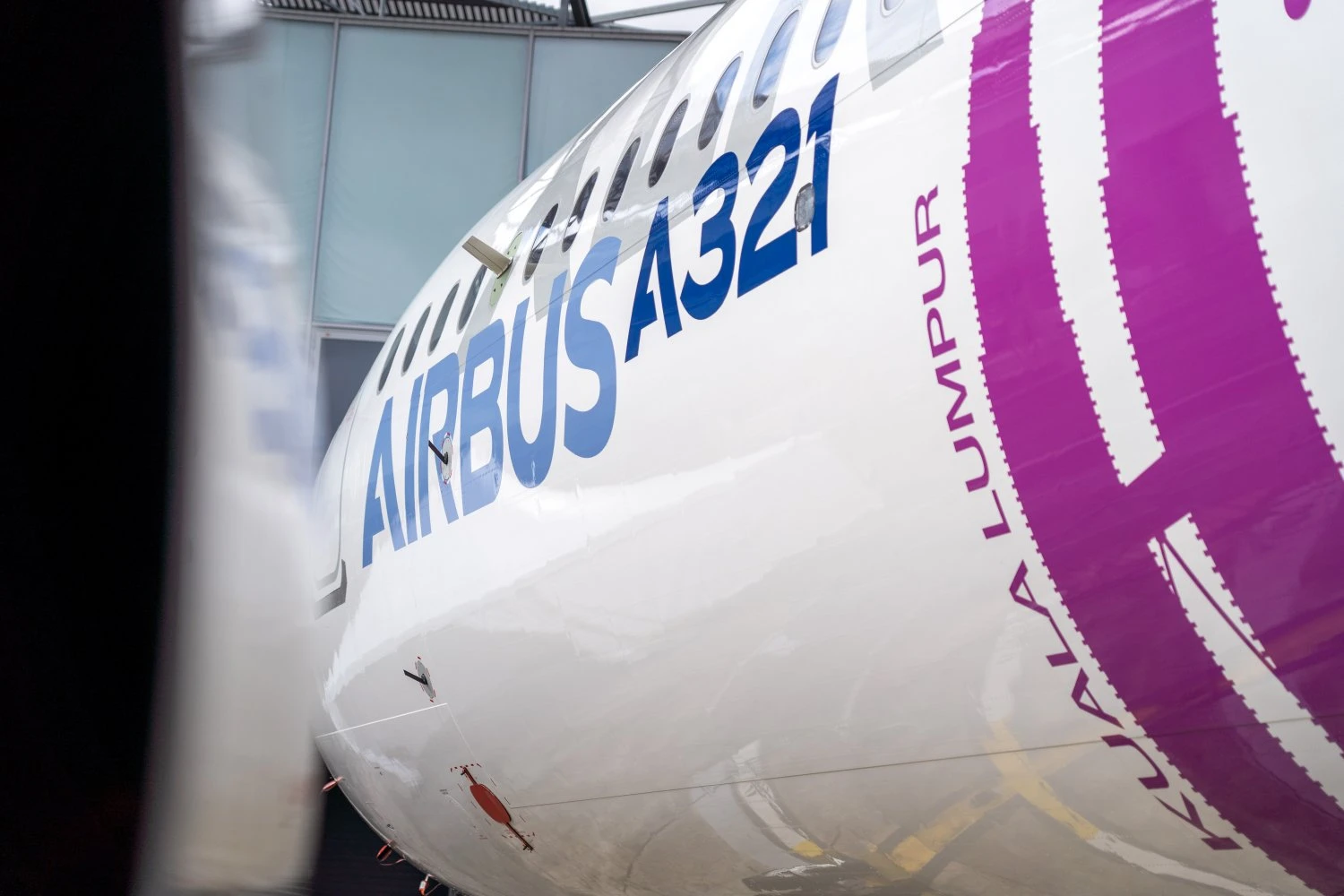
Faury added that Airbus continues to face supply chain constraints, particularly involving Pratt & Whitney engines. Several aircraft awaiting engines could be seen parked near the Toulouse facility during the inauguration.
Despite those challenges, Airbus expects a strong second half of the year as it works toward its target of delivering around 870 commercial aircraft in 2026.
