


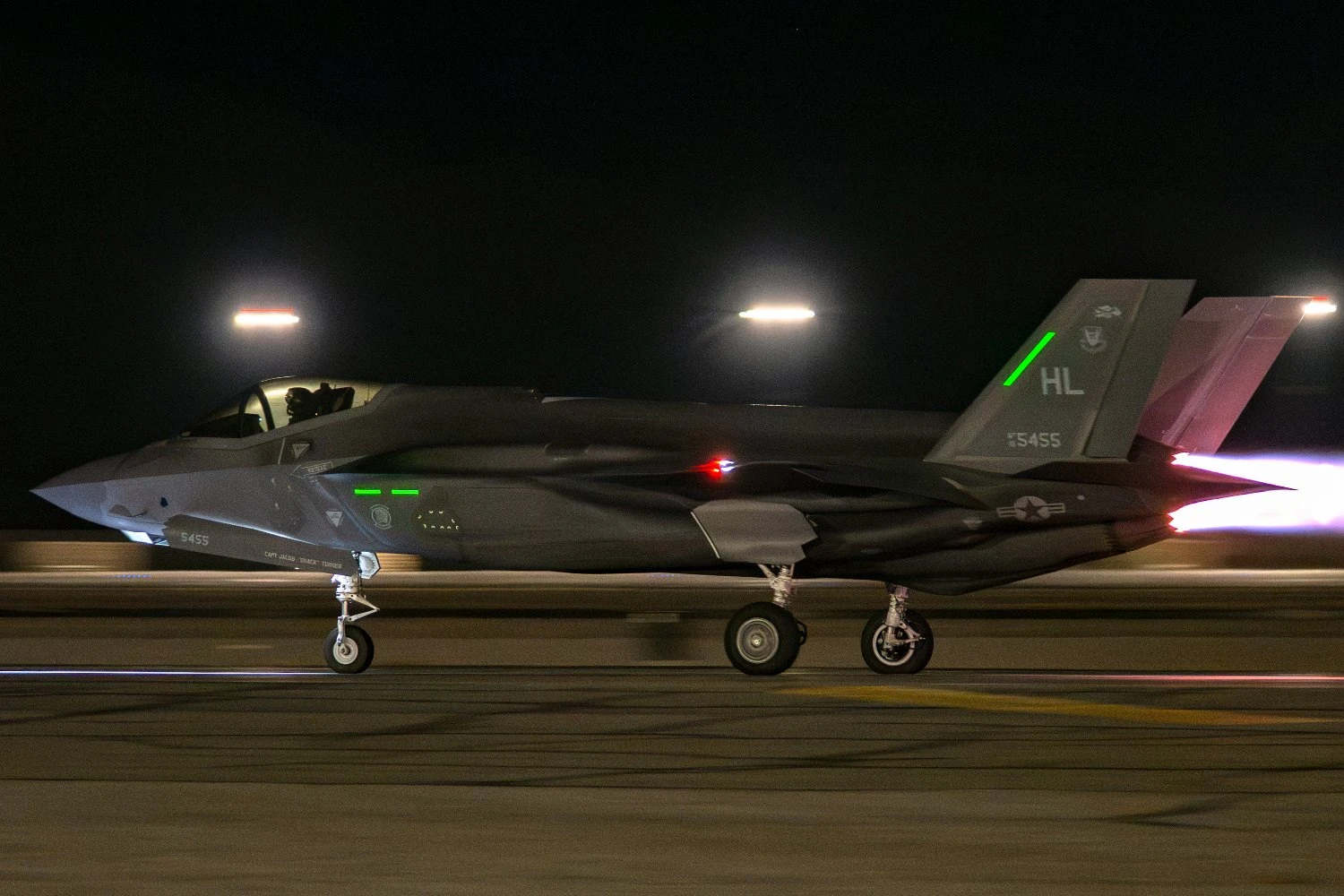
The U.S. Air Force’s F-35A fighter jet is assuming one of military aviation’s most demanding missions: suppressing enemy air defenses by locating and destroying radar-guided surface-to-air missile systems.
The transition is taking place at Misawa Air Base in northern Japan, where the 35th Fighter Wing is replacing its F-16 fleet with the fifth-generation fighter as part of a broader modernization effort in the Indo-Pacific region.
Known as the “Wild Weasel” mission, the role dates back to the Vietnam War and involves aircraft operating near heavily defended areas to identify hostile radar emissions and neutralize air defense systems. The mission became one of the most dangerous assignments in the U.S. Air Force, as crews deliberately exposed themselves to enemy radar tracking in order to locate missile sites.
For decades, specialized aircraft such as the F-105 Thunderchief, F-4G Phantom II and later the F-16CJ carried out the mission using anti-radiation missiles capable of homing in on radar signals.
According to the Air Force, the F-35 brings a different approach. Rather than relying primarily on externally mounted sensors and electronic warfare equipment, the aircraft integrates advanced sensors, electronic support measures and data fusion systems into its basic design.
“The F-35 was tailor made to be a weasel platform,” Lt. Col. John Widmer, commander of the 13th Fighter Squadron, said in a statement released by the service.
Air Force officials say the fighter’s sensor suite allows pilots to detect, identify and track threats across a wide area while remaining difficult to detect because of its low-observable design.
The aircraft’s growing role in suppression of enemy air defenses was demonstrated during recent combat operations. In June 2025, F-35s participated in strikes against Iranian air defense systems during Operation Midnight Hammer, helping clear routes for follow-on aircraft.
Suppressing enemy air defenses remains one of the first objectives in many air campaigns. Before strike aircraft can operate freely over hostile territory, air defense networks must be degraded or destroyed, particularly those equipped with long-range radar-guided missile systems.
The F-35 is expected to expand its capabilities in the role through the future integration of the AGM-88G AARGM-ER, the latest version of the anti-radiation missile family developed specifically to target advanced air defense systems.
