


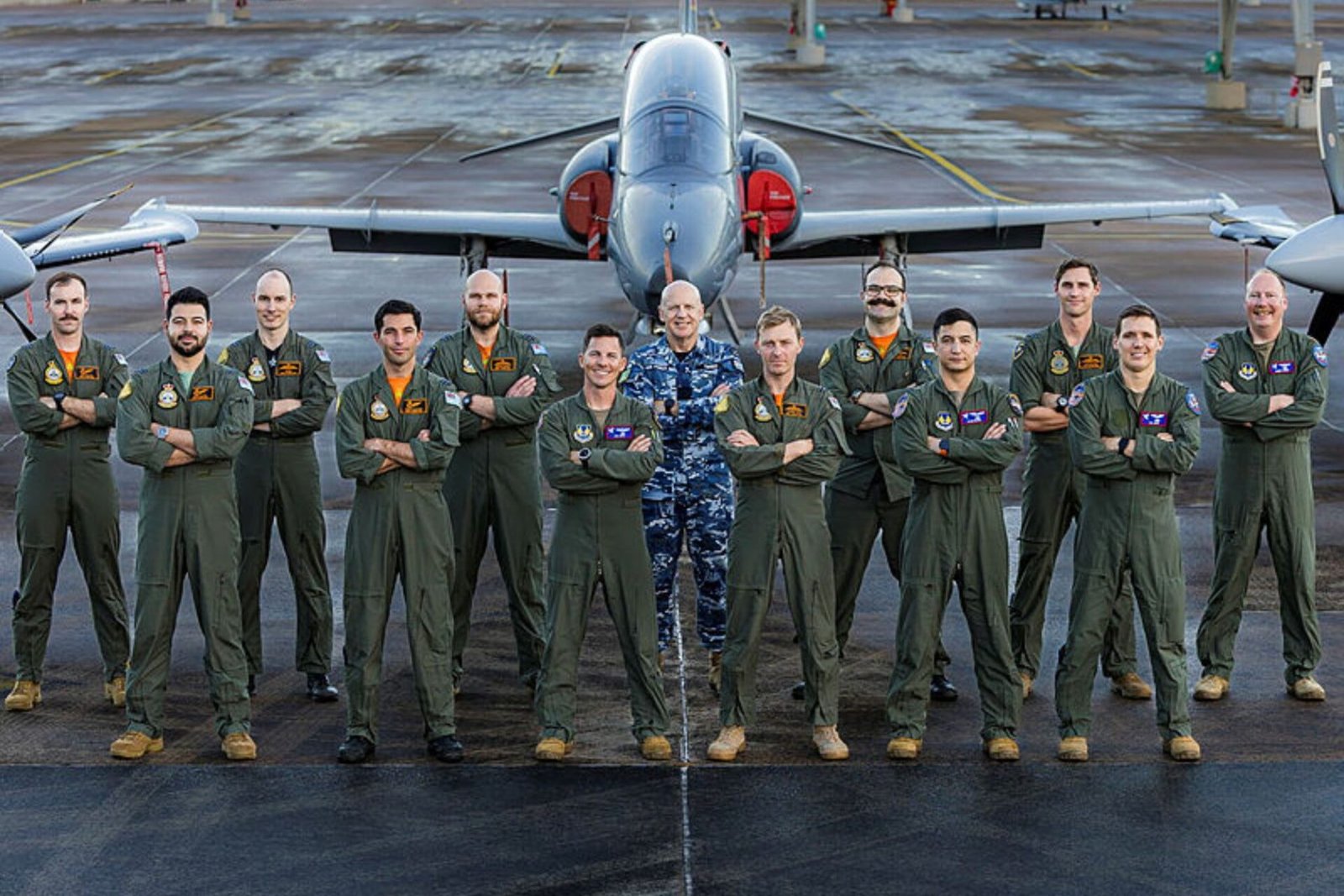
The Royal Australian Air Force (RAAF) has hosted the United States Air Force (USAF) Test Pilot School for the first time in many years, welcoming students and instructors to RAAF Base Williamtown in New South Wales.
The visit was organized by the Aircraft Research and Development Unit (ARDU), which focuses on test and evaluation work for the Australian military.
For decades, Australian pilots, mission aircrew, and engineers have traveled to the United States to complete the rigorous, year-long Test Pilot School program. This time, the exchange went the other way.
Aircraft Research and Development Unit was proud to host the United States Air Force Test Pilot School. Sharpening skills, sharing expertise and strengthening airpower—together. #AusAirForce #YourADF #StrongerTogether pic.twitter.com/NWgfwBZ4cD
— Royal Australian Air Force (@AusAirForce) June 18, 2026
From classroom to cockpit
The RAAF said that the visit gave both sides an opportunity to share knowledge, compare testing methods, and operate across different aircraft and environments.
By hosting their American counterparts in Australia, ARDU aimed to deepen the partnership through real-world experience in a different operational setting.
Flight Lieutenant Mitchell Jensen, an E-7 test pilot, said the relationships formed through these exchanges have practical value.
“The relationships built during training provide immediate, real-world benefits,” Jensen said. “Recently, I resolved a complex issue in a single day by quickly collaborating with a USAF Test Pilot School colleague whom I met during my training.”
Stronger ties for future operations
Jensen said the visit will help both nations work more closely on test and evaluation efforts.
“The relationships formed during this visit will enable us to work even more closely with the USAF in the test and evaluation environment, strengthening our ability to deliver outcomes as an integrated team,” he said.
The exchange reflects the broader defense relationship between Australia and the United States, which includes joint training, shared capabilities, and professional ties across multiple domains.
Through these kinds of visits, both air forces are building connections that help them operate together, solve complex problems, and develop capabilities that neither could achieve on their own.
