


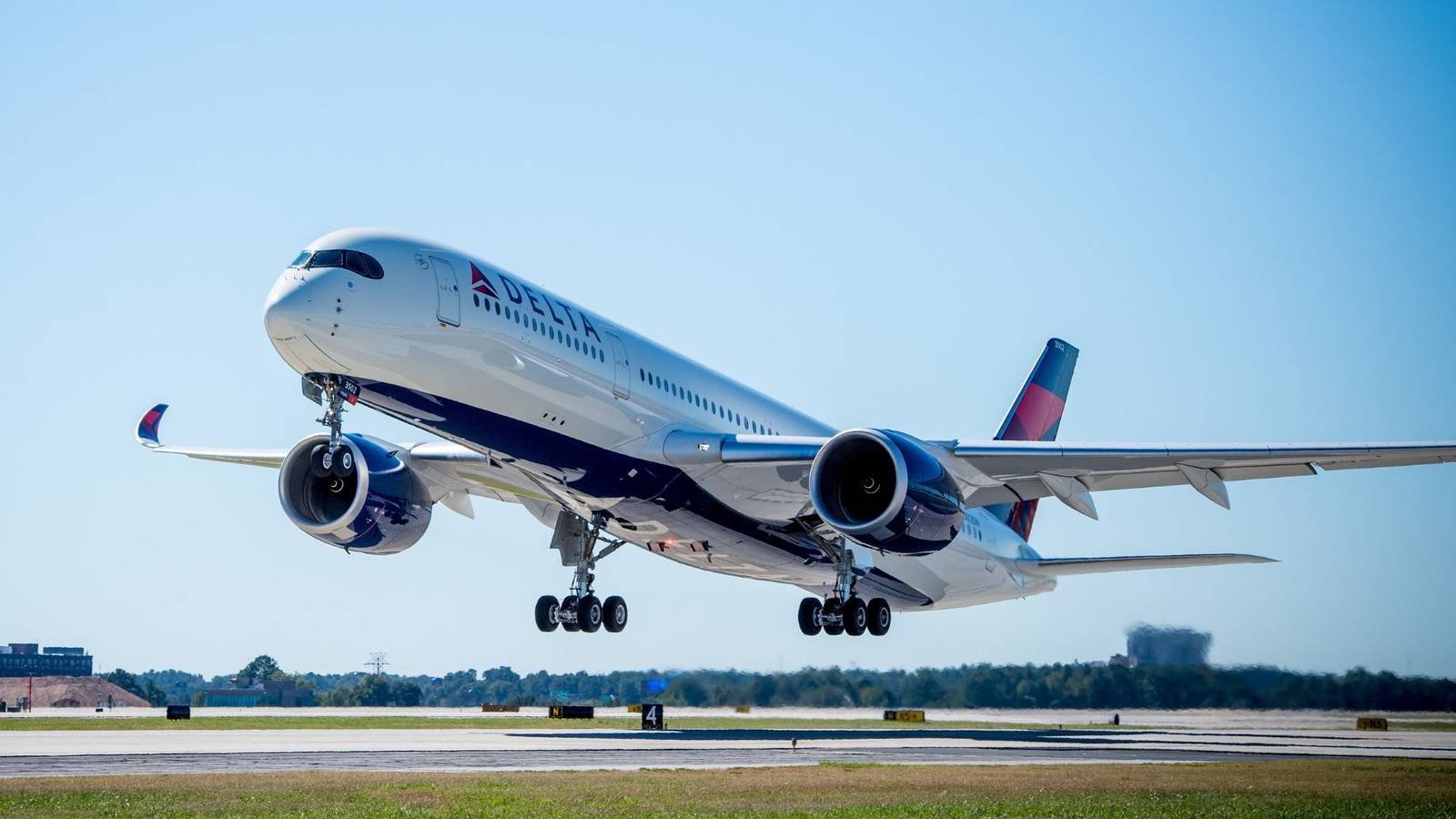
Delta Air Lines is preparing for a major milestone in its international fleet strategy, with aviation analyst JonNYC reporting on social media that the airline is targeting June 2027 for the entry into service of its first Airbus A350-1000s. The aircraft will become Delta’s new flagship widebody, introducing a larger version of the A350 family that will expand the airline’s long-haul capabilities. Delta placed an order for 20 A350-1000 aircraft in 2024, marking the first time the carrier will operate Airbus’ largest A350 variant.
The arrival of the A350-1000 represents more than a simple fleet expansion. It reflects Delta’s broader focus on premium international travel, operational efficiency, and next-generation aircraft technology. With a longer fuselage, increased passenger capacity, greater cargo capability, and a range of approximately 8,700 nautical miles (16,100 kilometers), the aircraft is expected to play a central role in Delta’s future global network.
A Larger Airbus A350 Creates New Opportunities For Delta’s International Network

The A350-1000 will become Delta’s largest passenger aircraft when it enters service, surpassing the capacity of the airline’s existing A350-900 fleet. Measuring approximately 242 feet (73.8 meters) in length, the aircraft is around 23 feet (seven meters) longer than the A350-900, creating additional cabin space while maintaining the efficiency advantages of the A350 platform. The Airbus A350-1000 can accommodate more than 400 passengers in a high-density configuration; however, Delta’s confirmed 314-seat layout will feature 53 Delta One Suites, 48 Premium Select seats, and 213 seats across the Main Cabin and Comfort+ sections, prioritizing premium capacity and passenger comfort over maximum seating density.
With a maximum takeoff weight of approximately 685,000 pounds (311,000 kilograms), the A350-1000 can carry substantial passenger and freight loads on long-haul missions. This additional capability allows Delta to generate revenue from both premium travelers and cargo demand, strengthening the aircraft’s overall economic value.
Simple Flying reached out to Delta for a comment, but a representative was not immediately available.
The A350-1000 Supports Delta’s Fleet Modernization Strategy

The introduction of the A350-1000 is part of Delta’s continued investment in newer-generation aircraft designed to improve efficiency and reduce operating costs. The airline already operates Airbus A350-900 aircraft and has built experience with the A350 family since becoming the first US carrier to introduce the model in 2017. The larger A350-1000 will expand that capability while adding a higher-capacity option.
Powered by Rolls-Royce Trent XWB engines, the A350-1000 benefits from advanced technology developed specifically for long-haul operations. Airbus states that the A350 family provides approximately 25% lower fuel burn, operating costs, and carbon emissions compared with previous-generation aircraft of similar size. These improvements are increasingly important as airlines look for ways to manage costs while meeting sustainability goals.
The aircraft will also strengthen commonality within Delta’s Airbus fleet. The airline operates aircraft across Airbus’ product range, including the A220, A320 family, A330, and A350. Expanding the A350 fleet allows Delta to take advantage of existing pilot training, maintenance infrastructure, and operational experience while building a more efficient widebody strategy.
Airbus A350 Deliveries Continue As Global Demand For The Widebody Family Grows

Delta’s introduction of the A350-1000 will mark another milestone in the continued expansion of the Airbus A350 family, which has become one of the most significant widebody aircraft programs in modern commercial aviation. With more than 1,500 orders from customers worldwide, the A350 has established a strong position among airlines seeking efficient, long-range aircraft for their future fleets.
As Airbus continues delivering A350-family aircraft to carriers around the globe, demand for the program remains strong. Airlines have selected the A350 for fleet renewal, replacing older-generation widebody aircraft while improving operational efficiency and expanding international networks.
The A350-1000 has continued gaining recognition as a high-capacity aircraft designed for some of the world’s most demanding long-haul missions, with Qantas selecting the type for its ambitious Project Sunrise program. The airline has ordered 12 A350-1000s configured for ultra-long-range operations, with the aircraft designed to connect Australia’s east coast with destinations such as London and New York through non-stop services. Featuring a range of up to approximately 9,700 nautical miles (18,000 kilometers) and a 238-seat four-class cabin focused on premium travel, the A350-1000 demonstrates the growing potential of next-generation twin-engine widebodies to redefine global connectivity and enable new ultra-long-haul routes.
