


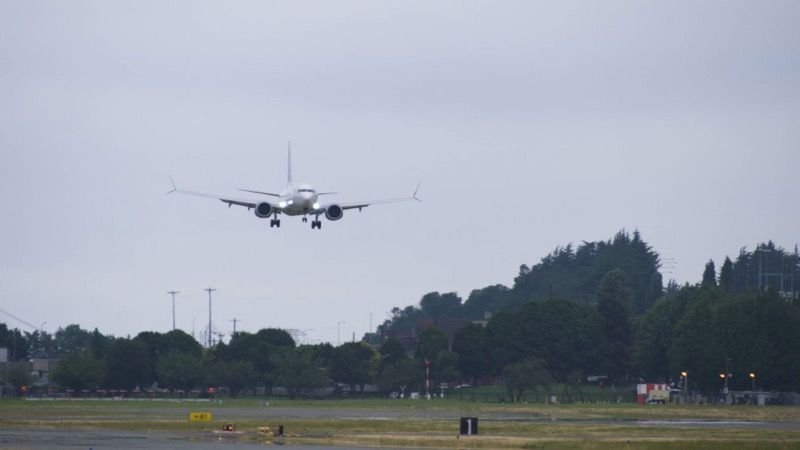
Boeing has completed certification flight testing for the 737-10, the largest airplane in its 737 MAX family, clearing the way to finish the aircraft’s certification.
The development team flew its final planned certification flight test after a program that logged 976 flights, more than 2,060 flight hours and about 1,040 ground test hours across three test aircraft. Testing validated the full range of certification requirements, from main landing gear and braking on wet runways to maximum-energy stops.
It also covered the 737 Engine Anti-Ice (EAI) solution and the enhanced angle-of-attack (eAoA) system. Boeing plans to introduce the updated engine anti-ice system across all 737 MAX models in production and to retrofit it to the in-service fleet.
The final test was an interiors evaluation confirming the audibility of the lavatory smoke detector and cabin speaker system, so crews can detect and respond to onboard alerts. The airplane departed from and returned to King County International Airport at Boeing Field in Seattle.
Chris Payne, vice president and general manager of 737 development programs, said, “Reaching this milestone is a huge testament to the commitment and dedication of the entire team. Thank you to everyone who gave so much of themselves to get us here. This is an important step on our journey, and we’re focused on building on it as we move forward.”
Dan Mangel, the Boeing pilot who flew the final test, also made the aircraft’s first flight four years ago. He said, “This was an important flight for me. I did the first flight of this particular airplane four years ago and this is the final certification test flight of the Boeing inventory for this airplane. So, I got to see the airplane from one end to the other. It was a bit of an emotional day.”
With flight testing finished, the program is closing out the remaining development assurance reviews (DARs) and system safety assessments (SSAs) before submitting final deliverables to the FAA for review. Boeing said one development assurance review is complete and the next about 60% done, while the safety assessments are about 32% complete.
Boeing has also finished flight testing the smallest MAX variant, the 737-7. The company expects certification of both aircraft this year, with first deliveries to customer in 2027.
Certification of the two variants has been long delayed, in part by design changes and tighter regulatory requirements that followed the 2018 and 2019 crashes of 737 MAX 8 aircraft. The 737-10 first flew in 2021, with entry into service then targeted for 2023.
