


Stakeholders from the two countries are looking at how electric aircraft could make the hop more sustainable.
Industry experts, aircraft developers and government representatives discussed the possibility of establishing an “electric air bridge” between the Netherlands and the UK during an event at the recent Farnborough air show, as first reported by FlightGlobal sister publication Luchvaartnieuws.
Participants in the Zero Emission Flying Forum, organised by AeroNL and the Dutch Ministry of Infrastructure and Water Management, explored the conditions that would be required to make such an initiative possible.
Across Europe and beyond, work is progressing rapidly on the development of hybrid- and all-electric aircraft. These technologies were prominently featured at the air show.
“Here, you can really see that electric flying is no pipe dream – it’s genuinely on its way,” says Gerben Groothuis, business development and innovation director at Twente airport, which describes itself as “an incubator for sustainable aviation”.
The vision behind electric aviation is not only to make flying more sustainable, but also to boost connections between smaller airports. AeroNL, which represents more than 100 Dutch aviation companies, says potential routes could include Rotterdam-Birmingham, Eindhoven-Bristol and Groningen-Norwich.
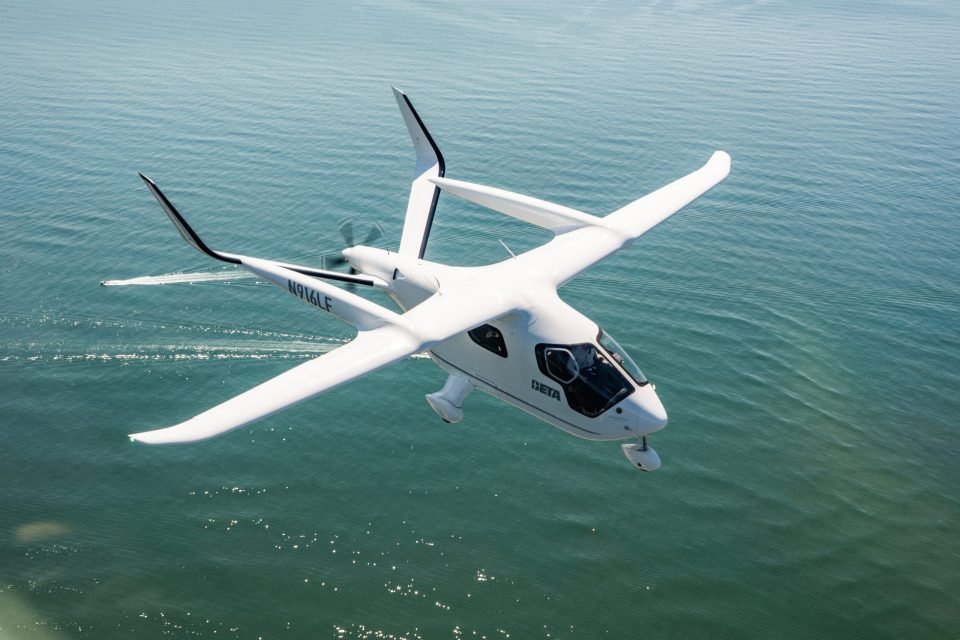
Under-development electric aircraft include the Beta Technologies Alia CX300, designed to carry five passengers, Vaeridion’s nine-seat Microliner and Elysian’s larger E9X, which is designed to carry 88-100 passengers.
On average, according to Eurocontrol data, one-quarter of all flights departing from European airports operate to destinations located less than 270nm (500km) away – putting them within the range of future electric aircraft.
Organisers of the Zero Emission Flying Forum say the current generation of electric aircraft will initially be too small to replace existing scheduled services. However, they could open up entirely new routes, improving connectivity for regions outside the major cities, such as Twente, Groningen and Limburg.
Roxanne van Rijn, one of the AeroNL representatives behind the Farnborough session, describes the meeting as a success.
“Many organisations are willing to work together to identify opportunities for electric aviation to succeed and help drive the sector’s transition,” she says.
Whether the first electric passenger flights between the Netherlands and the UK take off in the 2030 timeframe remains to be seen.
“Regulations need to be aligned between the two countries, and that will take some time,” says Van Rijn. She also points to practical considerations: “It would be helpful if Dutch aircraft could use the appropriate charging infrastructure in the UK to recharge their batteries, and if developments on both sides progress at roughly the same pace.”
Nevertheless, she believes both countries are well positioned to make a start.
“There are so many exciting start-ups and innovations underway in both our countries. It would be fantastic if we could turn all of this into a practical reality,” she says.
Additional benefits
In the longer term, once electric aviation becomes a reality, the sector expects benefits beyond creating new routes. Zero-emission, quieter aircraft could help address current challenges, such as allowing more night-time operations or giving airlines priority for airport slots based on their lower emissions and reduced noise levels.
Electric aviation could also provide an attractive alternative for destinations that are difficult to reach by rail.
An official Dutch trade mission to the UK focusing on sustainable transport is scheduled for November this year. King Willem-Alexander will be part of the delegation.
This article was first published by Luchvaartnieuws on 28 July.
Subscribe to gain access to all news
Already have a subscription? Log in.
Choose your subscription
Considering a corporate subscription? Contact us to find out more.
