


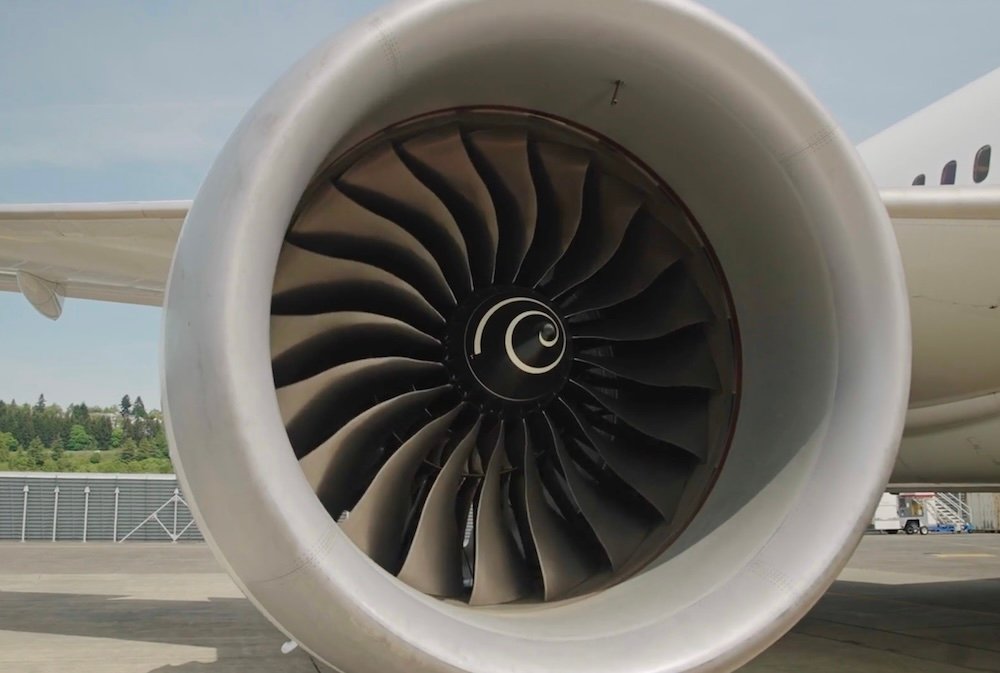
New blades being rolled out on Trent 1000 and 7000 fleets.
Rolls-Royce is claiming to have “effectively eliminated” aircraft-on-ground over the first half, as the company continues to roll out Trent engine improvements.
Nearly half of the Trent 1000 TEN fleet of Boeing 787s has been fitted with improved high-pressure turbine blades, bringing them up to the company’s new ‘XE’ standard for the powerplant.
Chief executive Tufan Erginbilgic, speaking on 30 July, said the XE was already delivering benefits, with three airlines having selected the powerplant, while the XE is being offered in “several significant ongoing sales campaigns”.
Rolls-Royce adds that “almost the entire fleet” of Airbus A330neos – which are powered by Trent 7000s, and use the same blades – have similarly been upgraded.
These measures are part of a broader time-on-wing programme intended to more than double durability across in-production engines by the end of 2027.
Rolls-Royce says this programme “remains on track”, with the “majority” of the improvements delivered.
Enhancement of its MRO network, to build more resilience into its operations, as well as stronger supply chains have helped the company to achieve “significant operational improvements” in the first half, it says.
These have included “effectively eliminating” aircraft-on-ground, which Rolls-Royce describes as a “best-in-class performance across the industry”.
Erginbilgic says the Trent 1000 upgrades have been a “big part” of this achievement.
Rolls-Royce states that improvements are progressing for the Airbus A350’s Trent XWB.
It brought forward life extensions to critical life-limited parts for the XWB-84 variant, fitted to the A350-900, while remaining life-extension work is scheduled to be certified by the end of this year.
The company has also “tested and proven” crucial technologies, including the combustor and ceramic matrix composite seals, for the XWB-97 which powers the larger A350-1000.
“This included sand-ingestion tests to replicate the harshest environments these technologies will be subject to in service,” it adds.
Rolls-Royce handed over 157 large engines in the first six months of the year, up from the previous figure of 122.
Its civil aerospace division recorded a 29% rise in underlying revenues, to nearly £6.2 billion ($8.3 billion), which the company attributes to higher deliveries and shop-visit volumes.
This revenue improvement included a contribution of £4.2 billion from services, including “stronger” large engine aftermarket performance; the company has been striving to increase the profitability of its aftermarket contracts.
Underlying operating profit for the division rose to £1.57 billion.
Rolls-Royce’s Trent backlog totals 2,266 engines, although its exclusive programmes – the A350 and A330neo – account for 2,229, with just 37 for the Trent 1000 on 787s.
Subscribe to gain access to all news
Already have a subscription? Log in.
Choose your subscription
Considering a corporate subscription? Contact us to find out more.
