


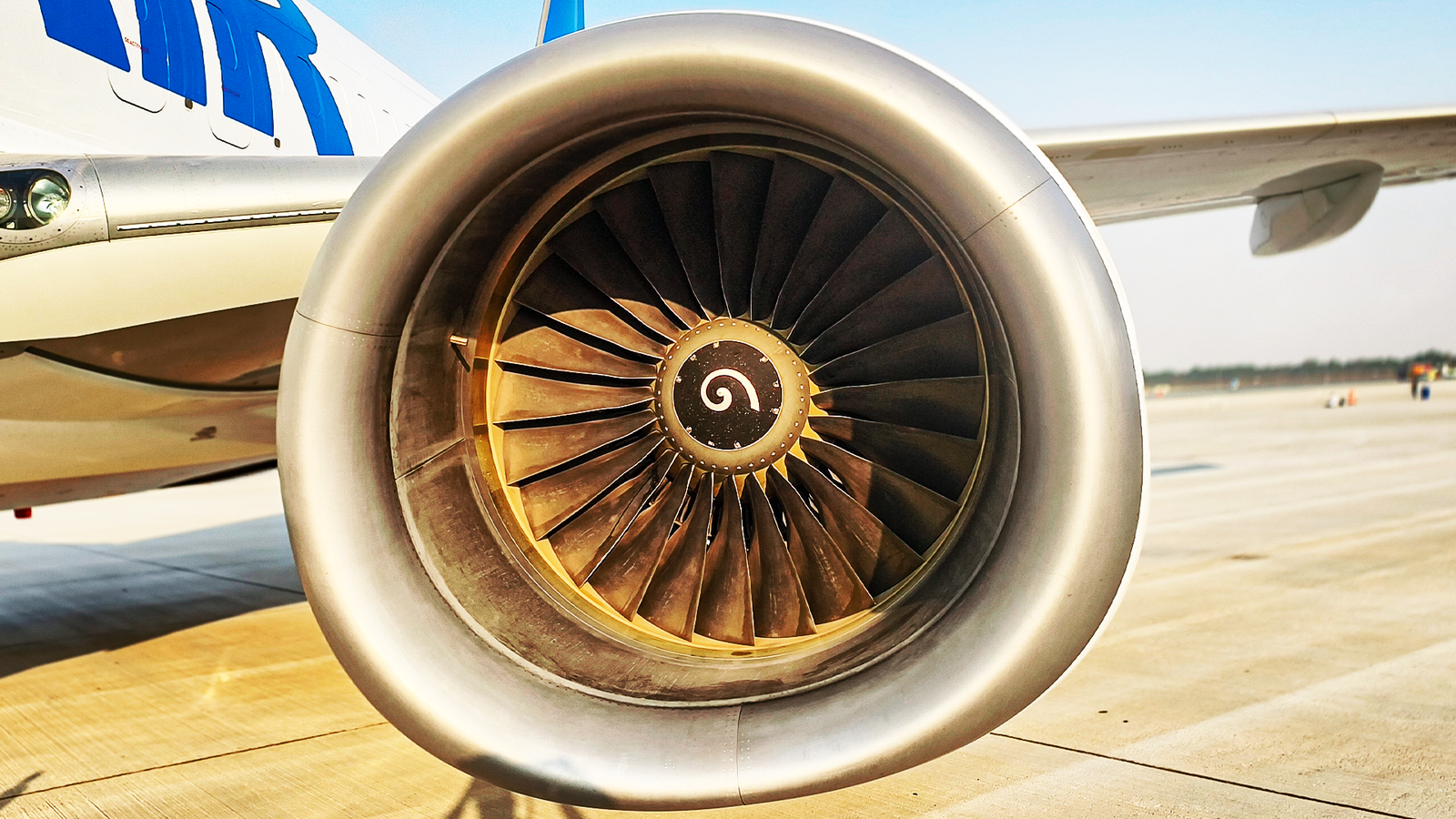
A retired Boeing 737NG is worth more in pieces than as a complete aircraft. The two CFM56-7B engines under its wings carry half-life maintenance values of $3.8 to 7.1 million each, according to IBA Group data, meaning the engines alone can be worth $7.6 to 14.2 million combined. Aviation valuation expert Rob Mikus demonstrated that once engines, landing gear, and avionics are removed from a 737, the airframe has “almost no value.” Companies like FTAI Aviation, which owns more than 450 CFM56 engines, have built entire business models around that gap.
Engine values have climbed since 2020 while airframe values have continued to fall. LEAP production constraints have delayed 737 MAX deliveries, forcing airlines to keep 737NGs in service longer than planned, which sustains demand for the CFM56 overhauls and spare engines the industry expected to wind down years ago. A retired 737’s engines can be overhauled and returned to service, leased at $42,000-$48,000 per month, torn down for parts that exceed the whole engine’s value, or converted into power turbines for AI data centers. The airframe gets recycled for scrap aluminum.
What A Retired 737’s Engines Are Actually Worth
When a Boeing 737NG reaches the end of its service life, the two CFM56-7B engines under its wings are typically the most valuable assets on the aircraft. According to IBA Group data, a single CFM56-7B carries a half-life maintenance value of $3.8 to 7.1 million, depending on the subvariant and the remaining life of its life-limited parts. A pair in midlife condition can be worth $7.6 to14.2 million combined. Green-time engines, those with usable cycles remaining but approaching their next shop visit, trade for between $2.8 million and $3.4 million, according to Safe Fly Aviation’s 2026 market report.
The airframe those engines are attached to tells a different story. Aviation valuation expert Rob Mikus demonstrated the math using the 737 MAX 8: a pair of spare LEAP-1B engines appraises at $40 million against a total aircraft market value of $56 million. Landing gear and avionics account for millions more. Once those high-value components are removed, the airframe has, in Mikus’s assessment, “almost no value.” The same principle applies to older 737NGs, where the airframe has depreciated further while CFM56 demand has kept engine values elevated. A 22-year-old 737-800 approaching its next D-check may be worth less as a flying aircraft than the sum of its detachable components.
Monthly lease rates for the CFM56-7B have stabilized at $42,000 to $48,000 per engine as of mid-2026. A single spare engine generating $45,000 per month produces $540,000 per year, meaning a green-time engine purchased at $3 million pays for itself in lease revenue in about six years, before accounting for maintenance reserves. The economics explain why companies acquiring retired 737NGs focus on the engines rather than the aircraft. Engines generate ongoing revenue through leasing or resale. Airframes generate one-time scrap value from aluminum recycling and minor component recovery.
Why Engine Values Have Climbed While Airframe Values Have Fallen

Two forces are driving CFM56-7B prices upward simultaneously. Production constraints on the LEAP-1A and LEAP-1B engines have delayed deliveries of new A320neos and 737 MAXs. Airbus had approximately 60 completed A320neo airframes sitting at its factories in mid-2025 with no engines to install. Boeing’s 737 MAX production has faced its own disruptions from quality control issues and regulatory oversight. Every new narrowbody that doesn’t deliver on schedule is an older 737NG or A320ceo that stays in service longer than planned, driving additional demand for CFM56 overhauls, spare engines, and replacement parts that were expected to enter the teardown pipeline years ago.
Overhaul costs have also increased substantially. High-pressure turbine and low-pressure turbine component costs have risen since 2019 as raw material prices, machining costs, and supply chain lead times have all moved upward. A CFM56-7B performance restoration shop visit costs more today than it did five years ago, which pushes the value of serviceable engines higher because airlines weigh the cost of overhauling an existing engine against leasing or purchasing a serviceable replacement. Safe Fly Aviation projects 2,300-2,400 CFM56 shop visits annually through 2028, reflecting sustained demand from a fleet that is retiring more slowly than planned.
Airframe values have moved in the opposite direction. A 737-800 delivered in 2002 has depreciated through more than two decades of service, approaching the point where the cost of the next D-check exceeds the aircraft’s market value. Airlines facing that calculation retire the aircraft rather than invest in extending its structural life. The engines enter the aftermarket at prices that have climbed since 2020. The airframe goes to a teardown facility where remaining components are harvested, and the aluminum is recycled. The divergence between rising engine values and falling airframe values makes a retired 737 worth more disassembled than flying.
What Happens To The Engines When A 737 Is Retired

A CFM56-7B removed from a retired 737 follows one of three paths depending on its condition and the remaining life on its life-limited parts. An engine with significant remaining life can be overhauled, restoring it to serviceable condition by replacing worn components and resetting the maintenance clock. The overhauled engine is either installed on another 737NG in the same operator’s fleet or sold to another airline or lessor. Alternatively, an operator can lease a serviceable engine while its own engine is in the shop. Operating lease terms for the CFM56-7B typically run 36-84 months, with 60 months being the most common duration. The lessor retains ownership, and the airline pays $42,000 to $48,000 per month.
An engine near the end of its useful life goes to teardown. The engine is disassembled, and its individual components are inspected, certified, and sold separately as used serviceable material. A core CFM56 engine worth $0.5 to 1.0 million as a complete unit can yield substantially more when its life-limited parts, including turbine disks, compressor spools, and fan blade sets, are sold individually to MRO providers and operators. Safe Fly Aviation describes the HPT Stage 1 disk as the single most valuable LLP in the CFM56. Teardown economics have improved since 2019 as rising LLP values make disassembly increasingly profitable compared to selling the engine whole.
The decision between overhaul, lease, and teardown is driven by economics, not preference. If restoring the engine to serviceable condition costs more than its post-overhaul market value, teardown produces a better return. If the engine has enough remaining life that an airline or lessor will pay $42,000 to $48,000 per month to use it, leasing is the better path. Companies that acquire retired 737s evaluate each engine individually and route it to whichever option generates the highest total return on the acquisition cost.
The Companies That Buy Retired 737s For Their Engines

FTAI Aviation is the dominant player in the retired 737 engine market. The Nasdaq-listed company owns more than 450 CFM56 engines and operates over one million square feet of maintenance facilities globally, including its proprietary Module Factory where engines are disassembled into modules, repaired, and reassembled faster and at lower cost than a traditional full overhaul. AAR Corp, an aviation aftermarket services provider, manages the teardown, repair, marketing, and sales of parts from FTAI’s CFM56 pool under an exclusive agreement extended through 2030.
GA Telesis, based in Fort Lauderdale, Florida, is the world’s largest independent supplier of used serviceable material and acquires retired aircraft and engines for disassembly and component distribution. EirTrade Aviation operates from Knock, Ireland West Airport, and specializes in CFM56 disassembly across multiple subvariants, including the -3, -5A, -5B, -7B, and -7BE. AELS, a Netherlands-based disassembly firm, recently added an ex-Luxair 737-700 to its teardown pipeline. These companies acquire retired aircraft at prices driven primarily by the value of the engines and high-value rotable components rather than the airframe structure.
FTAI has expanded its CFM56 business beyond aviation entirely. In December 2025, the company launched FTAI Power, a platform that converts retired CFM56 engines into 25-megawatt aeroderivative power turbines for AI data centers. Production began in 2026, targeting more than 100 units per year at full capacity. Chairman and CEO Joe Adams described the CFM56 as “the largest and most reliable engine market in the world, making it an ideal candidate for aeroderivative conversion.” Retired 737 engines now have three revenue paths: aviation overhaul, parts teardown, and powering the data center infrastructure behind the AI industry. The engine that was designed to fly passengers is finding a second career generating electricity.
Why Airlines Lease Engines By The Hour Instead Of Owning Them

Owning a spare CFM56-7B ties up $3 to 7 million in capital that sits on a stand generating no revenue until an aircraft needs it. The engine depreciates, requires climate-controlled storage, periodic preservation runs, and documentation management to maintain its airworthiness certificates. For an airline operating 30 or 40 737NGs, maintaining a pool of two or three spare engines represents $10-20 million in assets that produce nothing until a line engine comes off wing for maintenance. Power-by-the-hour agreements shift that burden to the lessor.
Under a PBH contract, the airline pays a fixed rate per flight hour to a company like FTAI Aviation or AerCap, which maintains a pool of serviceable engines and rotates them to airlines as needed. When a line engine requires a shop visit, the lessor delivers a replacement within days rather than the weeks or months a full overhaul would require. FTAI markets this as its Maintenance, Repair, and Exchange model, promising airlines they can “fly again in days, not months.” As of 2026, PBH agreements cover approximately 35% of the active CFM56 fleet worldwide, up from 22% in 2020.
The growth reflects a broader shift in how airlines view engine ownership. Traditional operating leases run $42,000 to $48,000 per month for terms of 36-84 months. PBH goes further by bundling engine access with the maintenance event, turning a large, unpredictable capital expenditure into a fixed hourly operating cost the airline can budget precisely. For a carrier flying 737NGs that will retire within five to eight years, investing millions in spare engine ownership makes less financial sense than paying by the hour for access to someone else’s engine pool. The lessor absorbs residual-value risk and depreciation. The airline converts a capital problem into an operating expense line item.
