


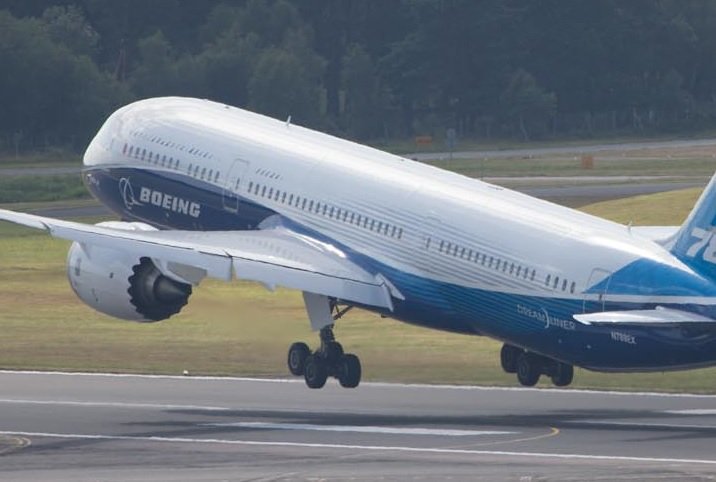
The agency targets a 737 structural concern and an issue that could cause a dual Trent 1000 failure.
The Federal Aviation Administration (FAA) is taking action to address risks involving Boeing 737 Max door-related structural components and concerns about uncontained failures of 787 Rolls-Royce Trent 1000 turbofans.
The agency this week issued two regulatory documents, including an airworthiness directive (AD) responding to the potential for some 737 Max structural fasteners called “bear straps” to develop stress cracks.
Affected straps are on the upper corners of 737 Max right-side forward doorframes, the FAA says. While no 737 Max have been found with cracked straps, the problem has for more than a decade been known to affect earlier-generation 737s.
The FAA in 2014 required operators to inspect bear straps on 737 Classics for cracking, and Boeing tells FlightGlobal that in 2019 it notified 737NG operators about the issue and provided them with inspection instructions, which the FAA mandated in 2021.
Boeing then in December 2024 issued 737 Max operators an Alert Requirements Bulletin, calling on them to inspect fuselage skins and bear straps.
The FAA’s latest AD mandates those inspections, saying 737 Max are likely “susceptible to the same crack conditions” due to the variants’ similarities.
The cracks can result from “high operating stresses in the fuselage skin and bear strap due to stress concentration at the corner of the door cutout”, it adds. Cracks “may lead to the inability of the principal structural element to sustain limit loads”.
“Inspections provide multiple opportunities to identify and correct possible cracking before cracks exceed critical length,” Boeing says, adding that it “conducted engineering analysis to identify root cause and is working through engineering changes that would prevent such cracking.”
Separately, the FAA this week issued a proposed rule addressing risks associated with the 787’s Trent 1000 engines.
“The FAA has received a report from the manufacturer indicating that the protection system on the left fan cowl of the right engine does not sufficiently cover the components and systems,” the proposed AD states.
The risk arises if a 787’s left-side Trent suffers an uncontained failure, in which case debris ejected from that powerplant’s intermediate pressure turbine rotor could strike the right-side Trent, damaging its oil lines or air-pressure sensor, the FAA says.
The result could be dual engine failure, it adds.
Boeing addressed the risk in January with a Special Attention Requirements Bulletin sent to operators. That document calls on them to inspect Trents and replace fan cowls on right-side engines.
The FAA’s proposal would mandate those actions. It applies to only 22 US-registered 787s – a small number because US airlines primarily operate 787s powered by GE Aerospace GEnx turbofans.
The post FAA orders Boeing 737 Max inspections, proposes 787 Trent 1000 safety fix first appeared on FlightGlobal.
