


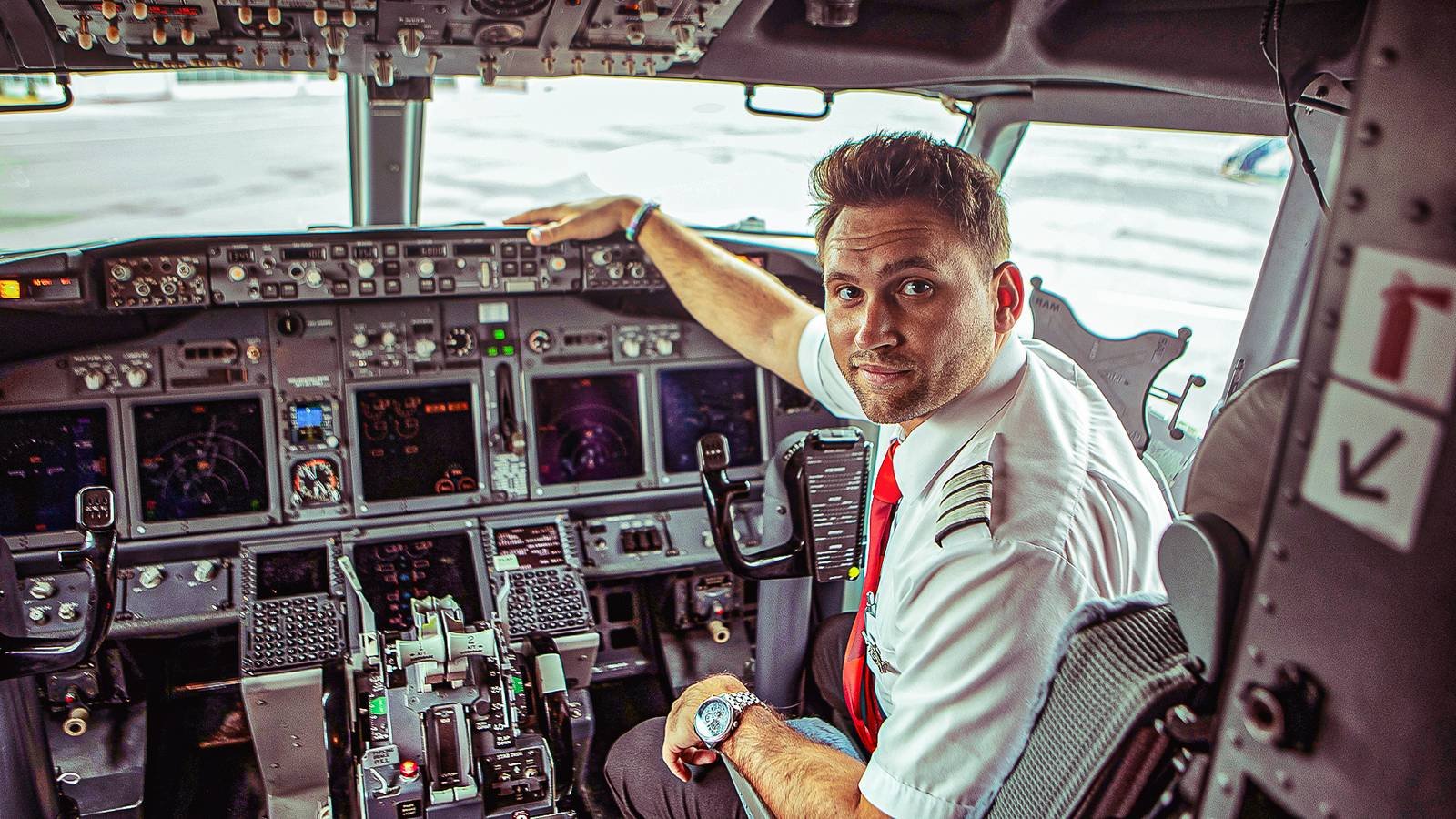
The moment a commercial jet lifts off the runway, the atmosphere inside the cockpit shifts instantly from anticipation to intense, synchronized action. The initial climb is one of the most demanding phases of flight, often referred to as part of the ‘critical eleven minutes’ of aviation. While passengers sit back and relax, the cockpit is a high-intensity workspace where pilots manage rapid mechanical, environmental, and air traffic changes.
The Flight Safety Foundation defines the critical 11 minutes as the three minutes after takeoff and eight minutes before landing when the cabin crew is prohibited from entering the cockpit when an airliner has sterile cockpit conditions. In the military, these are known as critical phases of flight. Siloing down on the first 10 minutes of every commercial itinerary, the initial climb phase is a dynamic stage of operations on the flight deck that is invisible to the passengers in the back of the jetliner.
To the passengers enjoying drinks in the back, the climb appears smooth and effortless, sometimes interrupted only by the distant mechanical thud of the landing gear retracting. However, the two pilots are about to face a major spike in data, communication, and mechanical modifications, all while hurtling through the sky at hundreds of miles per hour.
The Critical Eleven Minutes
The moment the plane securely clears the ground, the monitoring pilot reaches over and pulls a lever, cleanly tucking the massive landing gear into the belly of the plane to clean up the aerodynamics and help the jet glide through the air. The engines, which have been screaming at absolute maximum power to get the heavy metal tube off the ground, cannot sustain that brute-force effort forever.
The pilots reduce them to a more sustainable climb power, a move that saves the engines from overheating and lowers the jet’s scream over the neighborhoods below. As the airspeed increases, the crew gradually retracts the flaps and slats, extra metal panels on the wings that act as enormous scoops to lift the plane. Tucking them away is a delicate balancing act. Too early, and the plane loses lift. Too late, and the rushing wind may damage the wings.
Takeoff is described as the most dramatic part of flying in a brief write-up on Happy Fares entitled ‘How Airplane Takeoff Works — Simple Guide for Nervous Flyers,’ but as the report describes, takeoff and initial climb are the most rehearsed and procedurally predictable phases of flight, along with landing approaches. Pilots have trained for virtually every variation of these hundreds, if not thousands, of times throughout their career.
From Clean Cockpit To Cruise Mode

During the first ten minutes of flight, operating a commercial aircraft is a kind of fast-paced, high-stakes communication game with air traffic control. The radio is a fast-moving blur of noise due to the extremely crowded airspace surrounding large cities. The flight is passed from one radar station to the next by air traffic controllers, much like a baton in a fast relay race.
Before the wheels even leave the ground, the radio speaker in the cockpit becomes a wall of sound. In a busy terminal area like New York, Chicago, or London, dozens of airplanes share the same radio frequency. Every few minutes, a pilot must twist a radio dial to a new frequency, intercept a volley of numbers and headings, and immediately bark back their confirmation to the tower.
A hyper-focused mental filter is necessary for pilots. When you hear your own airline call sign, your brain instantly rushes to attention, even though it tunes out 90% of the conversation and other planes being commanded to turn, climb, or slow down. If you miss your cue, you will have to postpone a turn, which could result in your jet flying straight at a mountain or another aircraft. A wall of sound fills the cockpit speakers long before they reach cruising altitude.
The Verbal Safety Contract

As a commercial jet slices upward through the clouds, the intense radio dialogue with Air Traffic Control represents only half of the hidden battle in the cockpit. Simultaneously, the crew must execute a rigid series of mechanical verifications known as checklists. The aircrew performed checklists of as long as 200 items in some cases, all while moving at 300 miles per hour upward into the sky.
Aviation checklists are built on a philosophy of ‘Do-Verify’. Pilots do not read an item, flip a switch, and move to the next. Instead, the phase of flight dictates an automated flow of actions performed entirely from memory and habit. Once those actions are complete, the pilots pull out the physical or electronic checklist to verify that everything was done correctly.
The Pilot Flying, or PF, maintains complete focus on the aircraft’s flight path by keeping their hands on the controls or their eyes fixed on the automation. Pilot Monitoring, or PM, controls the radio, reads out the items on the checklist, and visually checks the condition of the cockpit switches. As soon as the wheels leave the tarmac, the first checklist sequence starts.
Navigating Densely Packed Skies

In busy airspace, controllers juggle dozens of jets, keeping them separated by as little as 1,000 feet (305 m) vertically or three miles (4.8 km) horizontally. Because a jet climbs at a restricted speed of 250 knots (288 mph / 450 km/h), it covers a football field every single second. Missing a radio call for just 10 seconds can cause the plane to travel almost a mile off course, which can easily disrupt the delicate sequencing of a dozen other aircraft.
Within just a few hundred feet of the ground, the local control tower hands the jet off to Terminal Radar Approach Control, the air traffic facility responsible for sorting out the chaotic web of arrivals and departures within 50 miles of the airport. Every single instruction issued by ATC must be spoken back to the ground exactly as given.
The read-back procedure is a standard function of all aviation operations around the world, from the smallest Cessna to the largest superjumbo jet. If a controller rattles off a complex sequence of headings and altitudes, the pilot cannot simply reply with “Roger.” They repeat every digit in the precise order received, concluding with their aircraft’s call sign.
During this phase of high cognitive load, even a professional Aviator can experience auditory tunneling, which is hearing orders correctly and reading back the wrong numbers or entering incorrect data into the flight computer. The flying pilot must actively listen to their partner’s radio read-back as a backup, and cannot simply focus on ‘stick and rudder’ flying.
Managing The Invisible Horizon: Pressurization

Monitoring the aircraft’s life support systems is an important, but virtually invisible, part of the after-takeoff flow. As the plane swiftly ascends into the frigid, thin upper atmosphere, the cabin must close and pressurize itself. During the checklist sequence, the Pilot Monitoring particularly inspects the environmental control panel. They are checking the “differential pressure” gauge to confirm that the aircraft is bringing in conditioned air from the engines at a pace that simulates a safe, breathable altitude for the passengers.
A single glance at a malfunctioning valve or a lagging pressure gauge during this checklist is the crew’s primary defense against hypoxia, the silent, oxygen-depleting condition that can incapacitate a crew before they even realize they are in danger. As the jet crosses the 10,000-foot threshold (3,050 m), a mechanical chime sounds in the cockpit. This marks the end of the sterile cockpit phase and triggers the final verification of the initial climb.
The pilots transition the aircraft’s altimeters from local airport barometric pressure to a standard global setting, ensuring every aircraft in the upper skies is measuring altitude using the same yardstick. With the After-Takeoff Checklist officially complete and stowed away, the crew finally transitions from a state of rapid, short-term tactical management to the long-term, strategic monitoring of the cruise phase ahead.

Once the aircraft climbs to a safe buffer altitude, usually around 1,500 feet (450 m), and the flaps and slats have been ‘cleaned up,’ the Pilot Flying calls for the formal After-Takeoff Checklist. The Pilot Monitoring brings up the checklist on a lower screen or a physical card and begins a rhythmic call-and-response chant. They read an item aloud, and both pilots must visually verify the system’s state before the monitoring pilot barks back the answer.
By the time the aircraft finally crosses the 10,000-foot threshold, the crew has likely cycled through four or five different radio frequencies in less than ten minutes. The autopilot takes over the routine tracking, the strict radio silence is lifted, and the pilots finally have a brief window to take a breath, check their instruments, and prepare for the long, quiet cruise ahead. The public never sees this intense opening act, but it is the invisible foundation that keeps modern aviation incredibly safe.
As the jet climbs out of the congested lower terminal environment and enters the vast, upper sectors of regional airspace, the frantic pace of the radio finally relents. The gaps between transmissions stretch from seconds to minutes, allowing the pilots their first opportunity to ease back into their seats, take a sip of water, and review the flight logs for the cruise ahead.
Catch what other trackers miss
Emergency squawks, holds, NOTAMs — live signals, no signup.
Open tracker
Catch what other trackers miss
Emergency squawks, holds, NOTAMs — live signals, no signup.
Open tracker
