


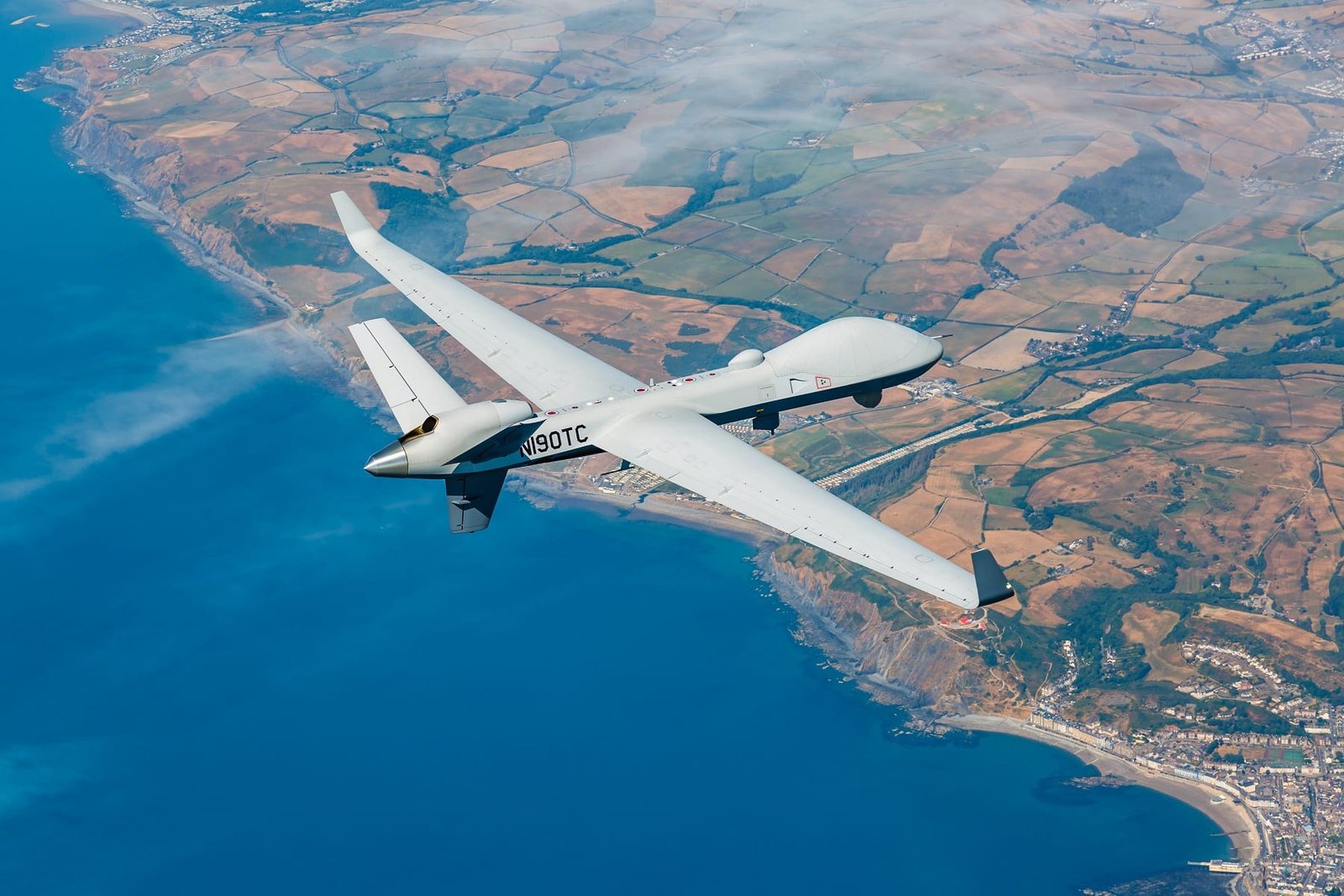
European nations face growing security challenges across the Arctic, the Baltic, NATO’s eastern flank, and the Mediterranean. In this environment, early detection and persistent awareness are essential to deterring conflict and preventing aggression. The MQ-9B SkyGuardian® and SeaGuardian® Uncrewed Aircraft Systems (UAS) from General Atomics Aeronautical Systems, Inc. (GA-ASI) provide a ready-now solution.
Sponsored by

Designed for multi-domain awareness and operational flexibility, the MQ-9B has emerged as a leading persistent, multi-mission uncrewed Intelligence, Surveillance, and Reconnaissance (ISR) platform.
Nations across Europe and around the world — including the U.K., Belgium, Germany, Denmark, Poland, Canada, India, and others — have established MQ-9B programs to meet their next-generation uncrewed ISR requirements.
The reasons are clear. MQ-9B helps fill critical capability gaps in maritime and expeditionary operations. It is more than a passive intelligence collector; it can detect, track, and support the engagement of adversary forces across multiple domains.f
Versatility in Flight
The MQ-9B SeaGuardian and SkyGuardian can be configured for missions ranging from traditional ISR and strike to airborne early warning, anti-submarine warfare, signals intelligence, and the employment of long-range munitions.
With endurance of more than 30 hours in certain configurations, MQ-9B provides persistent ISR across NATO areas of responsibility, including the Arctic.
Its certified airworthiness and soon-to-be-certified Flight Into Known Icing (FIKI) capability support reliable operations in challenging environments, enabling commanders to maintain situational awareness in demanding weather conditions.
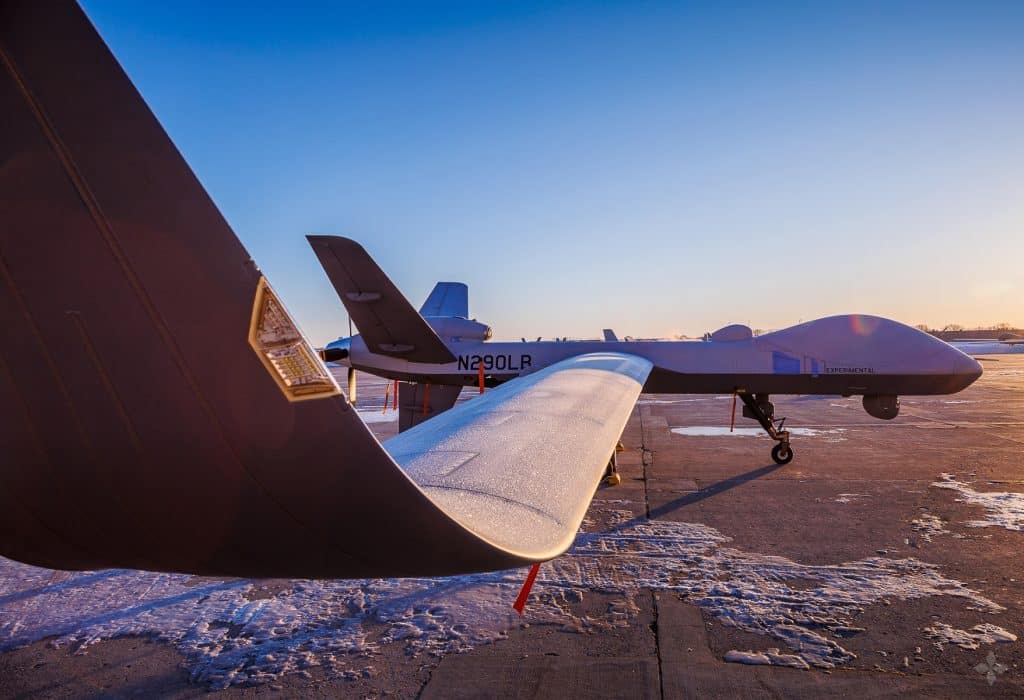
The MQ-9B’s cost-effectiveness further enhances its appeal. Built on the proven MQ-9 airframe, which has accumulated millions of operational flight hours, the platform delivers advanced capabilities at a fraction of the cost of a clean-sheet design.
Its extended endurance and advanced sensor integration provide persistent coverage and rapid response, reducing the need for multiple specialized platforms.
Protecting Airspace and Striking at Range
GA-ASI’s MQ-9B Airborne Early Warning and Control (AEW&C) mission package is designed to transform how European nations detect and respond to aerial threats.
The system can identify and classify advanced aerial threats as well as low-end, high-density threats such as drone swarms. It can also extend the reach of crewed airborne early warning systems already in NATO’s service.
The MQ-9B can operate in airspace that may be too dangerous for crewed platforms, reducing risk to personnel and preserving high-value crewed assets. It can also provide an organic AEW&C capability when crewed systems are unavailable, delivering persistent, cost-effective coverage across maritime and land domains.

Its long endurance supports surveillance of critical infrastructure, maritime chokepoints, and contested airspace, which is an increasingly important capability amid the worldwide proliferation of stealthy cruise missiles, high-speed aircraft, and coordinated drone attacks.
MQ-9B is also well suited to countering active swarm threats. Its extended endurance enables persistent coverage, while demonstrations of the Advanced Precision Kill Weapon System (APKWS) have highlighted its potential to engage multiple targets precisely and efficiently.
For example, one MQ-9B equipped with AEW&C could act as a forward picket while a second MQ-9B, armed with APKWS, loiters near critical infrastructure or NATO troop positions. The AEW&C aircraft could alert the armed MQ-9B to an approaching threat and help direct the aircraft toward the target.
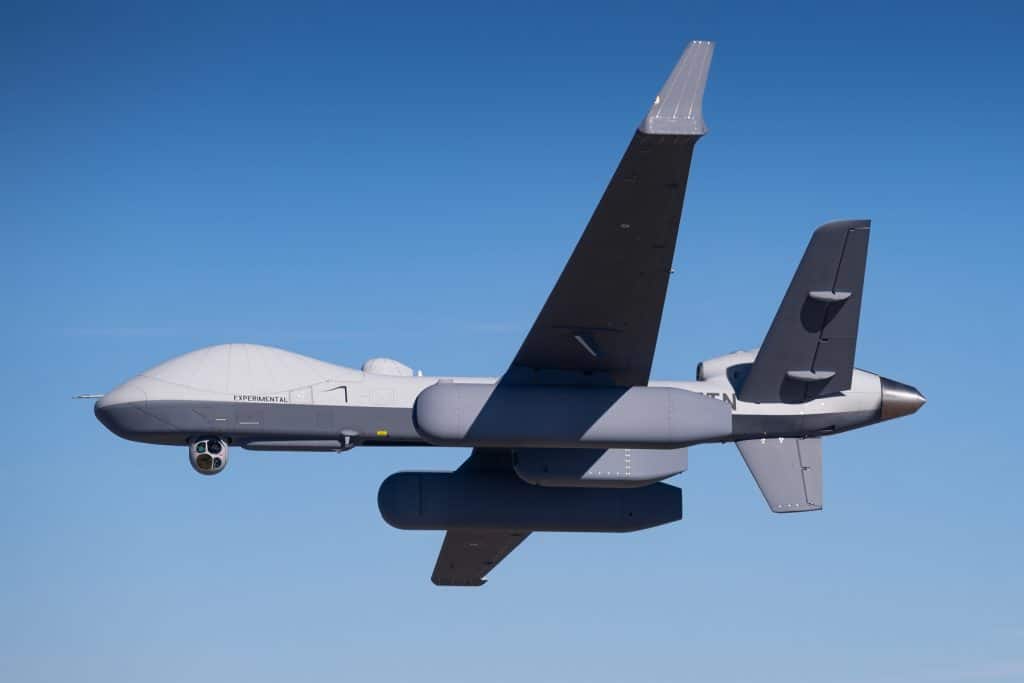
GA-ASI is also integrating the MQ-9B with long-range weapons, including Kongsberg’s Joint Strike Missile and Lockheed Martin’s Long Range Anti-Ship Missile.
These capabilities support precision engagement at extended ranges, including against mobile missile batteries operating beyond the effective range of enemy air defenses. They can also support operations in contested maritime zones and on land.
Together, AEW&C, APKWS, and long-range weapons make the MQ-9B a versatile asset for European operations.
Sovereign Systems, Allied Integration
At the heart of the MQ-9B’s success is its modular, open architecture design. This approach allows operators to integrate sovereign systems and tailor the platform to their specific requirements.
Such adaptability is a key advantage for European nations seeking solutions that meet national operational needs while supporting domestic industry and maintaining interoperability with NATO and allied forces.
GA-ASI works with each MQ-9B customer to maximize the value of their investment. Through the platform’s open architecture, customers can integrate sovereign weapons, sensors, communications equipment, and field-support systems into their national programs of record.
For example, Canada’s CQ-9B program includes sovereign training, ground support, and ground control systems. In the United Kingdom, the RG Mk1 Protector program integrates British components and munitions. And the list goes on.
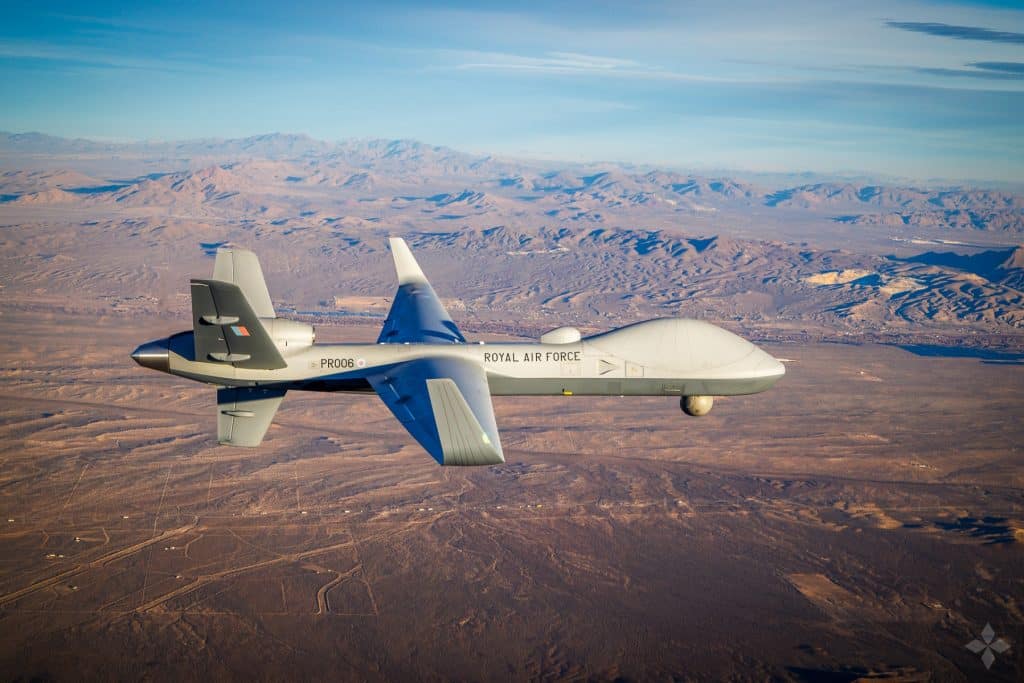
For nations seeking greater cost efficiency and collaboration, the NATO Support and Procurement Agency (NSPA) offers a streamlined framework for acquiring and maintaining the MQ-9B.
Denmark, for example, launched its MQ-9B program through a partnership with NSPA — announced in July 2025.
The NSPA approach can facilitate joint procurement, shared maintenance, and common spares, helping to reduce costs while fostering greater interoperability among NATO allies.
Proven Systems for Challenging Times
As European nations strengthen their defenses in response to evolving security challenges, the MQ-9B stands out as a flexible and mature solution.
Its persistence, multi-mission capabilities, and cost-effectiveness make it well suited to both maritime and expeditionary operations.
From the Arctic to the Mediterranean, MQ-9B can help European nations maintain situational awareness, strengthen interoperability, and enhance collective defense — addressing their challenges today while expanding their domestic industrial bases to prepare for the uncertainties of tomorrow.
